

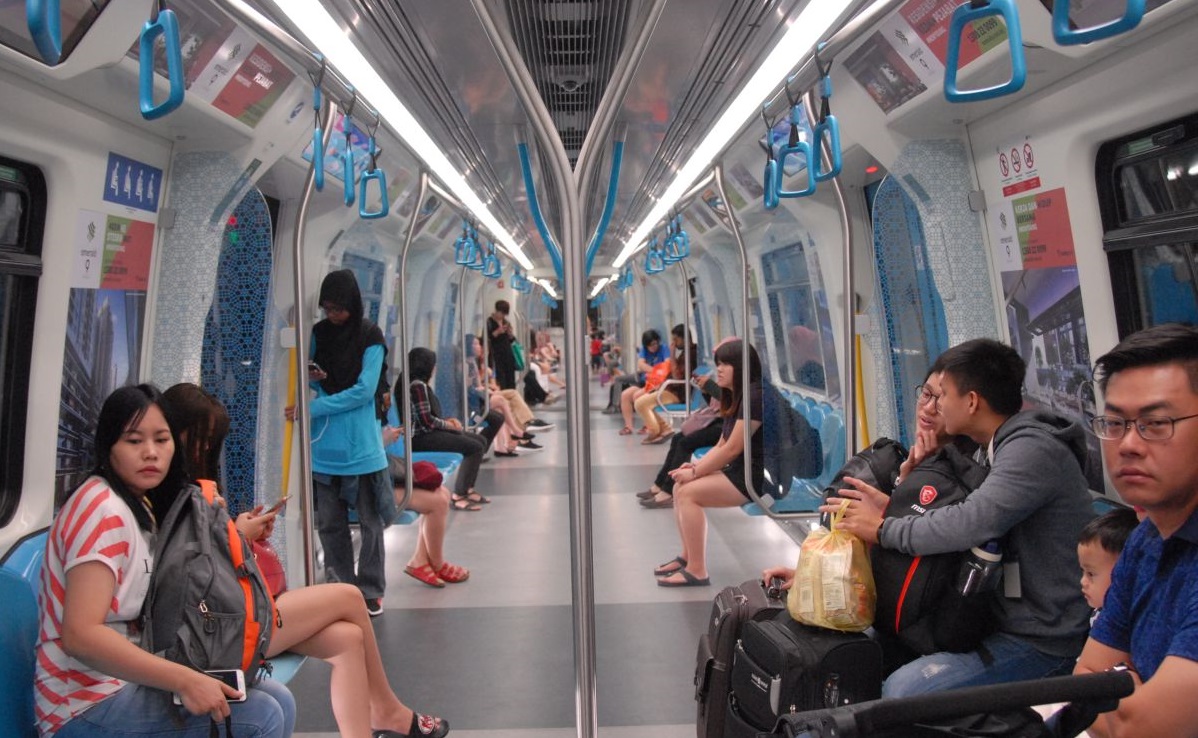
I REGULARLY use the Mass Rapid Transit (MRT) system when travelling to Kuala Lumpur for tourism industry training sessions. For medical appointments at Hospital Kuala Lumpur, I also take the monorail from Bukit Bintang to Chow Kit before walking to the hospital.
On the monorail, an auxiliary police officer is sometimes stationed near the boarding area above Jalan Sultan Ismail. However, their presence is rarely required, as passengers generally board in an orderly manner and the trains are seldom overcrowded.
The situation is often very different on the MRT during peak hours. It is common for passengers to wait for several trains before being able to board, especially when coaches are packed and no one disembarks.
One of the busiest stations is Tun Razak Exchange (TRX), the interchange connecting the Kajang and Putrajaya Lines. Passengers there usually queue in an orderly manner while waiting to board.
While station platforms may not always require additional personnel, more attention should be given to conditions inside overcrowded trains. Beyond operational efficiency, this is also a matter of customer service and corporate social responsibility for Prasarana Malaysia Bhd.
The MRT system provides women-only coaches and priority seats for senior citizens, pregnant women, passengers with infants, and persons with disabilities (OKU).
While able-bodied commuters may temporarily occupy these seats when trains are less crowded, they are expected to give them up immediately when someone in need boards the train.
Unfortunately, this does not always happen. Some passengers remain absorbed in their mobile phones, pretend not to notice, or simply choose not to move.
There are also occasions when foreign workers mistakenly enter women-only coaches or continue occupying priority seats despite visibly vulnerable passengers standing nearby.
Regardless of the reason, such incidents leave a poor impression on foreign visitors, many of whom cannot distinguish between locals and non-locals.
This issue has persisted for far too long. If public transport operators continue to treat such behaviour as trivial or unavoidable, commuter indifference may gradually become normalised as part of daily public transport culture in Malaysia.
Prasarana should therefore intensify public awareness campaigns on commuter etiquette, while station staff and auxiliary personnel should play a more active role in encouraging courtesy during peak hours.
Small acts of consideration can significantly improve the commuting experience and reflect positively on the country as a whole.
YS Chan is a tourism, transport and training consultant.
The views expressed are solely of the author and do not necessarily reflect those of MMKtT.
- Focus Malaysia.

No comments:
Post a Comment
Note: Only a member of this blog may post a comment.