


In an interview with Malaysiakini, Singapore Democratic Party (SDP) secretary-general Chee Soon Juan reflects on the personal and political struggles he has endured as well as his hopes for a more open and equitable future for Singapore.
The 63-year-old father of three, who has weathered decades of electoral setbacks without stepping away from politics, discusses a wide range of issues, including mental health, social and economic pressures, the Albatross File, and the role of the opposition in a tightly constrained democratic environment.
He speaks candidly about the emotional toll of his political journey, describing moments of doubt alongside the resolve that has kept him engaged in public life.
For him, persistence is not merely a political strategy but a conviction forged through years of confronting adversity.
Below are excerpts from the interview:
Malaysiakini: You have faced many hurdles in your political journey, from arrests to court cases. You also mentioned that during the 1997 election, your dog was poisoned, your electricity was cut off, and your car tyres were slashed. Is this something you can elaborate on?
Chee: There was a period where it was before the advent of the internet, social media, and everything that you came across to the public was basically painted by the media, the state media.
That was a very grim time. Not only was I facing some of these problems, but the general public also looked at me in a certain way, and to a certain extent, I don't blame them.
And I have had people coming up to me after YouTube came about, Facebook came about, and… They come up to me and look me dead in the eye and just very sincerely say, ‘You're not insane’. And seriously, in a way, you can see on my forehead that no horns are sticking out.
But that's the power of the media, how they were able to shape. The reason why they said I was insane was because (former Singapore prime minister) Lee Kuan Yew at the time said that he had consulted some of his medical friends, and they said I was a near psychopath. And that stuck.
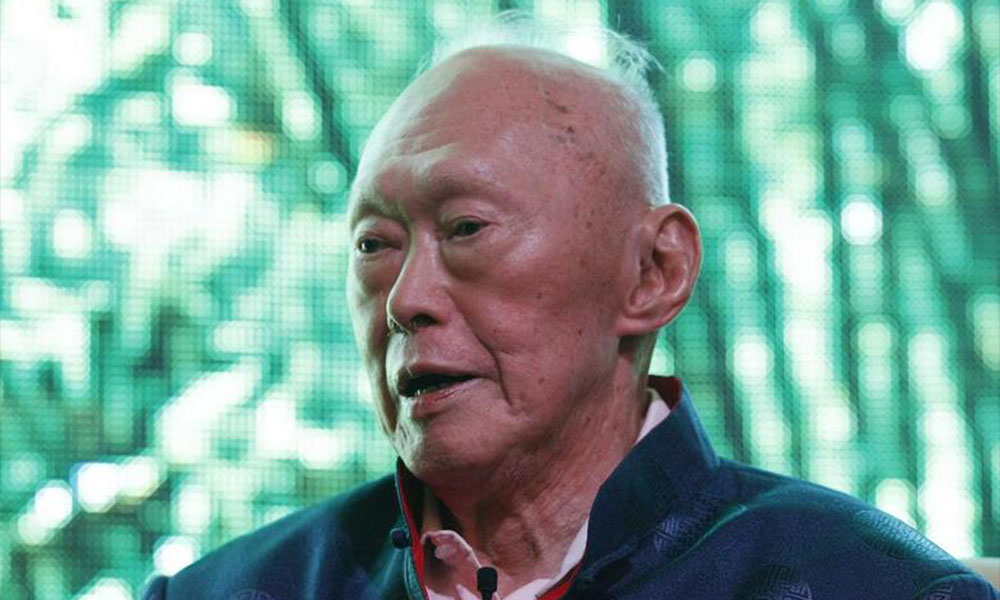
And that is why when people just meet me in person (they say), ‘You're nothing of the person that we thought you were’. And those are just very sad, tragic moments.
I am not speaking for myself right now, but when you have legitimate people questioning the system – not wanting to tear it down, but to improve on what we have – that is delegitimised, and legitimate activities are criminalised. And it is still going on until today. And this is where I worry for Singapore going forward.
This whole idea of talking with Malaysiakini, which I have done before, is a sad commentary, isn't it? That, back home, my own media has never asked me for an interview.
I take it back, there was one radio station that emailed me and said they wanted an interview with me. And then just literally minutes thereafter, they said, ‘Oh, I'm sorry, we have to postpone the date. We've already found somebody else’. It has been a year; I am still waiting for the invitation.
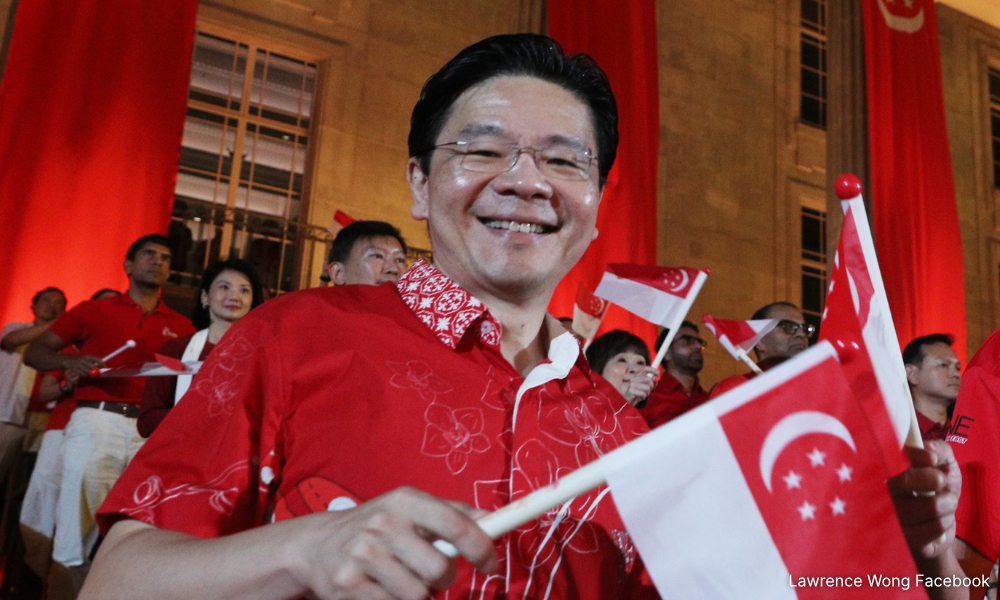
Do you see Prime Minister Lawrence Wong opening up the democratic space a little, or will he continue the tradition?
There is one part of me that really continues to harbour hope that anything is possible. But, you know, you begin to think that is more wishful thinking with all that has been seen and heard.
And you have got to understand, after decades of institutional lies, the kind of system within the party itself. I am not going to hold my breath.
What is the opposition’s future in Singapore?
… If you read, for example, what Nobel laureate Darren Acemoglu was saying, it has come to a stage where sometimes democracy becomes essential for progress, that you cannot continue to try to contain the views of your people and hope then to be able to grow.
I can do no better than to quote Steve Wozniak himself, co-founder of Apple. He came to Singapore and basically was saying that you are never going to get an Apple growing in Singapore.
Why? Because you've eliminated all your creative forces, your creative elements. And it takes that kind of thinking out of the box to question authority, and not take that as chaos.
But really, that's how humans have come about progress, whether it's (Albert) Einstein, Stephen Hawking; those are the people who have never taken… to be the end-all and be-all. But to question authority, and thereby broaden our thinking and make progress for humanity. That's been the history of humankind.
What makes Singapore so special? Somehow, we (believe that we) can continue to grow bigger and bigger by just maintaining this authoritarian control over the thinking of the people? It is never going to work.
That's why I say you live and die by the sword. And by that, I mean that if you still think that your legitimacy is just derived from economic growth. (But) now we have come to a stage of diminishing returns.
You are not going to be able to encourage productivity and economic growth just by working harder and cheaper. You are not going to be able to compete on this dimension right now.
So the next best thing is to make sure that we are able to compete with the best in the world in terms of ideas, creativity and innovation.
And guess what? The whole idea of being able to create that society where you just think out of the box is through this openness, culture, political, and corporate culture, where people are not fearful to think out of the box.
I'm just reminded so much of Steve Jobs at Think Different, remember? When he showed you signs of people, and he told you: These are the misfits, the people who never really followed the rules, who always questioned the authority. Those are the people who change the world.
And this is what I am trying to get at. If we aspire to become leaders and not just followers – and I am talking about Singapore as a society – we have got to be able to transcend that whole culture of governments saying ‘jump’, we say ‘how high’?
It cannot be that way anymore. Maybe it was the good years before when we were developing, but we have reached the stage where we have to graduate to the next level and have this sense of saying: questioning the system is not being disloyal to the country.
And that's why I fear where we are right now, where opposition is still seen as wanting to tear down society. That's not good, that kind of thing.
So the vilification is still there?
I am afraid that it is… Even though, as much progress as we have made… There's a segment of society that's still very fearful.
But what about the younger generation? Do you see them being manipulated as easily as the older generations?
Therein lies the hope for Singapore.
In the last election, especially, we have seen in the SDP, a surge of young people coming on to associate with us and supporting us.
And if you look at the post-election surveys that we have had, you can see the age difference in terms of political support. I think we appeal more to the generation of the millennials and the Gen Zs.
So, in that sense, I think the younger folks, younger Singaporeans, are beginning to see, only because they are more online, they are not watching state media, they get on to TikTok, Instagram, that kind of thing.
So, I continue to harbour the hope. And it is also because that generation is beginning to feel the pinch of a society and an economy that has almost run its course.
And you are talking about mental health, you are talking about opportunity, you are talking about the cost of living. Housing has come to the point… where it is becoming unaffordable.
So, when you talk to them, times have changed, and they are thinking of change, but the government is still not keeping up, apart from its rhetoric and buzzwords.
You also attributed this to the influx of wealthy foreigners, driving inequality.
I have made the case, and that is not just in the past years, but for the longest time that I can remember, and the way that we are going right now, you have got to rely on what we produce, what we want to sell to the world. And if you look at it, we sell almost nothing.
You look at Sweden, for example, a small country, with a population maybe a little bit more than Singapore. You look at Korea, you look at Taiwan, they have got things that they sell to the world.
What do we do? Very rent-seeking kind of behaviour. Rewrite the laws, secrecy jurisdiction, make your banking laws secret, and then become a tax haven.
And then we attract billionaires from overseas. So, anybody from James Dyson to Ray Dalio to Chinese billionaires has made Singapore their home, and we have the highest number of billionaires per capita worldwide. That creates the problem there, because wealth inequality comes around.
The thing in Singapore is that because we are an island, land becomes our most valued resource. So, these people, the wealthy class, come in and buy freehold property versus the masses, who are only eligible for our government Housing and Development Board (HDB), which is a 99-year lease.
Guess what? After successive generations, when you pass it down, the majority cannot pass it down because it is worth nothing after 99 years. Whereas the people who are living on all these landed properties, freehold land, get to pass it on to their offspring.
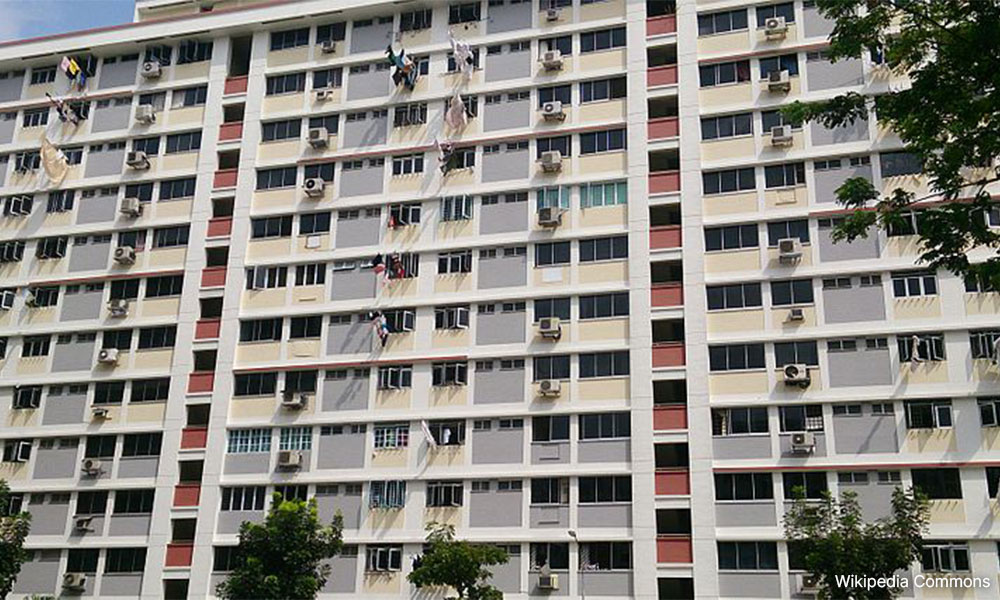
With time, inequality grows. And with that come all the attendant problems. Erosion of trust, economic costs, cost of living keeps going up, and inflation.
And these are things that you try to reason with the government. But because they are so sclerotic in their thinking, in terms of just being unable to entertain new ideas and look and see what some of the problems are that we need to really at least be prescient enough to be able to anticipate, it is not getting anywhere.
Singapore has always prided itself on how it manages race relations, but you recently accused the People's Action Party (PAP) of using identity politics.
Actually, they were the ones who wanted to play with fire and accused us, and one of our members, of playing identity politics.
And my counter to them is, we will take you on at any place, any time, and we will show you, give you chapter and verse, of how you played up identity politics.
We have this system we call GRCs (Group Representation Constituencies). And the raison d'etre was that, because Singaporeans did not want to, the majority of Chinese will not vote for your minority candidates.
Well, let us look at the evidence. Singaporeans, even the majority, our first chief minister was non-Chinese. David Marshall was an Iraqi Jew.
(Former opposition leader) JB Jayaretnam came, stood with a Chinese candidate, beat the Chinese candidate, PAP candidate. So, if you look across the board, that is even factually untrue.
And from our standpoint, the only reason why you have this GRC system is to make sure that you continue to do a bit of sabre rattling. So, make ethnic groups distrustful of each other.
That is what I clearly mean by playing race politics. And then after that, you amend the constitution to say the presidential candidate needs to be a Malay.
This is where even our Malay members are saying, ‘No, that's not right. We can compete, you know, just on merit, without you having to do this, this change, amend the constitution just to ensure that only a Malay candidate can stand’.
So, this is where, you know, as I said, I challenge them any time of the day to come and have this debate with us, and we will show you just who is playing… racial politics, and that is just not right going forward.
Do you think many Singaporeans see political change as a futile effort, and how does this fare for the opposition?
For the longest time, people have just accused me of, you know, banging my head against the wall, guess who is going to lose, that kind of thing. And I will tell you, stranger things have happened in the world and in Singapore.
In 1999, if I were to go and tell people we would have a speaker's corner, where you could come here and stage your protests and everything, people would just have laughed me out of the room.
But one year later, because I made sure that you have to prosecute the matter, and keep asking and knocking on the door and saying, ‘Why can't we have at this level of our development? Can't we just have more freedom of speech? What are you afraid of? What's the government afraid of?’
Lo and behold, when Lee had gone to Switzerland and Davos, World Economic Forum, a journalist asked him – Why can't Singapore have this freedom of speech? Then I started this campaign of speaking in public, but you are not allowed to because you don't have a permit and everything, and I think you are never going to give me the permit anyway.
So I was charged, I refused to pay the fine and went to prison. But that sparked the conversation, which then led to the government saying, ‘Yeah, we'll have this free speech in Hong Lim Park’.
The point I am trying to make is that sometimes things are impossible until they happen, and everybody looks back and says, ‘Yeah, it was inevitable’. And you have seen it happen around the world. As long as you don't try, as long as you don't strategise, as long as you don't hope, nothing is going to happen.
But when you try, things may still not happen. But you are never going back to ground zero. You are always going to build up. And just as you stand on the shoulders of those who come before you, there will be people who will build on what you have done.
And you are not talking about the next five years, maybe (change won't happen) in 10 years, maybe even my lifetime. But if you don't start it now, people cannot build on it.
What are your thoughts on Malaysia after the 2018 general election? Now, we are at a stage where Pakatan Harapan supporters are disillusioned.
I will not pretend to know enough about Malaysian politics to comment competently on it. But all I can say is that nobody has ever said that democracy is neat and tidy.
It has taken years, decades, for people to find the level where they begin to have some stability. And I would think that Malaysia, even though that (change) happened years ago, is still finding its way. It is messy.
But the price of freedom is eternal vigilance, right? And this is what I am saying, that as long as there is an opportunity, as long as there is hope, people, leaders will emerge, in terms of just being able to take the system forward and to be able to make it better than it was from the elections before.
And this is where I just keep wanting to come in, and I see that whole idea of resilience being so important, especially in this day and age, with what is going on around the world.
Democracy is under threat. And this is where I think the education of the youth coming up is so important, in terms of what constitutes democracy, what constitutes an organised civic society.
Be able to take that education process and then be able to inculcate that whole idea of resilience building. You are never going to get there in one go, correct? But it is just going to build on successive generations, and that requires resilience.
If you look at the world's inventions and progress, any system that has come through always starts and fits, right? In terms of you take one step forward, two steps back, and then you still make that push for progress.
And as far as Malaysian politics is concerned, we always say it's in its infancy stages.
What was the thinking behind declassifying the Albatross File at this point?
My first instinct would be, there you go again. After more than half a century, you just keep wanting to talk about how Singapore became independent.
This is where that part of me, the conspiracy mind that I have, just keeps going back to the point that, you know, you have run your course. Right now, you want to hark back to your glory days again.
But then there is also, I must concede, the point that things at that time were so murky, and people were beginning to bubble up.
And that whole idea where, you know, whether Singapore wanted to leave (the federation) and engineered it, or whether it was kicked out, everything is still very murky, and there are competing theories and stories.
Unfortunately, the storytellers have all taken the stories to the grave. And what we can do right now is to dig up historical artefacts or whatever documents that are still available. And try to reconstruct it from there.
But as I said, one side of it is Lee, on TV, crying. But I know that his deputy prime minister (Toh Chin Chye) had openly said it was recorded. (He said) ‘I don't know why PM was crying…’ that kind of thing. So that whole confusion is still there.
And as I said, you know, look, I am saying history, not that it is not important, where people who don't know where they come from, know not where they are going. So that part of it is important.
But right now, stop harking back. And look at, more importantly, spend your energy and time looking at everything that is happening right now, geopolitical, the advent of AI and everything.
It is so important. There are so many serious issues that we have to look at. And let us just focus on what we need to do going forward.
Do you think the Albatross File came at a very deliberate time?
Yeah, I just found it curious, right? Here you are sitting; I just thought everything with Lee’s memoirs and everything, you just note the story to, you know, nothing left to talk about.
And all of a sudden, this Albatross File. And it has apparently become this interactive museum thing… And I'm saying, what are you going to do with it?
Okay. After a little while, yes, you want to know that is part of our history. Right. But just the best that you can say is very controversial, you know. Let us just move on from there.
And then they are going to have this Founders Memorial (slated to open end of 2028) where they are spending over S$300 million (RM990 million) at a time when Singaporeans are crying out about the cost of living.
That is where I draw the line when ruling cliques begin to see there is something to be said about self-glorification, right? That mass propaganda, that kind of thing.
At that point, the merger with Malaysia was perceived as the albatross around Singapore's neck. What would you say is the albatross around Singapore’s neck today?
I don't hedge my words. It is this authoritarian government that is going to be our undoing.
People who have tasted wealth and power. And I am talking about wealth, not in terms... You know our ministers are paid head and shoulders above everybody else. The Singapore prime minister is paid, I think, about S$180,000 a month.

And this is where I think when you are so captivated and enthralled by this kind of wealth, the problem is that when all your ministers are getting that kind of remuneration, anyone who wants to put up their hand and have this independent thinking and say, ‘I don't think we should be doing this’, will have to be thinking twice because so much is at stake financially.
And then you come to a situation where there is so much groupthink and unwillingness to think out of the box and say, ‘Look, this is looming, this problem is looming, and we have to let go. Because if we don't, then there are going to be huge repercussions going forward’. And this is where we are right now.
And that's why I don't say it lightly in the sense that the government that has taken Singapore, the party that has taken Singapore for so many years, runs into this problem of believing in its own success to the point that it doesn't want to entertain any alternative. And therein lies the danger.
Right now, there is no opposition leader as well.
Yeah, I mean, this is where I say, it is almost, I hate to say, but it is godlike, the power that the government gives, it can take away as well. And this is why I say, no, power must reside with the people.
The people ultimately decide, because governments are only custodians of power. But when you take it upon yourselves to say, ‘I am the giver of power’, then that is where the problem comes in already.
And I keep saying that in the opposition, it is just this whole idea that they cannot conceive of the opposition as an institution that can build up Singapore.
And we have done our part. I mean the SDP came up with policy papers. I am not just talking about two or three pages; we have done our research. And many of these ideas and proposals the government has taken up.
I will give you one example and that is in education. I said, three decades ago, in my first book that I published, questioning the wisdom of streaming for young primary school students.
And I said, when you put them in different schools, best, better, bad. Children live up to their self-fulfilling prophecy. And I said, there is so much stigmatisation going on, labelling and so on. Thirty years hence, the government admits it.
I keep emphasising this point, simply because we (the opposition) are not out to tear society down. We see things from a different perspective, which sometimes can reflect reality better than the kind of policies that the government puts forth.
So I am saying that this whole synergy, it is important to have a strong opposition, strong government, strong civil society. That is the way forward. - Mkini

No comments:
Post a Comment
Note: Only a member of this blog may post a comment.