


For generations, hiding wealth followed a surprisingly simple formula.
Don’t put the house in your own name. Don’t own the company yourself. If necessary, let a trusted relative, friend, or business associate hold the paperwork while you quietly enjoy the benefits.
On paper, everything looks perfectly ordinary.
That is precisely the loophole Malaysia’s latest asset declaration reforms are trying to close.
The Public Service Department (PSD)’s revised asset declaration framework (MyPPSM Section UP.7.2.6) requires federal public officers to declare not only assets they or their families legally own, but also assets held by others on behalf of their spouses or children.
That may prove far more consequential than another headline-grabbing requirement introduced under the same reforms: declaring cryptocurrencies and other digital investments.

Digital asset declarations tell authorities what an officer owns. Beneficial ownership tells them who really controls the wealth.
It is an important distinction.
Beneficial ownership simply means the precise person who truly owns or enjoys an asset, even if someone else’s name appears on the title deed, company records, or other legal documents.
Owning assets is not the problem
There has never been anything improper about public officers owning companies or building wealth.
The revised circular continues to allow both, subject to ownership limits and approval requirements where applicable.
The issue is transparency.
Public office comes with a higher duty of accountability because personal financial interests can intersect with public decision-making.
The revised framework is designed to make those interests more visible through disclosure.
Until now, asset declarations largely focused on legal ownership. If someone else’s name appeared on the paperwork, that was often where the inquiry ended.
Beneficial ownership changes the question.
Instead of asking, “Whose name is on the document?”, authorities can now ask, “Who really benefits from this asset?”

That matters because corrupt officials have long understood that paperwork can be surprisingly easy to rearrange.
Keeping your own declaration spotless is much easier if someone else officially owns the property, company, or investment.
Lessons from the private sector
Malaysia has already learnt why legal ownership is not always the whole story.
The 1MDB scandal demonstrated how money and assets could move through layers of companies, trusts, and nominees spanning multiple jurisdictions before investigators eventually traced who ultimately controlled them.
Those lessons extended beyond one scandal.
Malaysia also faced growing pressure to strengthen compliance with the Financial Action Task Force (FATF) standards on beneficial ownership transparency.
In response, Parliament amended the Companies Act in 2024.
Companies must now identify their beneficial owners, maintain a beneficial ownership register, and report changes, with responsibility falling on company secretaries.
That was a significant reform. But it focused on companies.
The revised asset declaration framework applies the same logic to people entrusted with public office.
Malaysia is hardly alone.
Governments around the world have spent years strengthening beneficial ownership rules because legal ownership often tells only part of the story.
Casting a wider net
The revised framework widens the reporting net in other ways too.
Federal public officers must now declare private companies owned by parents, parents-in-law, and siblings.
It also expands the definition of a child.
Children born out of wedlock, stepchildren, adopted children, and certain adult children with disabilities must be included where they remain under the officer’s responsibility.
Together, these changes make it considerably harder to move financial interests around the immediate family without disclosure.
The revised circular does not introduce new disciplinary penalties. That is perhaps unsurprising.
Public officers have long been required to declare their assets under the Public Officers (Conduct and Discipline) Regulations 1993.
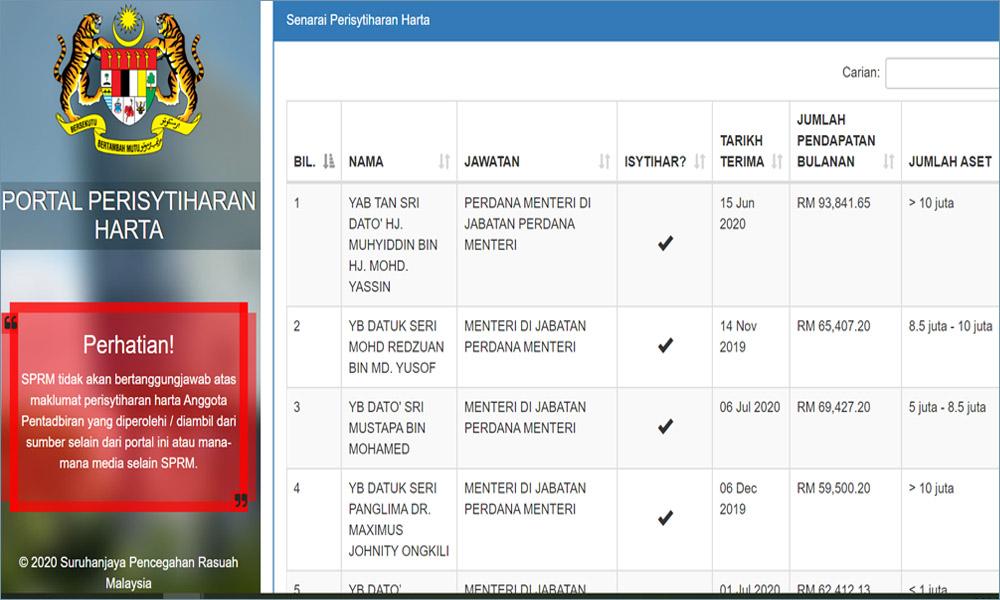
The latest reforms expand what must be declared rather than creating an entirely new obligation.
Whether they succeed will depend less on the wording of the circular than on consistent monitoring and enforcement.
The circular itself does not expressly establish a comprehensive verification framework.
Declarations are only as useful as the systems that verify them.
Next challenge: States
There is, however, one important limitation. These reforms currently apply only to federal public officers.
The PSD has extended the revised framework to state public services, statutory authorities, and local authorities, but adoption ultimately rests with each respective state government.
That should happen sooner rather than later.
State governments oversee some of Malaysia’s most valuable public assets, particularly land.
Senior state officials also sit on the boards of state-owned enterprises, statutory bodies, and government-linked companies, making decisions involving land, procurement, investments, and public funds.
If some states adopt the revised framework while others do not, public officers performing similar roles could face very different disclosure standards.
Transparency should not depend on where an official works.
Identifying beneficial ownership will not eliminate corruption. No disclosure system can.
But by looking beyond the name on the paperwork, Malaysia has taken an important step towards making hidden financial interests much harder to hide.
The next test is whether every level of government decides to follow. - Mkini
S VINOTHAA is a member of the Malaysiakini team.

No comments:
Post a Comment
Note: Only a member of this blog may post a comment.