


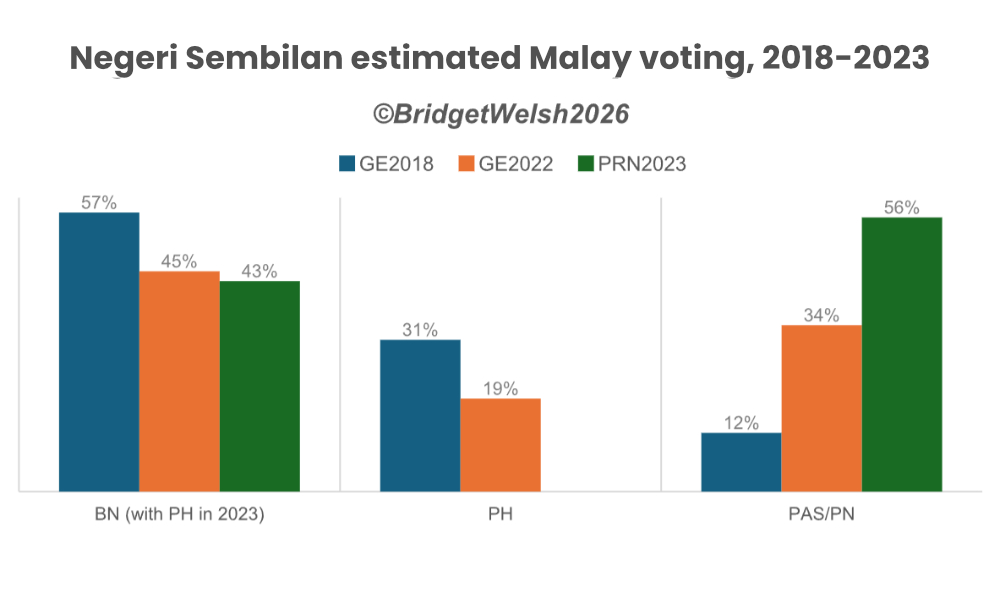
Malays in Negeri Sembilan – in their diversity of backgrounds and cultural practice of adat perpatih – comprise 57 percent of the Negeri Sembilan electorate.
Of the 36 seats, 23 comprise a Malay majority, with 11 of these having more than three-quarters Malay voters.
A big Malay swing such as occurred in Johor polls last month, nearly 40 percent to BN, will be decisive in determining who will govern the state.
In Negeri Sembilan, how that swing will be distributed among the different coalitions and across seats will be crucial.
With the non-contest agreement between BN and Perikatan Nasional impacting seat candidacy and seen to strengthen both coalitions in the Malay ground through vote transferability, the focus has been on positioning these two coalitions to the disadvantage of Pakatan Harapan.
The situation is more complicated on the ground. The entry of Bersatu as a new coalition – as argued below as a potential spoiler in a few seats – and divisions over ongoing adat issues and some resistance to vote transferability due to traditional party loyalties make securing the Malay ground more complex.
Understanding the base battles of Malay politics in Negeri Sembilan offers insights.
Fragmented Malay electorate
Let’s start with the background of the Malay voting in the state. What has happened is that in a matter of five years, the majority of the Malay vote moved from Umno/BN in 2018 to PN in 2023.
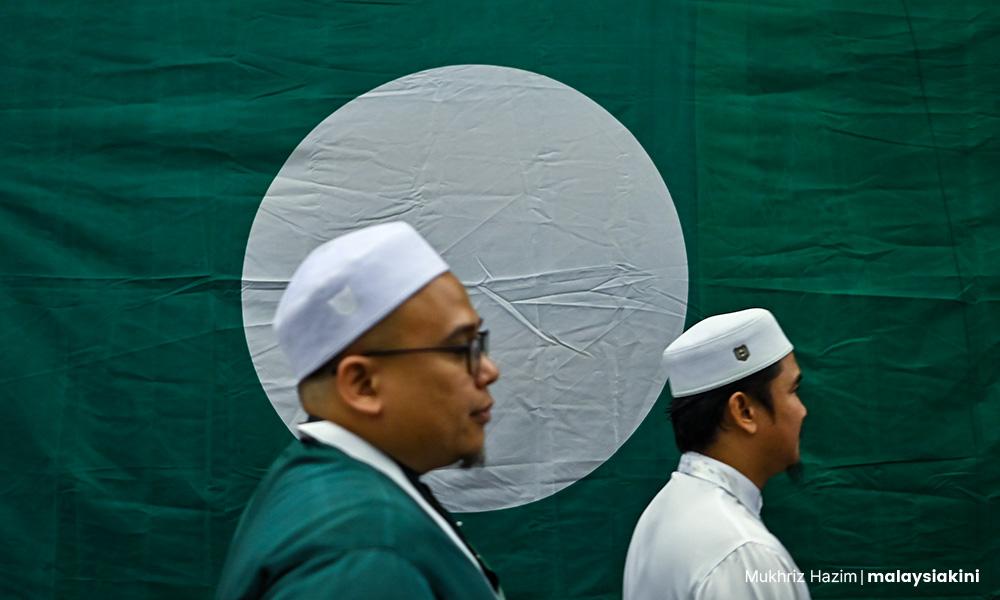
This “Green Wave” factor underscores the desire for an electoral agreement between the two coalitions. In 2023, PAS won seats in the state for the first time – three of them, with Bersatu winning two others.
Importantly, in the 2023 state election, when BN entered into a seat agreement with Harapan – the coalition did not see a significant increase in Malay vote share – in fact there was a small decrease.
Electorally, in the last state election, working with the Madani government did not improve the coalition’s position with the Negeri Sembilan Malay electorate.
Another feature of Malay voting has been the limited support of Malays for Harapan. This is despite PKR leading the state government since 2018.
Harapan support among the Malay electorate dropped from an estimated 31 percent in 2018 to an estimated 19 percent in 2022, lower than the support in neighbouring Selangor.
This lower level of Malay support makes Harapan more dependent on non-Malay support, especially in the mixed seats, and more vulnerable in Malay majority seats such as Sikamat and Ampangan, two seats Harapan has won multiple times.
PKR has won Sikamat for four terms, with Ampangan held for two terms. Both seats this election are highly competitive.
Adat perpatih electoral impact
One reason is the adat factor. The adat perpatih crisis is shaping voting, although in some seats more than others. The adat factor shapes outcomes primarily in the seats where these customs are practised, more than half of the seats. Three adat-related electoral dynamics are emerging.
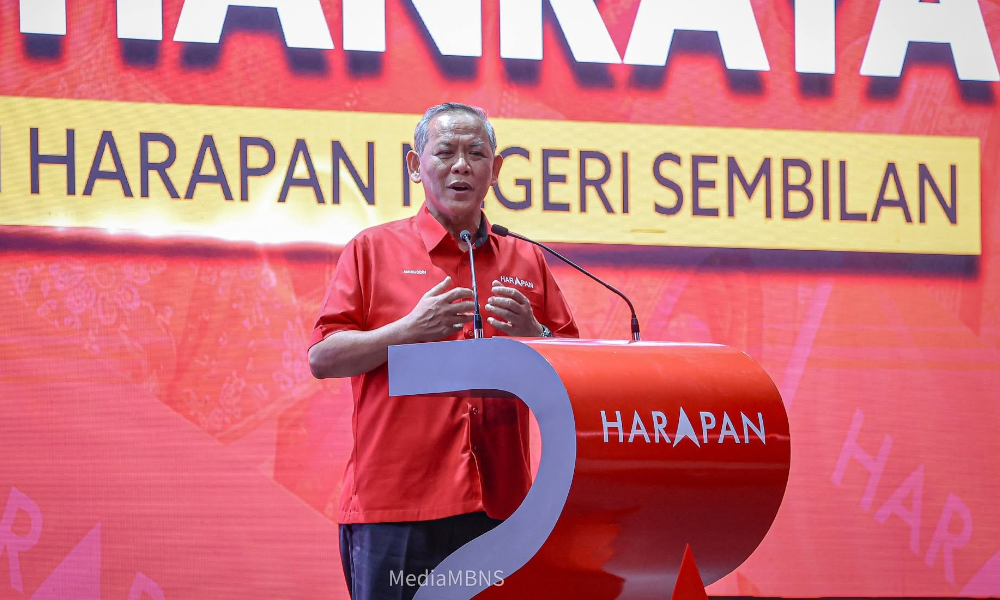
First, the crisis has put Harapan on the defensive. Caretaker menteri besar Aminuddin Harun’s move from Sikamat, where adat is practised as part of local luak institutions, to Linggi, where it is not, has heightened questions about his handling of the adat crisis.
Second, as Negeri Sembilan is a closely knit society, with small margins impacting electoral outcomes and ties to adat royal elites extending into communities, in some seats such as Klawang, loyalties to different elites and views of how they responded to the crisis are shaping voting.
Third, with Umno/BN’s agreement with PAS/PN, this has impacted traditional resistance among voters against PAS over adat. PAS is contesting in seats with strong adat perpatih roots, such as Ampangan, and stands a chance of making gains.
For Parti Wawasan Negara, which is seen as openly taking a stand on the crisis by advocating for one of the local royal leaders, this issue has been more divisive among voters.
Malay unity pressure
Differences over adat coincide with the “Malay/Muslim unity” narrative, which frames the Umno/BN-PN agreement, especially for PAS/PN.
This narrative has long been pushed by its advocates, feeding on racialised insecurities of supposed threats from other ethnic groups while simultaneously portraying the message as a means to strengthen the Muslim community.
At the same time, the “Malay/Muslim unity” narrative channels evolving Malay nationalist sentiments, bringing in a sharper religious divide and heightening concerns about exclusion of other communities.
Malay ethnic mobilisation is not new, but in this campaign it is coming at a time after multiple elections have showcased ethnic polarisation in voting and ethnic mobilisation has raised sensitivities among voters, across the political divide.
Some Malay voters embrace the narrative, while others express disquiet and unease with its divisive effects on Negeri Sembilan’s multi-ethnic society.

Reversing a Felda swing?
The question is whether this narrative will lead to unity among the divided Malay electorate. Recent election results in the Malay voter base showcase divisions.
There are two areas where the swings have been most evident, issues I highlighted in my analyses of the 2023 state polls campaign. These include the Felda areas and security vote.
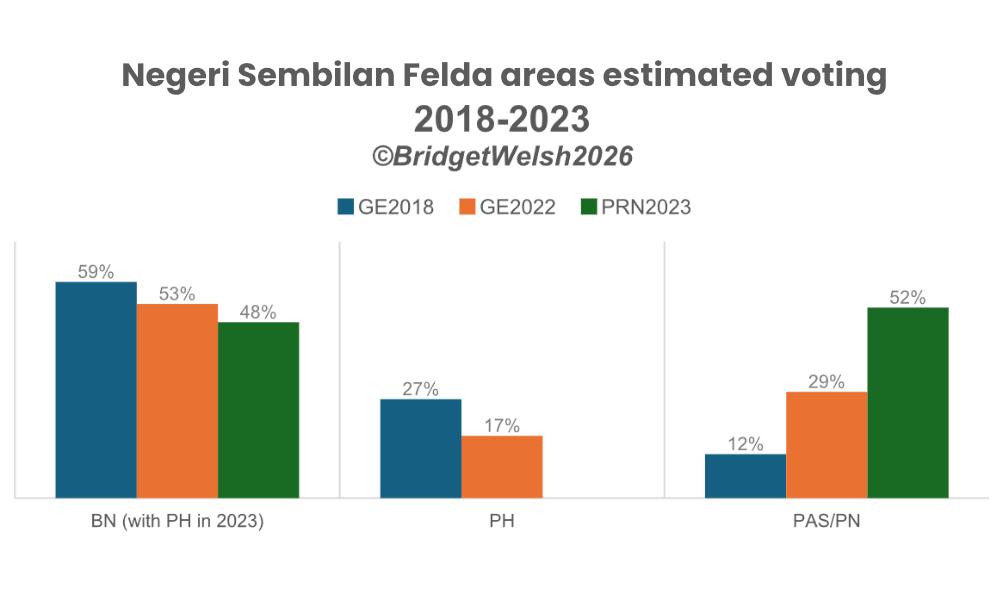
In the 49 Felda settlements of Negeri Sembilan, the vote has become evenly split, with the 2023 polls analysis showing the most swing towards PN, reaching an estimated 52 percent of Malay Felda voters.
Felda settlements in Negeri Sembilan were established from 1963 in Sendayan, where they set up one of the most multi-ethnic settlements in the country.
Sendayan has gone through significant redevelopment, as part of the corridor programme to expand housing and connectivity, especially with Port Dickson under the Mohamad Hasan (Tok Mat) development priorities for the state. This focus on interrupting earlier governance plans has been an issue raised on the ground.
The main Felda schemes were opened in the late 1970s, known as the "Wilayah Raja Alias" after Tun Raja Alias Raja Ali, a Negeri Sembilan-born former Felda chairperson.
Negeri Sembilan's schemes cluster almost entirely in three districts - Jempol (Palong, Raja Alias, Serting Hilir, Lui complex), Tampin/Gemas (Bukit Jalor, Bukit Rokan, Jelai, Pasir Besar, Sungai Kelamah), and Jelebu (Titi 1 and 2, Pasoh).
The Raja Alias cluster itself (originally called Gugusan Serting) grew into Bandar Baru Serting, now renamed Bandar Seri Jempol - and one of the seats that PAS captured in 2023. Bersatu captured another Felda seat in that election, Gemas.
There are nine seats with a large share of Felda voters - Pertang, Chennah, Sungai Lui, Palong, Jeram Padang, Serting, Gemas, Gemencheh, and Senaling. There are 112,000 estimated Felda voters, across multiple generations, with many of the voters working and living outside of these areas.
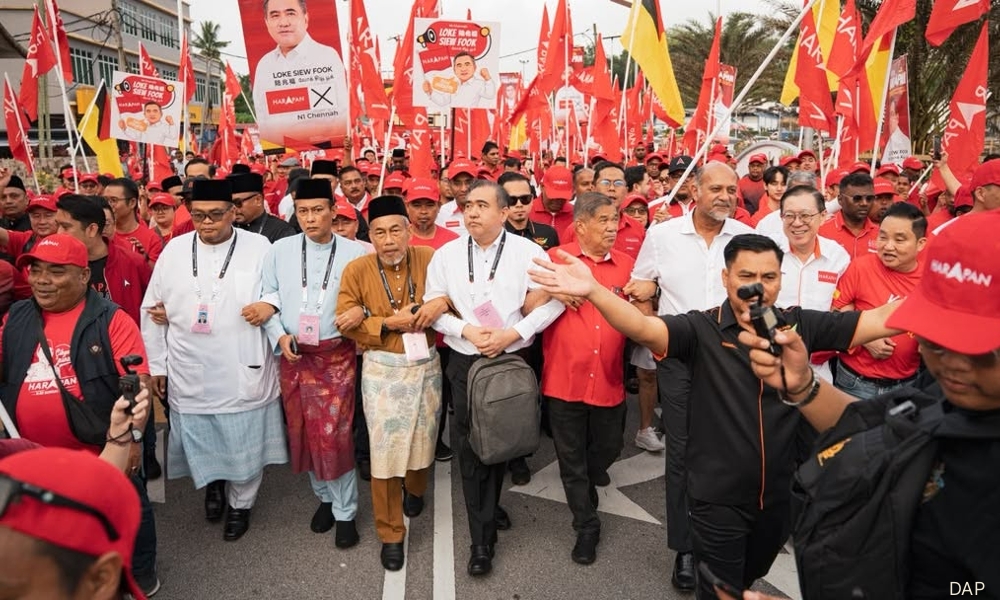
Of these seats, the most competitive is Chennah, where DAP’s Anthony Loke is contesting. How unified the Felda voters are, and how many will return to vote, will make an impact on the results.
Security vote watch
Another important Malay majority group is security forces. While postal votes are only 13,263, their distribution matters in Negeri Sembilan’s close races with lower numbers of voters.
There are five seats where the security force vote will be the most salient – Bagan Pinang, Gemas, Linggi, Temiang and Rahang. The security vote contributed to PAS’ comfortable 3,426 majority win of Bagan Pinang in 2023, where it made up the largest share and numbers.
Of the seats to watch in the coming polls are, of course, Bagan Pinang, followed by Linggi, Temiang and Rahang.
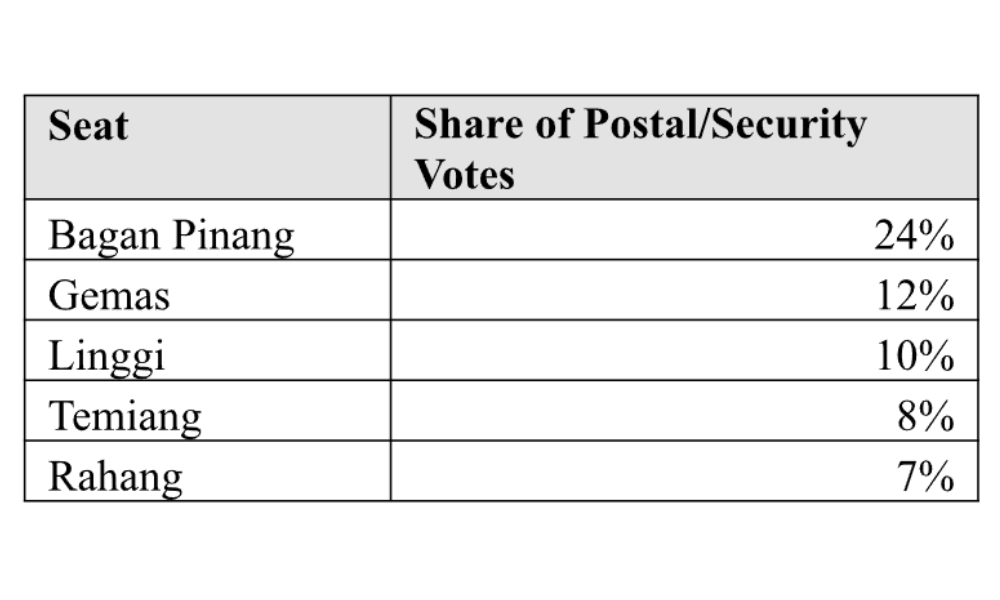
Johor 2026 voting patterns show that the security vote was unified in its support for BN, overwhelmingly so. We will see whether the impact of potential BN-PN vote transferability continues in this election.
Bersatu spoiler?
There is one other factor to highlight. Given Bersatu’s performance in Johor, expectations are not high for Muhyiddin Yassin’s party. Many are likely to lose their deposits. Yet, it cannot be dismissed.
Unlike other smaller parties, it has reconfigured itself into a new coalition and, in the process, found some resources. In Negeri Sembilan, they have a significantly improved flag presence and operating machinery, although uneven across the 24 seats their coalition is contesting.
Importantly, some of their individual candidates have strong local standing, individual wealth and greater access to resources, including their incumbent in Labu.
Their electoral effect – as Parti Bersama Malaysia showed in two seats and Muda in one seat in Johor – can make for closer contests and potentially split the Malay vote, highly impactful in close contests. The competitive seats to watch in this regard are Ampangan, Sikamat, Labu, Jeram Padang, among others.
There is another factor as well, where Bersatu is running against its former Wawasan Negara members under the PN flag/coalition. Many voters remember the party candidate as a Bersatu leader, in places where Bersatu is now running.
Seats such as Klawang and Gemas will be interesting to watch in this regard. (Not to be left out is the challenge coming from Bersatu-coalition umbrella Indian candidates in seats with a large number of Indian voters, highlighted in Part 1.)
Bersatu’s coalition future will be shaped by this election, as much as it reveals patterns of Malay voting.
A complex picture
On the ground, ethnic voting practices mesh with generational differences and greater attention to candidates. Ethnic loyalties – despite the mobilisation – combine with other factors, not least of which is the power of incumbency and resources of Harapan-led government around their Kekal (Remain) campaign as well as the resources of all the campaigns.
The battle over social media, especially impacting voters living/working outside of the state, is even more intense. Inevitably, this election is as much national as it is local.
The battle for the Negeri Sembilan Malay base is fierce. For some parties such as Bersatu and for candidates in high-stakes seats, it is a matter of survival. For others, it is about positioning in the national landscape, seat numbers and legitimacy representing the Malay community.
In short, Malay voting remains multifaceted despite the “unity” narrative, with Negeri Sembilan’s polls showcasing different patterns of voter engagement and with persistent fluidity a week out from polling day in a quiet but still heated and highly competitive campaign. - Mkini
BRIDGET WELSH is an honorary research associate of the University of Nottingham’s Asia Research Institute and a senior associate fellow at The Habibie Centre. Her writings can be found at bridgetwelsh.com.
The views expressed here are those of the author/contributor and do not necessarily represent the views of MMKtT.

No comments:
Post a Comment
Note: Only a member of this blog may post a comment.