


In the days leading up to the Negeri Sembilan state election, Prime Minister Anwar Ibrahim apologised for referring to certain Hindu temples as "illegal" earlier in the year.
This apology was meant to placate and fight back the support of Indian Malaysian voters in the elections, referencing a crucial time in Malaysia's public sphere where calls from Malay ethnonationalists to destroy and remove all these so-called illegal temples were made.
At the time, Anwar's poorly phrased need to regulate such temples further increased the backlash the Indian community faced.
The issue of "illegal Hindu temples" was centred around allegations that most Hindu temples were built on "illegal" land in Malaysia.
The first major event of this controversy occurred in early 2025, when the 130-year-old Dewi Sri Pathrakaliamman temple located at Jalan Masjid India Kuala Lumpur was ordered to be relocated to make way for the construction of a Madani mosque to celebrate the prime minister.
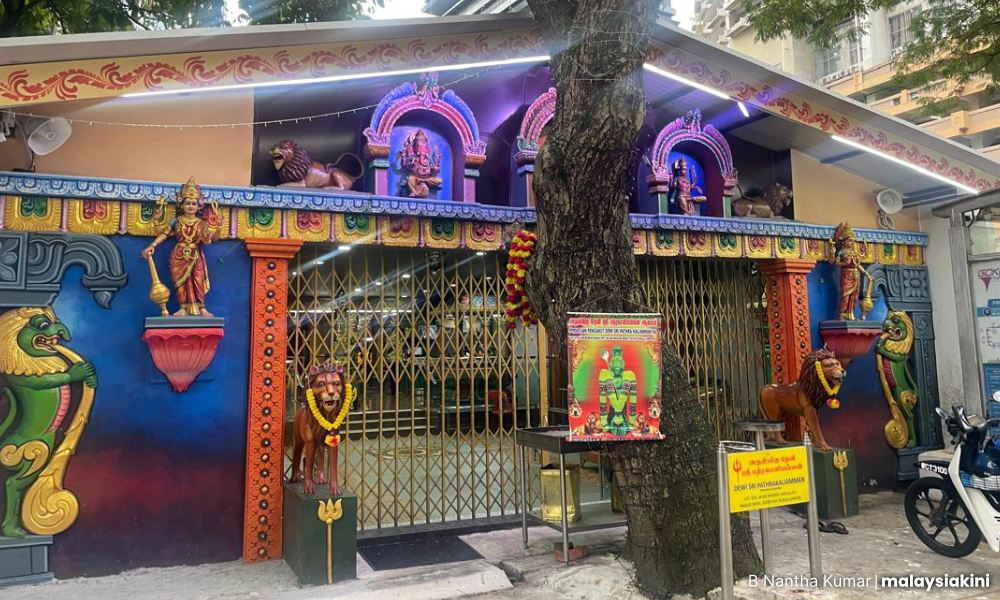
The issue ignited a long-standing issue between the majority Malay community and minority Indian community; the temples often lacked documentation or ownership of the land, but the Indian community argues that these temples were only made "illegal" due to colonial-era discrimination and subjugation that persisted past independence.
Even so, the Madani government has not done any favours to the Indian Malaysian community, with Anwar providing fuel for Malay ethnonationalists.
Very famously, the prime minister used the pejorative "k*ling" (often used as a slur to denigrate Malaysian Indians) in a speech in 2023 and later apologised and justified its use, citing historical text.
This in turn normalised the use of the term in digital spaces.
Critical discourse analysis
This paper is based on a critical discourse analysis of Malaysian X posts in the past two years, but with a strong focus on the political discursive spaces between February and March 2026.
Focusing on recent events, posts from accounts based around the rallying hashtag of #RobohKuilHaram (Demolish Illegal Hindu Temples) were gathered initially in February to identify influential accounts that were primarily pushing these Malay supremacist values and rhetoric.
We identified about 13 accounts that were regularly posting tweets on these issues (some tweeting a dozen threads a day) and then monitored their activity on a weekly basis.
The strategies employed by these accounts were not too dissimilar to what has been observed in the past, with these accounts relying heavily on overwhelming discursive spaces and bullying dissenting voices into submission or retreat.
This is known as the Spiral of Silence effect, where a small group with enough force and presence can overwhelm majority voices and suppress others.
The strategy to overwhelm is through constant posting of tweets and replies, often aggressively and relentlessly.
They make heavy use of memes and repeated keywords and phrases to flood X threads. The meme images were often created using artificial intelligence, which allowed them to be produced in large quantities and quickly.
This enabled these accounts and their followers to cyberbully at scale through mass replying and posting. Dissenting accounts were often attacked relentlessly through direction from several key accounts that led this charge and numerous faceless bot accounts with the hopes of forcing these accounts to abandon these discussions or turn private.

These Malay supremacy accounts mirror the use of other far/alternative right-wing coded groups around the world that play up the same rhetoric: the status quo or the position of the mainstream majority is being threatened by an outsider, other or minority.
These are hinged on arguments based on the majority having an inherent right to the land or to be the dominant majority and to remind other minorities to be mindful of their place and not threaten the status quo.
Islam under attack
The primary rhetoric that is used, mainly to deflect any accusations of this being racially motivated, is that this is an issue of Islam under attack or being disrespected by the Hindu minority.
It is also here that the same tactic that was used against other migrant groups is also used against Indian Malaysians: accusations that these "foreign" minority groups are infiltrating Malaysian spaces with the intent to usurp the local majority and to make Malay Muslims a minority in their own country.
The oft-repeated narrative is that Hindus here do not respect local laws and are all criminals. This is evidenced by illegal temples being erected without a care for who owns the land.
While the primary goal is to build public support among the Malay majority against these minorities, it does lend a lot of its support and credibility to the Malaysian government, primarily Anwar.
Lackadaisical treatment
The prime minister has been accused over the last couple of years of not just being lackadaisical in his treatment of Indian Malaysians, but in perpetuating many behaviours that embolden these supremacist groups.
As such, many Malay supremacist accounts and their supporters often hinge their arguments against the Indian Malaysian community by highlighting the community's alleged disdain and disrespect for the rule of law and, transitively, the legitimacy of the government.
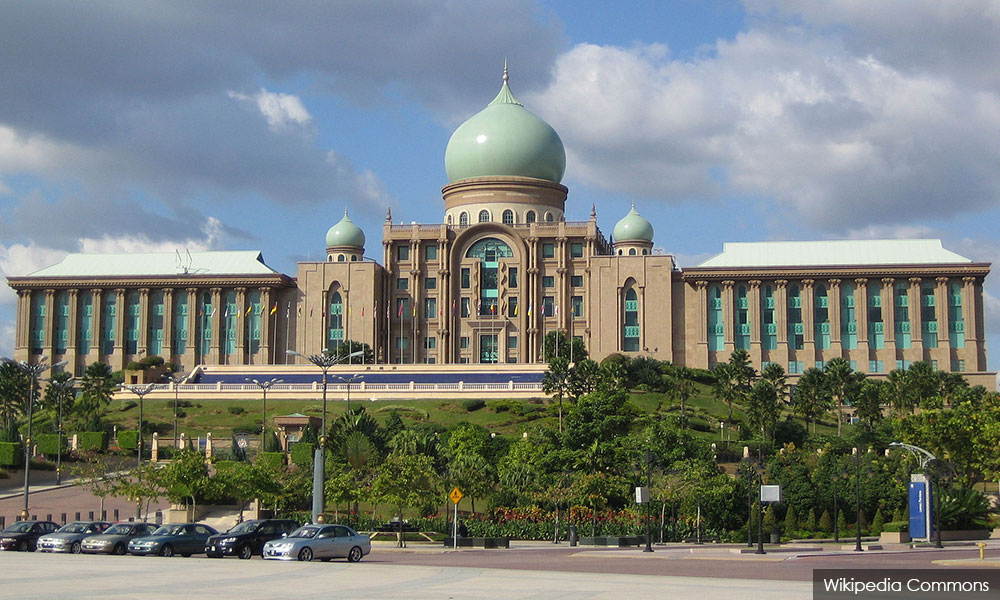
Many of the calls to action prescribed in these tweets are aimed towards the Madani government, urging it to take more direct action or risk being seen as a lame duck administration that is unable to enforce its own laws and policies.
The illegal temple situation was just the start of the latest anti-Indian sentiment that has dominated X for almost four months. It has only slowed down in intensity as Malay ethnonationalists have shifted their attention to the Rohingya community.
The government has been slow in responding, but has called for the arrests of many public influencers and activists who are involved in stoking these racial tensions.
However, many of the supremacist accounts identified in this study continue unabated and are unrelenting in propagating this harmful and divisive rhetoric.
Malaysian governments have always been weak at taking down anonymous accounts, no matter how dangerous they may act. As such, these accounts act with impunity, spreading vile, hateful, and inflammatory rhetoric daily, with the only pushback coming from concerned Malaysians willing to fight back against these supremacists.
While it is unclear who the backers of these accounts are (very likely political, but impossible to verify), they should not be allowed to operate so openly and flagrantly.
If the government is serious about keeping the peace and about protecting minorities, it has to take a strong stance to finally institute digital hate speech legislation and policies.
BENJAMIN YH LOH is a senior lecturer at the School of Media and Communication at Taylor’s University, an associate with the Asia Centre in Bangkok, and a visiting fellow with the Iseas Yusof Ishak Institute in Singapore. - Mkini
GAAYATHREY BALAKRISHNAN is a feminist researcher, gender consultant, and co-founder of Antropika Consultancy who focuses on marginalised communities, gender issues, and social advocacy.
The views expressed here are those of the author/contributor and do not necessarily represent the views of MMKtT.

No comments:
Post a Comment
Note: Only a member of this blog may post a comment.