


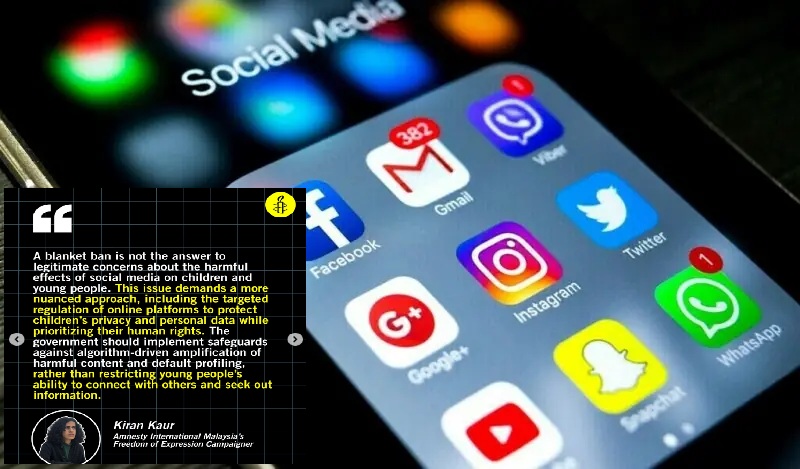
GOVERNMENTS around the world are struggling with how best to protect children in the digital age. From cyberbullying and harmful content to excessive screen time, concerns about young people online are real and growing.
But as policymakers search for solutions, one idea that continues to surface is a blanket ban on social media for children under 16.
Recent debates in the UK’s House of Commons show increasing scepticism toward such an approach. Lawmakers have raised concerns about enforcement, privacy risks and the broader impact on young people’s digital participation.
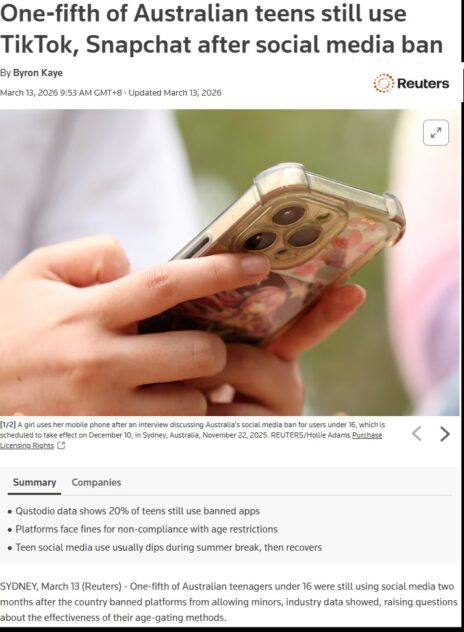
Australia offers perhaps the most instructive case study.
While the Australian government has explored strict age-based restrictions for social media access, the policy debate there has also exposed significant practical and economic complications.
These lessons are highly relevant for Malaysia as policymakers consider how best to regulate digital platforms while protecting young users.
Enforcement is biggest challenge
One of the clearest lessons from the Australian debate is that enforcing a blanket ban is far more complicated than it appears.
Age restrictions rely heavily on accurate age verification, yet many platforms struggle to reliably confirm a user’s age. In practice, young users can easily bypass restrictions through VPNs (virtual private network), borrowed accounts or simply providing inaccurate information.
Australia’s own policy discussions have acknowledged that strict bans may drive young users toward unregulated platforms or underground digital spaces where oversight is far weaker.
Malaysia faces an even more complex enforcement environment. With widespread smartphone penetration, cross-border digital services and millions of digitally savvy young users, implementing a rigid age ban would likely prove difficult to enforce.
The risk is that such policies may create the illusion of protection without addressing the underlying challenges.
Age verification raises serious privacy concerns
Another lesson emerging from international debates is the growing concern around privacy.
To enforce age limits, platforms may be required to collect sensitive information such as government identification numbers, facial recognition scans, or biometric data.
While intended to protect minors, these measures could create vast databases of personal data belonging to children and teenagers.
This introduces new cybersecurity risks. Large repositories of sensitive information inevitably become attractive targets for cybercriminals.
Malaysia has already experienced several high-profile data breaches in recent years. Expanding mandatory identity verification across social media platforms could significantly increase the country’s digital risk exposure.
Protecting children online should not involve exposing their personal data to new vulnerabilities.
Unintended consequences for young entrepreneurs
Social media today is not just a space for entertainment. It has become a platform for learning, creativity, and entrepreneurship.
Many Malaysian teenagers use platforms such as Instagram, TikTok and YouTube to develop digital skills, build audiences and even run small online businesses. For some, social media serves as a first entry point into the digital economy.
Australia’s debate has highlighted concerns that blanket restrictions could limit these opportunities.
Restricting young people from participating in digital platforms may inadvertently undermine efforts to nurture the next generation of digital entrepreneurs, creators, and innovators.
For a country like Malaysia that is positioning itself as a regional digital economy hub, limiting early digital engagement may ultimately slow the development of digital talent.
Social media as educational tool
Another overlooked consequence is the role social media plays in education and community building.
Teachers, educational institutions, and community groups increasingly use social media to engage students, share knowledge, and promote educational initiatives.
A rigid ban risks cutting off these channels of engagement, particularly in a country where digital platforms often serve as accessible learning spaces beyond the classroom.
The challenge is not simply limiting access but ensuring that young people develop the critical thinking and digital literacy needed to navigate online environments responsibly.
International experience increasingly suggests that blanket bans are not the most effective solution.
More balanced approaches focus on strengthening parental controls, improving digital literacy education and increasing platform accountability for harmful content.
Parents remain the most important line of defence when it comes to guiding children’s online behaviour. Policies that empower families with tools, education and transparency are likely to be far more effective than sweeping prohibitions.
Child protection
Technology platforms must also play a greater role by improving content moderation systems, strengthening child protection safeguards and providing clearer reporting mechanisms.
The real policy challenge is not whether children should be online but how they can participate safely.
Malaysia’s digital future depends on a generation that is digitally capable, informed and resilient. Blanket restrictions that attempt to exclude young people from digital platforms risk undermining that goal.
Protecting children online is essential. But protection must go hand in hand with empowerment.
Rather than banning young people from social media, Malaysia should focus on building a safer digital ecosystem – one that equips young users with the skills, tools and support needed to navigate the online world responsibly.
Because in the digital age, the answer is not to keep the next generation offline. It is to prepare them to thrive online. – Focus Malaysia

No comments:
Post a Comment
Note: Only a member of this blog may post a comment.