


When news reports mention Hezbollah, many Malaysians recognise the name but do not fully grasp what it represents.
It is not a state, yet it fights like one. It is not merely a political party, yet it sits inside the government. It is not only an armed movement, but it also runs schools, clinics and welfare networks.
Hezbollah survives in the blurred space between militia and state, and that is exactly why its story matters far beyond Lebanon.
To understand Hezbollah, one must first understand Lebanon, a country in which the political order has long been divided along sectarian lines. Large sections of the Shia Muslim population felt neglected for decades, both politically and economically.
When Lebanon collapsed into civil war in 1975, communities withdrew into their own camps, and militias emerged not only from ideology but from fear, insecurity, and the instinct to survive.
The turning point came after the 1979 Iranian Revolution and the 1982 Israeli invasion of Lebanon.
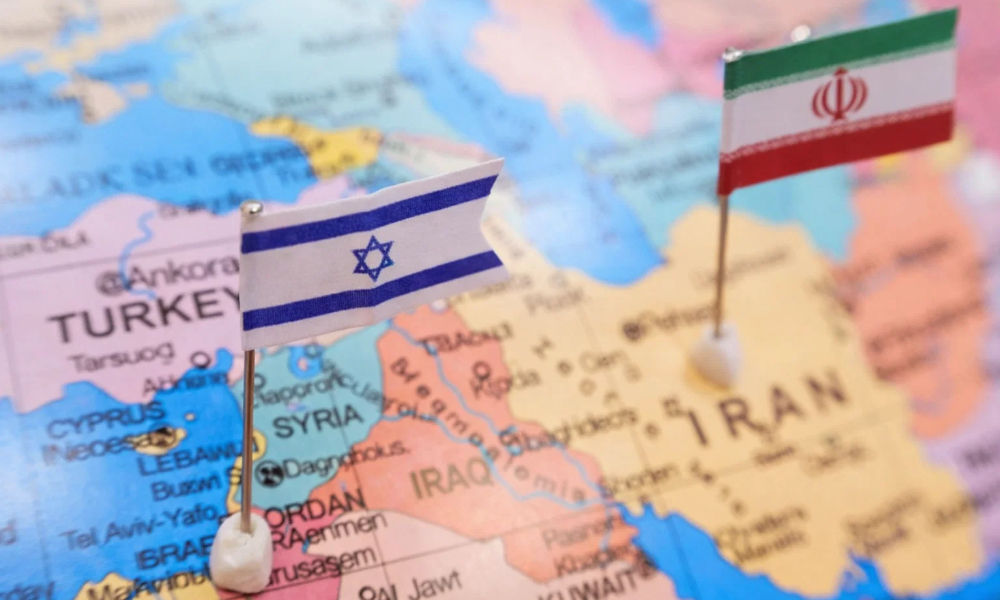
Iran saw an opportunity to build influence by backing Shia fighters in southern Lebanon. Out of that environment, Hezbollah emerged and gradually consolidated itself into a movement that mixed armed struggle, political participation, and social services.
How Lebanon got trapped
At the beginning, Hezbollah presented itself as a resistance force against Israeli occupation. In parts of southern Lebanon, many saw it as a protector where the state appeared absent or ineffective.
But over time, the movement became far more than a resistance group. It built a military force of its own, entered parliament and entrenched itself socially in areas where the state struggled to deliver basic services.
That dual role remains central to Hezbollah’s durability. Where the state falters, it fills the gap.
For supporters, loyalty is often practical before it is ideological. Yet that same arrangement weakens the state further, because the more communities depend on parallel structures, the less authority the state retains over force, welfare, and political legitimacy.
This is the trap Lebanon fell into. It is also the lesson other countries should study carefully.
From proxy skirmish to open warfare
What separates Hezbollah from ordinary political actors is its military capability. It has long maintained a disciplined armed wing, battle experience, external backing, and a structure that allows it to operate partly within civilian environments, which makes direct military confrontation more difficult.
But the current reality is more complicated than the older image of an ever-rising force. Hezbollah remains powerful, yet it is also under heavier strain than before. It has suffered military losses, political pressure, and growing domestic pushback inside Lebanon.
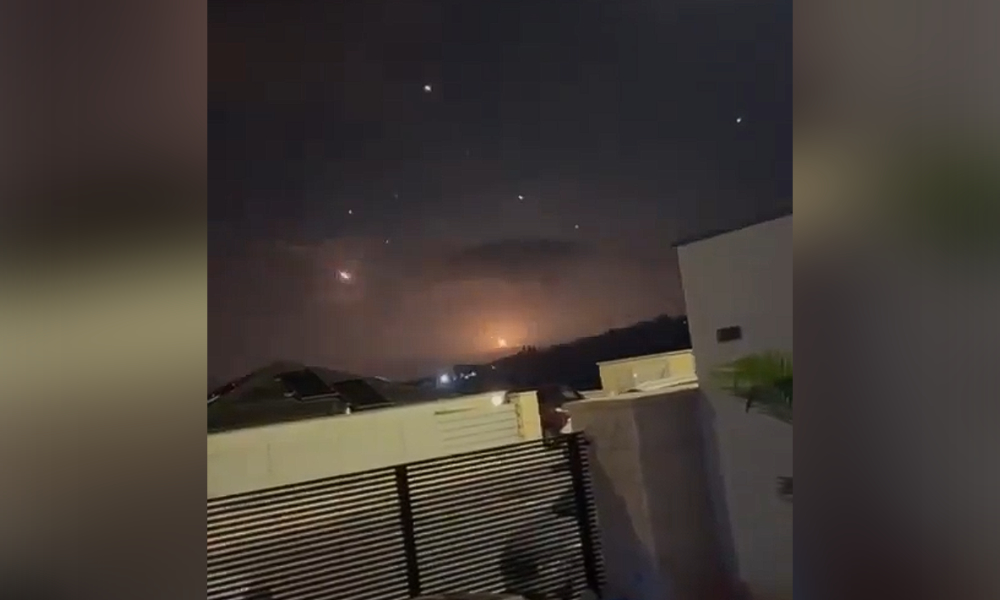
Its relationship with Iran is still decisive. Hezbollah functions as one of the most important elements in Iran’s wider regional network, allowing Tehran to pressure adversaries without always relying on direct state-to-state confrontation.
But that line has now blurred. The conflict is no longer only about proxies acting at a distance. Direct clashes involving Iran, Israel, and the United States have intensified, while Hezbollah has again become an active front in a wider regional war.
That is why it is no longer enough to describe escalation as a future risk. It is already happening.
Hezbollah has resumed major exchanges of fire with Israel. Israeli strikes have expanded inside Lebanon, including Beirut and the south.
Lebanon’s government has publicly moved against Hezbollah’s military activities, even as the group remains deeply embedded in the country’s political and social landscape.
In other words, the crisis has moved beyond theory. The region is already living through the consequences of a proxy structure that has become too deeply rooted to be controlled easily.
The danger of spillover is also no longer hypothetical. Violence tied to the wider conflict has spread across parts of the Gulf, with attacks, retaliatory strikes and maritime threats reinforcing the sense that no front remains truly isolated once alliances and proxy networks are activated.
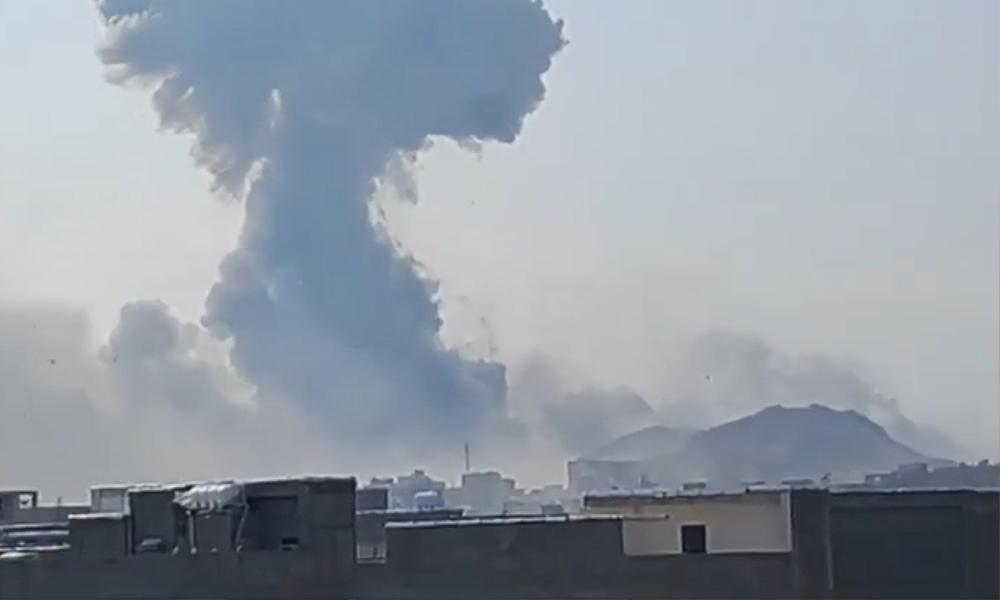
Once that happens, containment becomes far harder, and the economic consequences spread almost immediately.
That matters because West Asia sits at the centre of global energy flows. Instability in the region affects oil routes, shipping security and insurance costs, which in turn push up prices around the world.
Even countries far from the conflict, including Malaysia, feel the consequences through higher energy costs, inflationary pressure, disrupted supply chains and broader uncertainty in trade and finance.
Another lesson lies in information itself. In wartime, truth is contested. Narratives move quickly, especially on social media, where emotion often outruns evidence. Images circulate without context, claims harden into beliefs, and public opinion can shift before facts are established.

This is part of modern conflict, too. War is fought not only with missiles and drones, but with stories and psychological pressure. That makes social resilience just as important as military preparedness.
Not letting non-state actors take root
For Malaysia, the most important lesson is not to choose emotional sides in distant conflicts, but to understand the structural conditions that produce groups like Hezbollah in the first place.
They grow where institutions are weak, communities feel insecure, grievances are left unresolved and outside powers find openings to intervene. Once a non-state actor becomes the provider of security, welfare, and identity, the state’s own authority begins to shrink.
This is why the lesson is not just about Lebanon. It is about state capacity. It is about national cohesion. It is about ensuring that citizens continue to believe the law, the government and public institutions are strong enough to resolve disputes before alternative centres of power emerge.
Once the monopoly over force begins to erode, restoring it becomes one of the hardest tasks a nation can face. Lebanon today is living proof of that difficulty.
Malaysia must pay attention precisely because it is a plural society. Lebanon’s sectarian fragmentation created fertile ground for militias. When people begin to identify primarily with factional loyalties rather than the nation, external actors gain room to manipulate local fractures.
Malaysia’s long-term strength has always depended on managing diversity through institutions, law, and a shared national compact. That is not merely a social aspiration. It is a strategic necessity.
Hezbollah’s story, then, is not only about militancy or ideology. It is about what happens when weakness in governance, unresolved grievances and external intervention come together over time.
What fills the vacuum may first appear useful, even protective. But once it hardens into a parallel power structure, the cost to the state becomes immense.
The most important lesson is therefore preventative. Peace is not protected by geography alone. It is protected by strong institutions, inclusive governance, credible law enforcement and a society that refuses to let differences turn into permanent fault lines.
If those foundations weaken, the vacuum will not remain empty for long. And once a country allows its own version of Hezbollah to emerge, reclaiming full state authority becomes one of the hardest struggles any nation can face. - Mkini
MAHATHIR MOHD RAIS is a former Federal Territories Bersatu and Perikatan Nasional secretary. He is now a PKR member.
The views expressed here are those of the author/contributor and do not necessarily represent the views of MMKtT.

No comments:
Post a Comment
Note: Only a member of this blog may post a comment.