


Agriculture and Food Security Minister Mohamad Sabu has defended the government’s call for the public to grow their own vegetables, saying the initiative is part of a broader strategy to strengthen Malaysia’s food security.
In a Facebook post, Mohamad responded to criticisms from Tasek Gelugor MP Wan Saiful Wan Jan, whom he referred to only as “an MP who was expelled from his party”.
“I read a news report about an MP who was expelled from his party, claiming that the suggestion for people to grow their own vegetables will not resolve the country’s food security issue.
“Indeed - two chilli plants will not lower global oil prices. A pot of kangkung will not stabilise global urea prices. I know that too,” he said.
The minister said his ministry has been monitoring developments in the Middle East geopolitical conflict, which could disrupt global supply chains.
“Based on the monitoring conducted so far, I can assure that the country’s food supply remains stable and sufficient,” he said.
Fortifying food supply
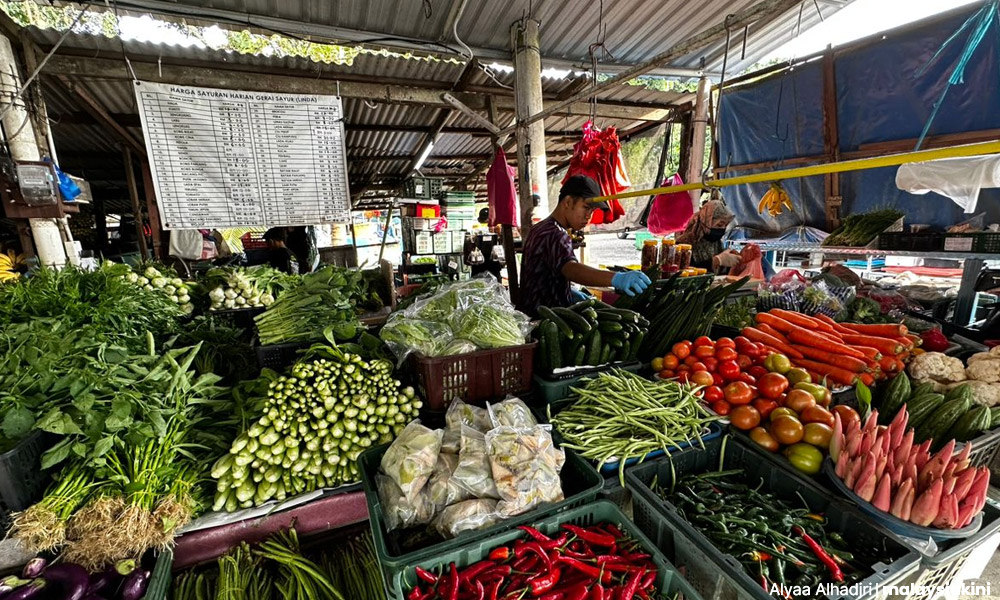
On Friday, Mohamad said ministry staff who live on landed property will be expected to grow vegetables at home as part of Putrajaya’s move to fortify the nation’s food supply amid the global conflict.
Separately, MCA deputy organising secretary Kang Meng Fuat also described Mohamad’s suggestion for home gardens as extremely irresponsible, shifting the burden of food issues onto the people.
He argued that as a minister, Mohamad is essentially receiving a salary for doing nothing, and this does not address the fundamental problems of national food security and price stability.
“Modern food security depends on a complete agricultural production system, a stable supply chain, a reasonable policy environment, and long-term investment in the agricultural industry.
“Shifting the responsibility to civil servants or ordinary citizens does not truly alleviate the current pressure of rising food prices,” stressed Kang.
He attributed challenges facing the country’s food supply to policy-level structural issues, such as delays in renewing B-class fishing boat licences and the latest Selangor government ban on pig farming.
“Without institutional reforms at the source of agricultural production, relying solely on encouraging household vegetable planting is clearly insufficient to achieve national food security goals,” he stressed.
Early measures taken
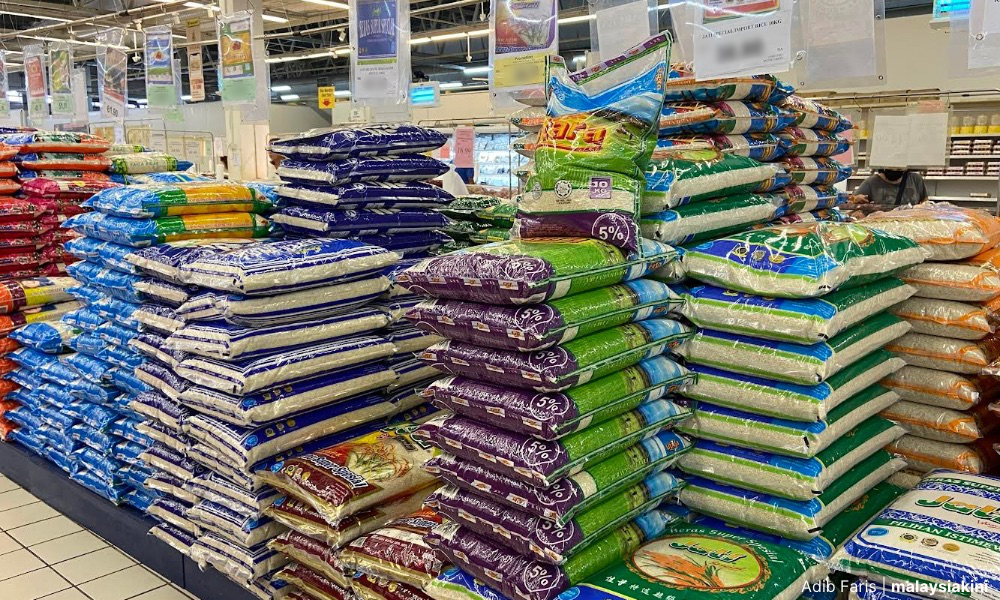
Mohamad, however, reiterated that the ministry has taken early risk-mitigation measures, including increasing the national rice buffer stock through Padiberas Nasional Berhad (Bernas) from 200,000 metric tonnes to 300,000 metric tonnes and engaging Petronas to ensure an adequate urea supply at controlled prices.
The ministry is also strengthening programmes under permanent food production parks, permanent food production zones, aquaculture industrial zones, integrated agricultural development areas, and farmers’ organisations to increase domestic output.
In addition, Mohamad said the ministry is drafting a crisis management action plan and proposing the establishment of National Food Production Zones.
“In the longer term, we will implement nine strategic directions, including domestic grain corn production, strengthening the ruminant industry, developing the Ayam Saga breed, increasing padi productivity, and reinforcing the aquaculture industry.
“All of these are part of a major plan. There are figures. There are allocations. There are KPIs,” he said.
“So when the ministry encourages the public to grow vegetables through programmes such as Kebuniti and Household Kitchen Gardens, it is not because the government lacks a strategy.
“It is because we understand that food security must be built in layers,” he said.
He cited countries such as Singapore, which uses less than one percent of its land for agriculture but invests heavily in urban farming under its “30 by 30” food production target, and Japan, which continues to encourage community farming despite having strong national food policies.
“Because in an uncertain world, self-reliance is not a slogan. It is a strategy,” he added. - Mkini

No comments:
Post a Comment
Note: Only a member of this blog may post a comment.