


For 55 years, the Universities and University Colleges Act (UUCA) has been teaching local university students the same lesson: do not ask difficult questions, do not organise without permission, do not assume that the rights you hold as citizens follow you through the campus gate.
Generations of students absorbed this lesson so thoroughly that most never tested it. The ones who did learned what the penalty looked like. I was one of them.
In April 2010, I was a second-year political science student at Universiti Kebangsaan Malaysia. Three coursemates and I travelled to Hulu Selangor for the by-election to observe campaign activities.
It was the kind of field exercise that would have been encouraged in any university system that valued independent inquiry.
Instead, it earned the four of us, the so-called “UKM4”, disciplinary charges under Section 15(5)(a) of UUCA and the threat of expulsion.
Anyone who had the misfortune of sitting next to me at dinner over the past 16 years has probably heard this story. My friends can recite it from memory and I suspect my wife has developed coping strategies.
In short, we challenged the law and the Court of Appeal declared it unconstitutional. I have been telling people that “we won” ever since.
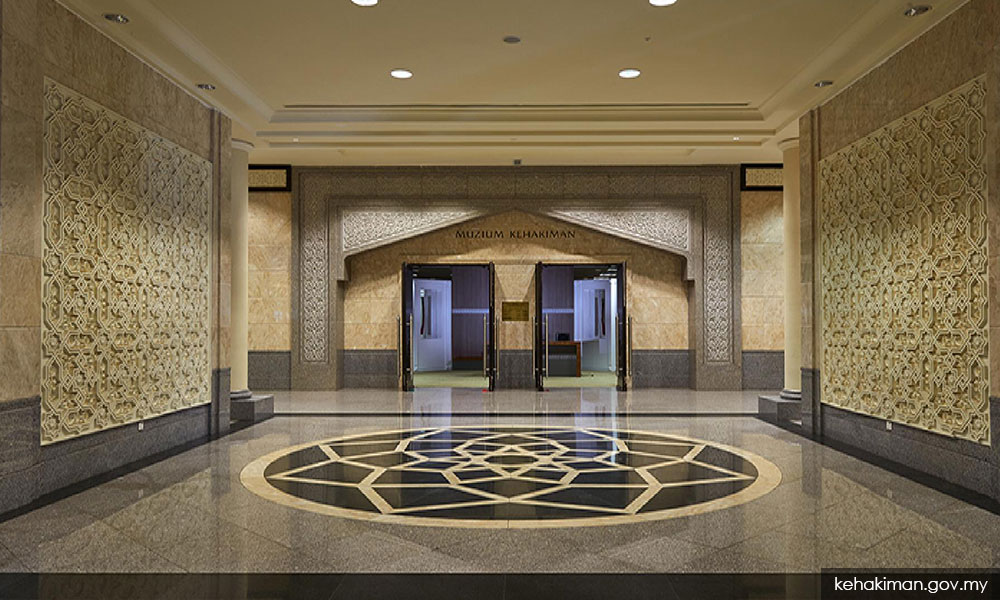
However, here is what my more honest friends have probably wanted to ask me for years: did it actually matter? Not for me personally, but for the system?
The provision prohibiting university students’ participation in politics was struck down but the architecture of control survived.
Seven amendments
At last count, there had been seven rounds of amendment across 55 years, each conceding that the previous amendment was insufficient, and the law is still here.
Despite every amendment, UUCA still confines permissible student expression to “academic matters”, still empowers university boards to decide which organisations are “unsuitable”, and still lets the vice-chancellor dissolve any student body considered “detrimental”.
These are still part of the law as it stands today, even after the most recent amendment in 2024.
Since 2021, 5.8 million post-Undi18 voters have entered the electoral roll and many of the university students whom the Federal Constitution now trusts to choose the government but whom UUCA still subjects to these restrictions on their own campuses.
And the lesson it teaches has not changed. This month alone, Universiti Malaya sent a cease-and-desist letter through an intellectual property law firm to Liga Mahasiswa Universiti Malaya, a student activist group, over the use of the words “Universiti Malaya” in their name.
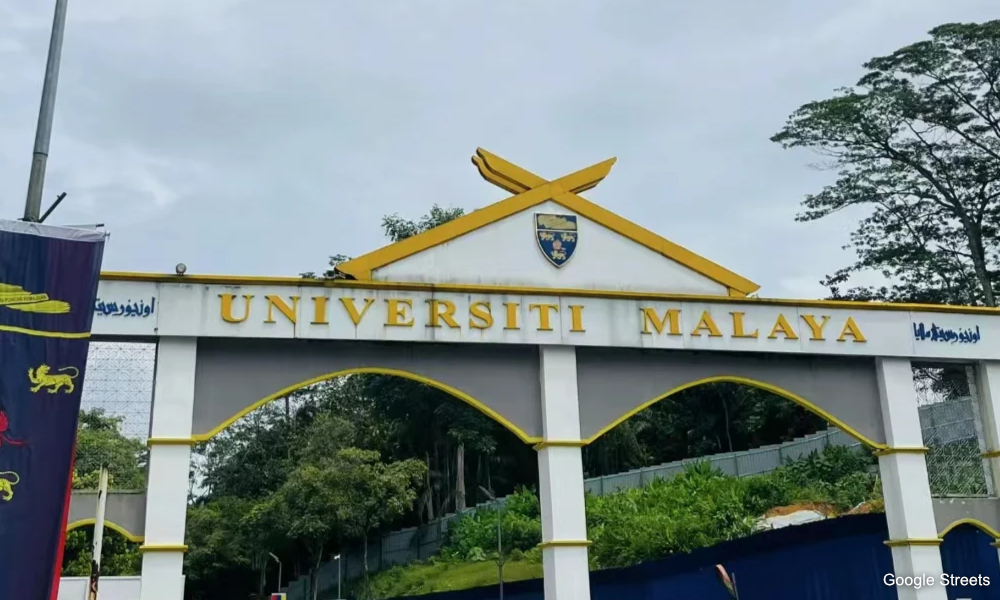
It was not a disciplinary charge but a threat of a civil suit, with a seven-day deadline, from lawyers whose usual clients are corporations.
When I was charged in 2010, at least the instrument was honest. UUCA said plainly: students may not participate in politics. We could argue against it and take it to court.
What is happening now is more insidious. The lesson is now being taught through lawyers and the threat of civil suits that have nothing to do with campus governance. The message to students and academics is the same, though: do not create trouble.
This shift has made it much harder to challenge precisely because these actions are not necessarily labelled as restrictions on academic freedom.
‘An institutional culture’
However, the old tools and the new ones are connected. UM did not need UUCA to send that trademark letter because 55 years of UUCA have already built the institutional culture that made it the natural response, where student expression is a problem to be managed, not a right to be protected, as the vice-chancellor answers to the minister who appointed him.
There is no independent oversight and no statutory protection for academic freedom. The culture of control has taken on a life of its own.
This is precisely why UUCA must go. It is not because abolition alone fixes everything, but because you cannot change the culture while the law that created it remains on the books.
Every government and almost every political party has promised to abolish UUCA at one point or another, most notably Pakatan Harapan, which committed to it several times in its 14th general election manifesto. It is time to hold everyone to their word.
The question UUCA abolition forces us to answer is not “which provisions should we remove?” but rather, what kind of universities does Malaysia actually want?
If the answer is universities that produce graduates who can compete in a knowledge economy, then academics must be free to offer expert analysis without fearing that their commentary today becomes grounds for intimidation tomorrow.
If the answer is universities that are trusted by parents and students to allocate places fairly, then admissions governance must be transparent and independently accountable, not dictated by vice-chancellors who answer to the minister who appointed them.
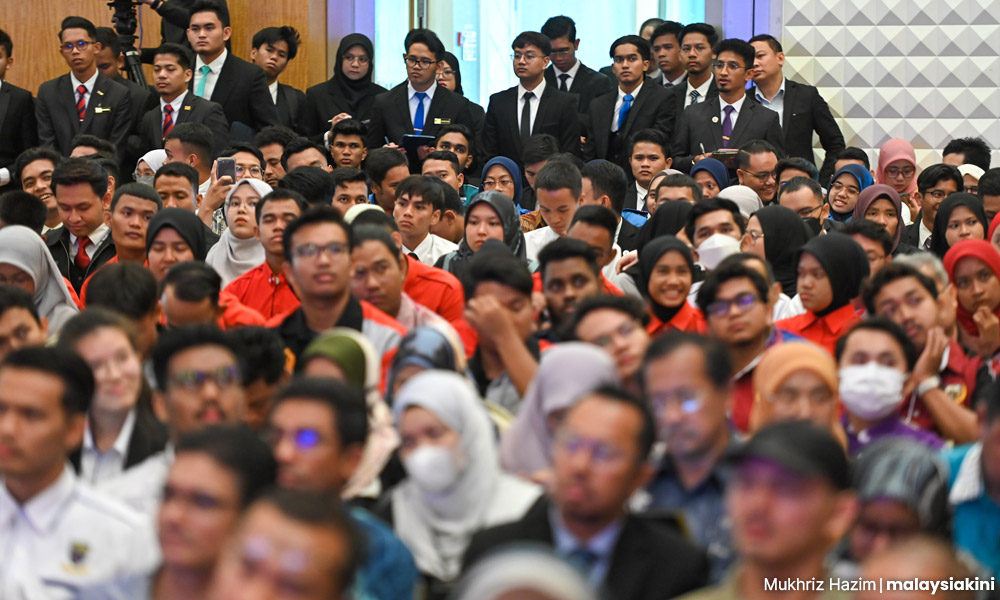
If the answer is universities that contribute to public debate rather than retreating from it, then students must be able to organise, question, and dissent without a legal department measuring whether their club’s name infringes a trademark.
None of this is possible under UUCA because UUCA was never designed to produce independent universities.
It was designed and enacted in 1971, following the 1969 racial riots, with additional restrictions introduced following the Baling protests of 1974, to establish control over the students and ensure universities would never again be sources of political inconvenience.
Every subsequent amendment has acknowledged this by removing the most embarrassing provisions but no government has replaced the underlying architecture, because every government benefit from the minister’s power to appoint vice-chancellors.
We need to move on from UUCA and table a replacement that does something no local law has ever done: make academic freedom a legally protected right.
A right that covers students forming their own organisations and associations. A right that protects academicians from intimidation. A right that comes with independent governance, transparent admissions, and accountability mechanisms that do not end at the minister’s desk.
My friends and I spent 438 days waiting to find out whether we would be expelled for observing a by-election.
We would very much have liked that to be the last story of its kind, but the lesson UUCA taught, which is to keep quiet, stay safe, and not test the boundaries, is still being taught today, through threats and intimidation dressed up as trademark claims and protection of reputation.
The law must go, and what replaces it must be worthy of the universities and the students this country deserves. - Mkini
WOON KING CHAI is one of the UKM4, four political science students whose 2010 constitutional challenge led the Court of Appeal to declare AUKU's ban on student political participation unconstitutional. He is currently the director of the Institute of Strategic Analysis and Policy Research (Insap).
The views expressed here are those of the author/contributor and do not necessarily represent the views of MMKtT.

No comments:
Post a Comment
Note: Only a member of this blog may post a comment.