


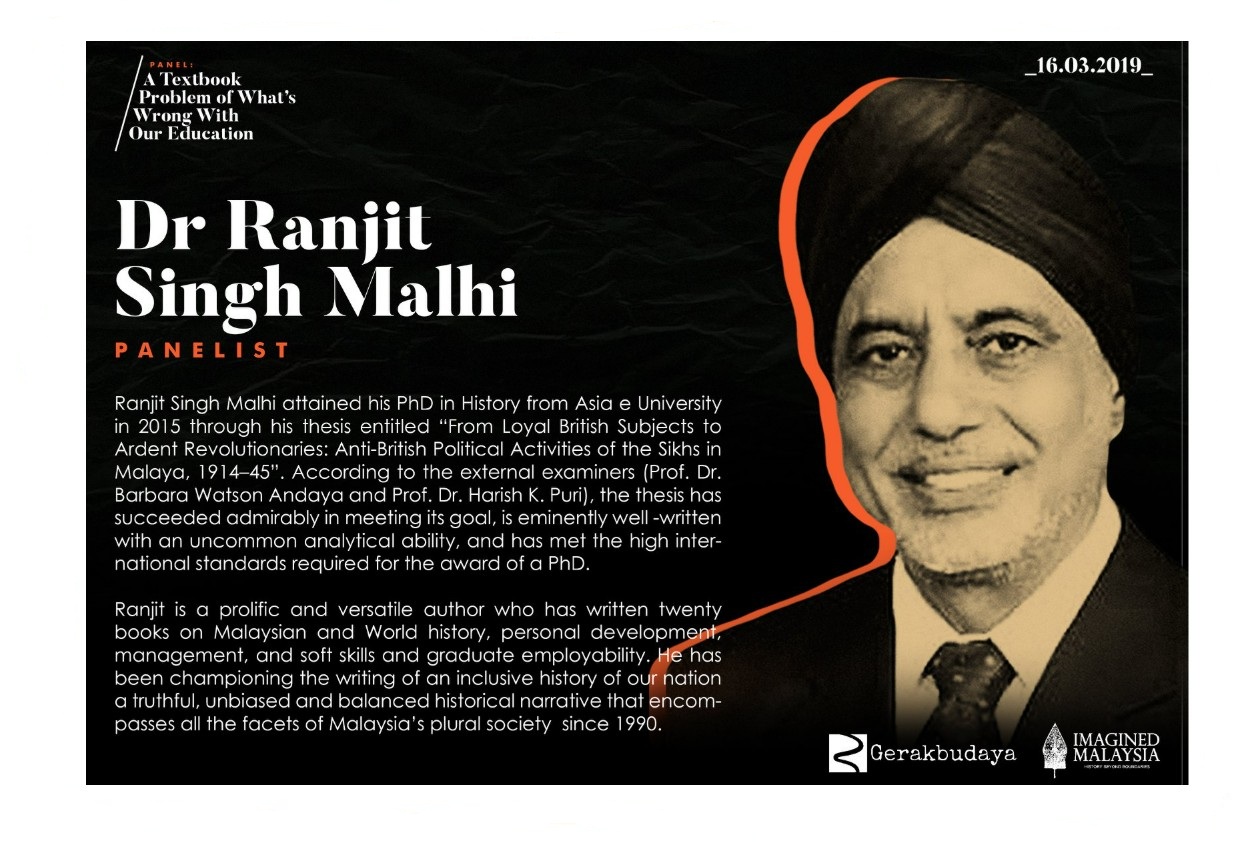
RENOWNED historian Ranjit Singh Malhi has apparently rued the fact that Orang Asli have almost disappeared from Malaysian secondary school history textbooks today.
There is no reference to them as the indigenous people or “first people” of Peninsular Malaysia despite a 2019 Form Four History textbook having described them as “the original people of Tanah Melayu“.
“To me, the erasure of this basic historical truth is nothing less than an ‘intellectual crime’,” he opined in a recent statement posted on the Facebook page of NGO Centre for Orang Asli Concerns (COAC).
“Previous generations of Malaysian history textbooks acknowledged the Orang Asli with honesty and respect, providing pupils with a proper account of their existence and recognising them as the ‘original inhabitants of Tanah Melayu“.”
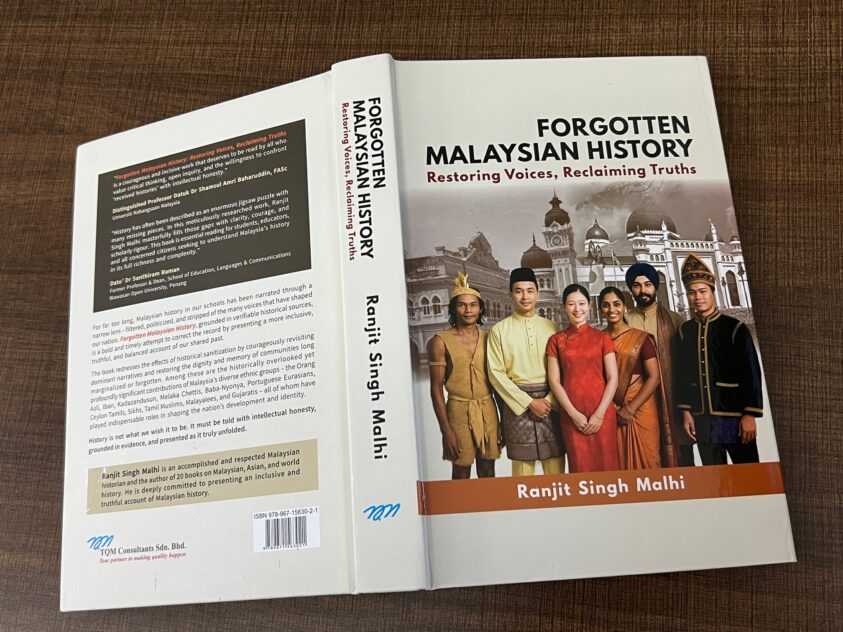
Expressing his view in conjunction with the roll-out of his latest book Forgotten Malaysian History: Restoring Voices, Reclaiming Truths (2026), the senior academic and prolific writer on Malaysian history reckoned that such “glaring omission cannot be allowed to pass unnoticed”.
Apart from the book, Ranjit will also be launching a video series entitled Sejarah Malaysia: Di Sebalik Buku Teks (literally, “Malaysian History: Behind Textbooks) which aims to present a more complete and truthful account of Malaysia’s past.
Telling history as it is
Alluded to his grandmother’s wise advice not to argue or debate with those who are either “intellectually retarded” or driven by narrow ethno-nationalist thinking, he described his small effort as crucial to ensure that future generations of Malaysians understand their true history.
“Instead, she (his grandmother) reminded me that truly wise people quietly share the truth, enlighten others and let knowledge speak for itself,” philosophised the 82-year-old historian whose history textbooks were commonplace among Gen X Malaysians.
“Malaysia was not built by a single ethnic or religious group. It was forged through the blood, sweat, sacrifice and hard work of the many communities – of different ethnicities, cultures and beliefs – who together shaped this country.
“History must be told as it really happened, not as we wish it to happen. Only when history is told honestly and inclusively can it achieve its highest purpose: to unite a nation and inspire its people.”
Prior to defending the Oramg Asli, Ranjit has previously heavily criticised Malaysian history textbooks for omitting or downplaying the crucial role of Yap Ah Loy in re-building and developing Kuala Lumpur.
He argues that modern KL was developed largely by Yap Ah Loy, arguing against attempts to diminish the roles of Chinese and Indian pioneers.
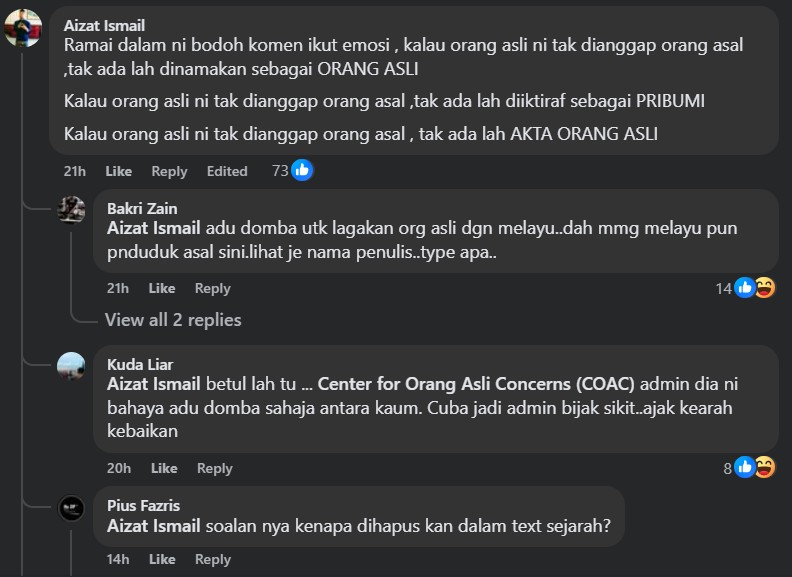
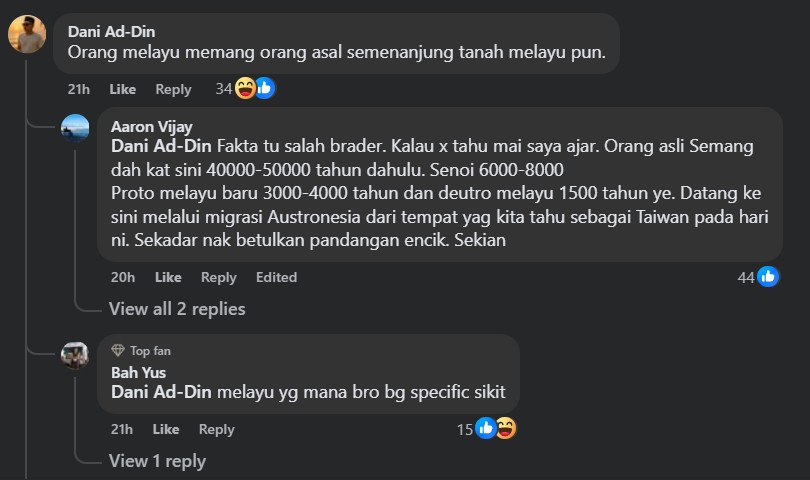
As the Orang Asli community vouched for the correctness of Ranjit’s statement, rightists – presumably those with Malay supremacy complex – accused him of trying “to pit the Bumiputera (son of the soil) community in a fight”.
- Focus Malaysia

No comments:
Post a Comment
Note: Only a member of this blog may post a comment.