


The investigation into Na’imah Abdul Khalid, widow of the late Daim Zainuddin, should not be read as an isolated law enforcement matter.
Daim served as finance minister under the first premiership of Dr Mahathir Mohamad and was among his closest political allies. Their combined influence shaped Malaysia’s economic landscape for decades.
Both men, along with their families, have since become targets of enforcement action under the Anwar Ibrahim-led administration, a fact that Na’imah herself has addressed directly.
She has publicly stated her belief that Anwar harbours a political vendetta against them, rooted in his falling-out with Mahathir, which included Anwar’s own imprisonment during Mahathir’s tenure.
Whether or not that characterisation is fair, it reflects a perception that enforcement is being shaped by old political scores rather than objective criteria, and it is a perception the MACC has done little to dispel.
MACC’s wide powers
The MACC’s investigative mandate is wide by design. It is empowered to investigate corruption, money laundering, and unexplained wealth, and asset declaration notices under Section 36(1) of the MACC Act 2009 are a legitimate and important instrument within that framework.
No serious argument can be made that politically connected individuals should be immune from such scrutiny. If anything, those who have held public office or benefited from proximity to power warrant closer, not lesser, examination.

The question, then, is not whether the MACC can investigate political figures and their families. It clearly can, and sometimes must.
The question is whether enforcement reflects objective, good-faith decision-making, or whether these powers, however lawfully framed, are being deployed in pursuit of political interests rather than through truly independent and impartial investigation.
The Daim and Mahathir family proceedings are far-reaching. Daim and Na’imah were issued Section 36 asset declaration notices and subsequently charged in January 2024 with failing to declare assets accumulated over decades in public life.
More recently, the investigation has been expedited against their four children, with the MACC seeking to trace them to assist in investigations.
Mahathir is likewise under investigation, with his sons issued notices requiring declarations stretching back decades.
It is worth noting that Section 36 notices of this kind, demanding that individuals account for wealth accumulated over 30 or 40 years, are an exceptional instrument.

Malaysia has no shortage of ultra-wealthy individuals and families whose fortunes have grown substantially over the same period, yet no comparable declarations have been sought from those without a political history adverse to the current administration.
These cases may all rest on genuine evidence. The point is that when such an exceptional tool is deployed selectively, against the families of former political adversaries and not others, the question of political motivation becomes impossible to avoid.
The Zahid contradiction
No case illustrates the problem more starkly than that of Deputy Prime Minister Ahmad Zahid Hamidi, Umno president and the parliamentary anchor of Anwar’s coalition government. Zahid faced substantial corruption charges across two separate cases.
The first ended when the Attorney-General’s Chambers (AGC) declared no further action (NFA), despite the High Court having already found a prima facie case on the prosecution’s own evidence.
It means the court was satisfied that grounds existed requiring Zahid to answer. He was already serving as deputy prime minister, in a government dependent on his party’s support, when that decision was made.
In the second case, Zahid was acquitted, and the AGC, in an unusual departure from standard practice, withdrew the appeal it had filed. Appellate review of acquittals is a routine and legitimate prosecutorial practice, yet the AGC declined to exercise it here without adequate explanation.
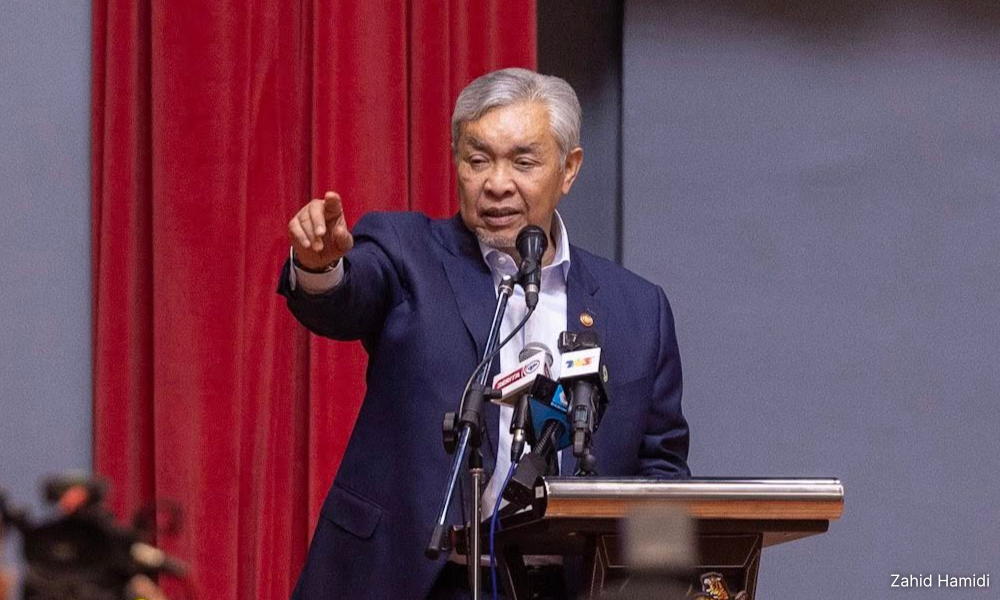
The AGC has issued statements on both decisions, but none has satisfactorily addressed why a prima facie finding by a court was followed by a decision not to prosecute further, or why an acquittal that would ordinarily have been appealed was not.
The man leading MACC
The credibility questions surrounding the MACC are compounded by what is now known about its chief commissioner, Azam Baki, a figure whose contract Anwar has extended three times, each time past the mandatory retirement age, and who has survived two separate shareholding scandals.
In early 2022, Azam was exposed as holding shares exceeding the RM100,000 limit applicable to civil servants.
His defence, that his brother had used his trading account, was met with widespread scepticism. Earlier this year, Azam was again exposed, holding shares substantially in excess of that limit, when Bloomberg reported the same.

His response this time was that he had declared and since disposed of them. Disposal is not a defence against a prohibition on purchase.
Bloomberg’s reporting raised concerns that went beyond shareholding limits. The investigation also alleged that a division within the MACC had colluded with businesspersons described as a “corporate mafia” to pressure company owners and executives into surrendering ownership stakes.
Detrimental to parliamentary democracy?
Against this backdrop, the decision to investigate Na’imah’s engagement of a public relations firm under Section 124B of the Penal Code demands particular scrutiny.
Section 124B, which criminalises activity detrimental to parliamentary democracy, was among the new offences against the state introduced in 2012 to target violent threats to constitutional order: assassination, armed insurgency, and coup d’état.
Invoking it against the retention of a communications firm, an offence carrying a maximum of 20 years’ imprisonment, is not merely disproportionate; it is preposterous.
It is worth recalling that when Anwar himself was imprisoned, his own supporters retained a public relations agency to draw international attention to his case and secure his release. Neither engagement was a crime.
To invoke the law against a political opponent’s widow while overlooking the same conduct in service of his own cause is a double standard the law does not support.
It risks normalising the use of a serious offence against the state provision against conduct with no conceivable connection to state security.
The precedents are instructive. During the Najib Abdul Razak 1MDB era, offences against the state, including Section 124B and 124C, were turned against journalists, activists, and opposition politicians.
Among those affected were The Edge CEO Ho Kay Tat, blogger Clare Rewcastle-Brown, former Umno member Khairuddin Abu Hassan, lawyer Matthias Chang, former MP Tony Pua, and activist Maria Chin Abdullah.

Also affected was Adam Adli Abdul Halim, now a deputy minister in Anwar’s government.
They were people who campaigned for reform when Anwar was in opposition, and their persecution under Najib was part of the story of institutional abuse that brought his coalition to power.
That the same provision is now invoked against Na’imah for merely hiring a public relations firm is a pattern this government knows too well and has chosen to perpetuate.
What credibility requires
The contrast is difficult to ignore. In the same period that an offence against the state provision has been invoked against a widow’s public relations engagement, the deputy prime minister has walked free of corruption charges, including charges on which a court found a prima facie case, through prosecutorial decisions whose public explanations have fallen well short of adequate.
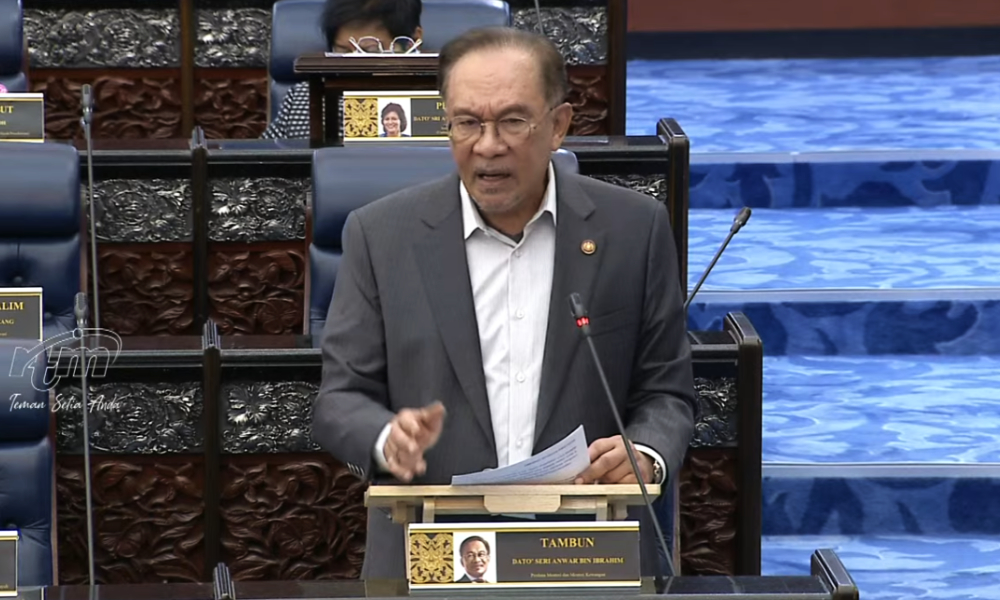
Anwar built his political career on opposition to exactly this kind of institutional double standard. That commitment is now being tested.
Anti-corruption institutions do not run on legal authority alone. They run on credibility and public confidence.
When enforcement is visibly harsher toward political opponents than toward political allies, the framework does not merely appear selective. It becomes so.
Whether these powers are being applied equally, transparently, and in good faith, free from political motivation, remains a question without a satisfactory answer. That it must even be asked reflects poorly on Anwar and his government. - Mkini
ERIC PAULSEN is the co-founder and adviser of Lawyers for Liberty and the former representative of Malaysia to the Asean Intergovernmental Commission on Human Rights (AICHR).
The views expressed here are those of the author/contributor and do not necessarily represent the views of MMKtT.

No comments:
Post a Comment
Note: Only a member of this blog may post a comment.