


Malaysian education policy has always been a hot topic of debate since it was first introduced by the first Malayan government in 1956.
With certain quarters urging the Malaysian government to recognise the Unified Examination Certificate (UEC) used by independent Chinese secondary schools, which has been under Dong Zong’s purview and custody since 1975, the issue once again resurfaced to instigate emotional reactions rather than an academic construct.
The UEC is a delicate matter that has proven to be a convenient tool for political parties to divide communities of different races, which might be useful to rally political support whenever the situation demands.
However, debates and discussions on the UEC should not be suppressed by the government, as it would be more beneficial for the public to comprehend why it would be unwise for the government to adhere to such demands.
Given that the education system was set up in 1956 with the main aim of unifying the ever-diverse Malaysian races through the Malay language, it is now more important than ever for us Malaysians to unite and safeguard the wisdom behind it by not entertaining the insane UEC demand.
To understand this, we should look back on the history and wisdom of why the first National Education Policy was implemented in 1956, a year before the promulgation of our nation’s independence.
Colonial education
Before World War II, the British colonial government in Malaya was very parochial in its education agenda, which was merely to introduce some form of formal education through government schools to create better farmers of the Malays, who have always been recognised as “sons of the soil” of Malaya since time immemorial.
They formed the majority among the other races, ie, the Chinese and Indians. British Malaya was then a cluster of nine Malay states called the Federated and Unfederated Malay States, which did not share the same system of governance or even had an official policy on education.
The Malays would find themselves working mostly in agricultural sectors as farmers. Some of the better-privileged Malays, ie, the aristocrats, would work in the government sectors as middle administrators, and the lowest rung would be contented to work as clerks, gardeners, and syces or drivers to their colonial masters.
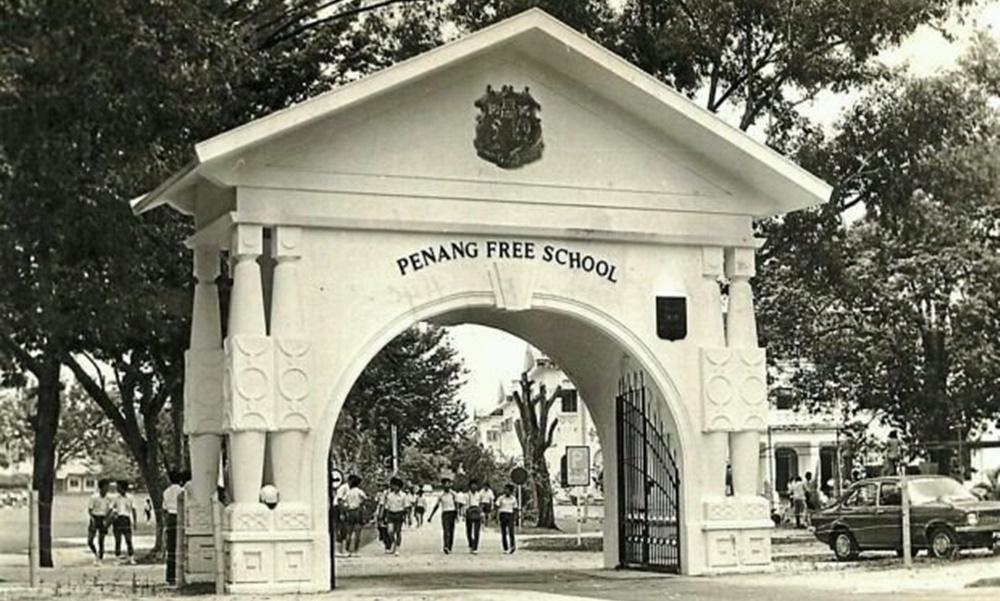
The formal education door was officially opened with the opening of the Penang Free School, based on the foundation of the English-language school in 1816.
The country, since then, had become more complex, not only as the base for raw minerals and agricultural produce for the British Empire, with the likes of rubber and tin still then needed to be exported to Great Britain to be turned into finished goods and sold at a higher price.
The need for the British colonial government to start recruiting Malays to be active administrators came by the start of the 20th century.
The Malayan College Kuala Kangsar was then founded in 1905, where most privileged Malays from a royal lineage and an aristocratic background were sent to undergo training to become colonial administrators.
This sparked the awareness for self-rule or nationalist spirits in the second quarter of the 20th century.
The Chinese, on the other hand, were not yet given a citizenship status (not before 1952). They, however, were very complex and exposed to the Chinese mainland education policy.
They built schools in British Malaya for the purpose of integrating them into China’s mainland political agenda, including to inculcate loyalty beliefs for their motherland.

It also includes amassing as much wealth as they could in Malaya, eventually sending the wealth back home in China, or for them themselves to return home for good and build a better China post the Manchu dynasty.
As such, the education syllabus was based on China’s needs, and the official language was Chinese, compared to government schools implemented by the British colonial government, which used English as the main medium.
The ‘Razak Report’
When the war ended in 1945, nationalist spirits arose, and the main aim for Malaya was full emancipation from its British masters, which the local population saw as the grand superior English race, terribly defeated by fellow Asians, the Imperial Japanese Army, in 1942.
Through those awakenings, we managed to gain our independence, but also inherited the legacy of the British colonial education system.
All of a sudden, the founding fathers realised the need to unite the different races in Malaya, which did not share a common language, religion, skin colour, or even daily staples, but found themselves lucky enough to become Malayan citizens.
It was not an easy decision for the Malay rulers to adhere to General Gerald Templer’s ultimatum in 1952, but through a hard bargain of a “social contract”, the Chinese and Indians started to live and adopt Malaya as their homeland and pledged loyalty to it as well.
After the first election in 1955, Abdul Razak Hussein was appointed as the first education minister, who then set up a committee which consisted of 15 of his fellow members representing a diverse range of the Malayan community picked from the federal legislative council, with himself as chairperson.
Its main terms of reference were “to examine the present education policy… and to recommend any alterations or adaptations that are necessary with a view to establishing a national system of education acceptable to the people of the federation as a whole; which will satisfy their needs and promote their cultural, social, economic, and political development as a nation; having regard to the intention to make Malay the national language of the country, whilst preserving and sustaining the growth of the languages and cultures of other communities living in the country.”
This committee, which held its first meeting at the end of September 1955, decided to invite every association and individual in any way connected with education to submit suggestions to aid it in its investigations.
It also formed a sub-committee to examine and compare the educational systems then operating in the Philippines, India, Ceylon, Burma, Indonesia, and Hong Kong.

Its recommendations, which became known generally as The Razak Report, were published at the beginning of May 1956, and presented by Razak for acceptance by the federal legislative council a fortnight later.
Razak, while presenting the findings of the 15 committee members’ report in the federal legislative council, traced back the history of education in the peninsula from the foundation of the first English-language school in 1816 in the British Settlement of Penang.
Thereafter, he told the council, English remained the sole medium of instruction in government-sponsored schools until the 1860’s when a start was made in providing elementary tuition for a few Malays in their own language.
The early Chinese, Indian, and Arabic schools, the latter teaching mainly subjects connected with the Islamic religion, were private ventures, and the media of instruction were usually dialects of the founding philanthropist or of clan associations.
This diversification and communal fragmentation inevitably led to a complex pattern in which schools with no common syllabus, varying standards of efficiency, and with teaching carried on in a multiplicity of languages and dialects, had unwittingly helped to forge communal insularity, economic inequalities, and racial animosities.

He then turned to the recommendation of his own committee and its suggestions for solving the main issue that had confronted it, the eventual introduction of an integrated national system of education, based upon a common syllabus and predicated upon the modern needs of a multi-racial society.
He and his colleagues felt, he told the House, that the first move should be to establish two broad categories of primary schools: standard primary schools with the national language, Malay, as the medium of instruction; and standard-type primary schools in which the chief teaching medium would be the Chinese national language, Kuo Yu, Tamil, or English.
In the standard primary schools, English would be a compulsory subject, and Chinese or Tamil would be taught if there were 15 or more children among the students whose parents wished them to learn one or more of those languages.
Malay and English would be compulsory subjects in all standard-type primary schools, no matter what the principal language of instruction was.
The committee, he made clear, also wished to establish national-type secondary schools in which all pupils would follow a common syllabus oriented toward life as it existed in Malaya and designed to equip them to sit standard final examinations.
Malay and English would be compulsory subjects, but it was hoped that sufficient flexibility could be incorporated into the system so that other languages might be used whenever considered desirable.

At the same time, the authorities also proposed to introduce a new Federation of Malaya Lower Certificate of Education (then known as Sijil Rendah Pelajaran, colloquial to Peperiksaan Menengah Rendah).
This was to be sat for on the completion of three years in these secondary schools, and a National Certificate of Education (now Sijil Pelajaran Malaysia) to be taken at the end of the secondary course.
Razak, when addressing the assembly, mentioned as such: “It was in the spirit of give and take and sense of duty to this country as a whole that members of the committee were able to reach a complete agreement.
“This country is undergoing a period of transition. Political freedom and full nationhood are just around the corner. Therefore, as Malaya enters this… new period in her history, let us give our children ideals and loyalties to which they can stretch their hands and which can promise them a happy and contented future…”
The Razak Report on Education, issued in May 1956, was a landmark moment in the history of Malaya, for it not only introduced common syllabuses for schools in the various media but also introduced the policy of having Malay as the eventual medium of instruction in all schools.
The Razak report began the unification of the younger generation through education and through the Malay language.
Anti-Chinese sentiments ‘false’
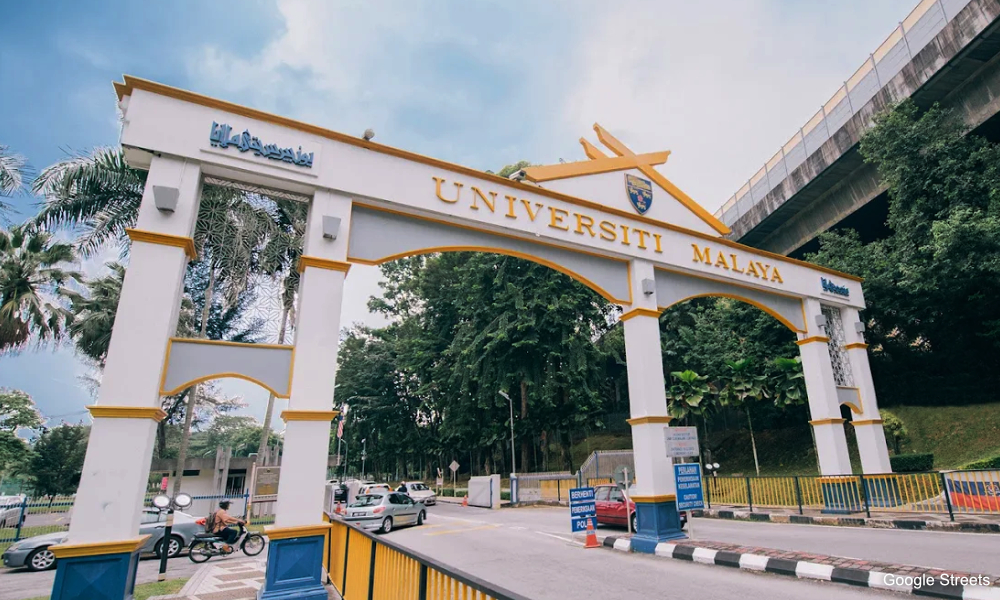
Six years later, in 1962, while addressing the public at Universiti Malaya, Razak reiterated the government’s commitment to achieve unity through education.
“There are some who allege falsely and in some cases, I am afraid mischievously, that our education system denies to many of our citizens the opportunity of learning and studying their ancestral cultures.
“This allegation is completely untrue… It is not surprising to us that political opportunists… made these charges in order to get the support of the Chinese for their political ends. But it is strange that it could be believed in the face of all the facts.
“What are the facts? Here in the federation, in institutions wholly maintained out of public funds, a Chinese child can have six years of primary education wholly in the medium of Chinese.
“What is more, after this free primary education, (he/she) can continue to study Chinese language and literature as a subject in a secondary school where, for this subject, the medium of both instruction and examination is Chinese.
“He can thereafter take an honours degree, if he so wishes, in the Department of Chinese Studies now set up in this university (Universiti Malaya)…,” Razak said.
The National Education Policy, argued Razak, was surely not the programme of a government set upon destroying Chinese language and culture, or, for that matter, the institutions of any other Malayan community, although the country’s education system needed not to continue to operate for too much longer in several separate communal compartments, each isolated from the others.
Instead, the government aimed to unify the system through the eventual use of one language, Malay, common to all the people, even though the attainment of this objective must lie still in many more years in the future.
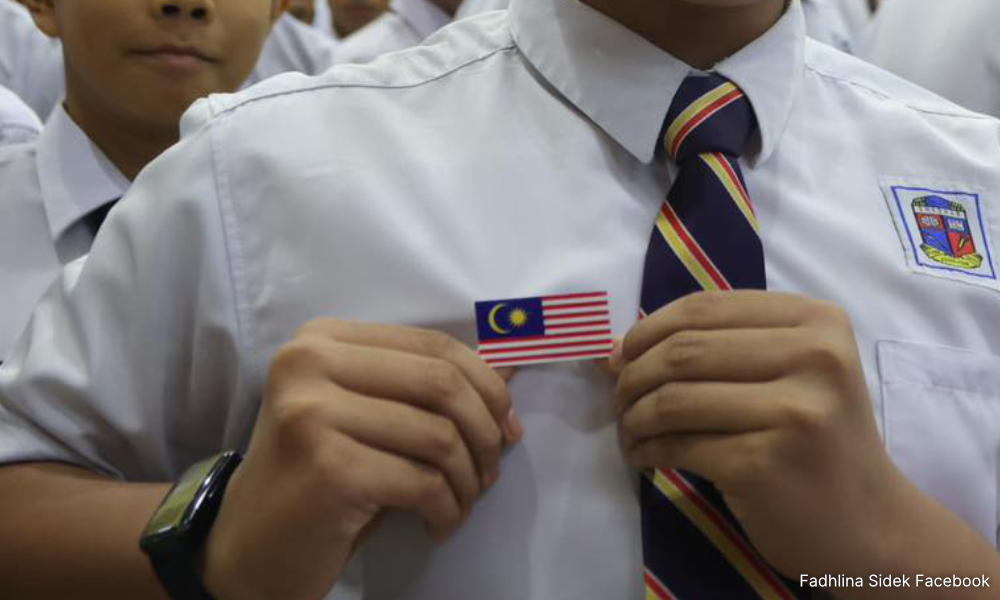
Razak’s wisdom on the matter still holds to this day. The fight for the government to recognise UEC was courted by the magnitude of small segments of ambitious, self-centred individuals who walk recklessly along the road that will surely lead towards national and communal self-destruction. - Mkini
MOHAMAD SHAFIQ SAHRUDDIN is Permata president.
The views expressed here are those of the author/contributor and do not necessarily represent the views of MMKtT.

No comments:
Post a Comment
Note: Only a member of this blog may post a comment.