


Parti Bersama Malaysia (Bersama), led by de facto leaders Rafizi Ramli and Nik Nazmi Nik Ahmad, released a 12-point agenda as part of the new leadership launch yesterday.
It covers various issues from social security, education, housing, and the environment.
In the opening text to their agenda, Bersama states that BN, Pakatan Harapan, and Perikatan Nasional had been given a chance but showed “an unwillingness and/or inability to evolve their ways in a manner that can meet the challenges of the 21st century”.
“Our agenda strives to cultivate a culture of resourcefulness and creativity that brings people together, rewards honest hard work, and helps build a better nation for the long run,” they said.
Monthly govt aid
The party’s first agenda is to create a national social security system in which all Malaysian households are entitled to monthly government assistance based on their household income, age, and number of dependents.
The aid, they said, should be distributed automatically without pre-registration.
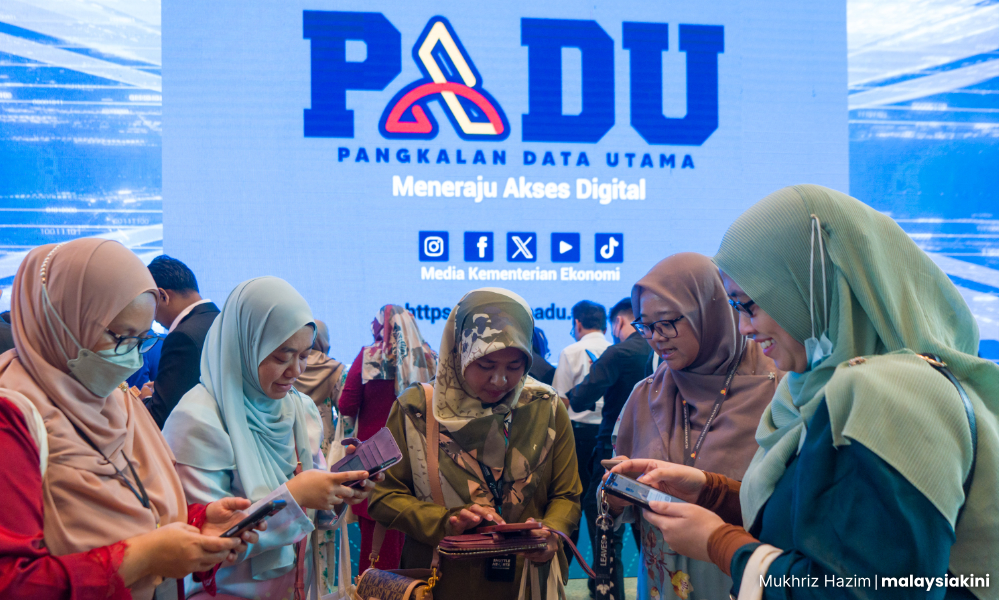
This appears to be aimed at realising Rafizi’s vision of how the Central Database System (Padu) was supposed to work in distributing targeted subsidies.
Meanwhile, they also want all welfare planning and aid agencies to be consolidated under a single Social Security Ministry.
GDP and wage growth
Bersama wants both the nation’s economy and the people’s wages to grow by five percent or more each year.
“Through strategic government interventions and fiscal incentives, we must also ensure that real wage growth (calculated as gross wage minus inflation) exceeds five percent, thereby achieving parity with national economic expansion.”
To achieve this, they said Malaysia must transition to a “high-complexity economic model” - although there was no elaboration of what this meant.
Make farming pay well
Bersama believes that farming can be turned into permanent high-value jobs for rural Malaysians through modern and industrial techniques.
This may be building on the People's Income Initiative - Agricultural Entrepreneur Initiative (IPR Intan) programme spearheaded by Rafizi during his time as economy minister, which sought to help participants get an additional RM2,000 to RM3,000 per month in income.
Additionally, Bersama wants more public-private partnerships to deploy advanced greenhouses and modern agricultural zones nationwide, with a focus on turning states like Kelantan, Terengganu, and Sarawak into national food security hubs.
Free pre-school
Another agenda is for there to be universal childcare - perhaps taking a leaf from New York mayor Zohran Mamdani’s playbook.
The Bersama proposal is to establish a system providing free preschools for children aged four to five years, to reduce the cost-of-living burden.
They said the system, infrastructure, and teaching capacity must be ready within 10 years of implementation.
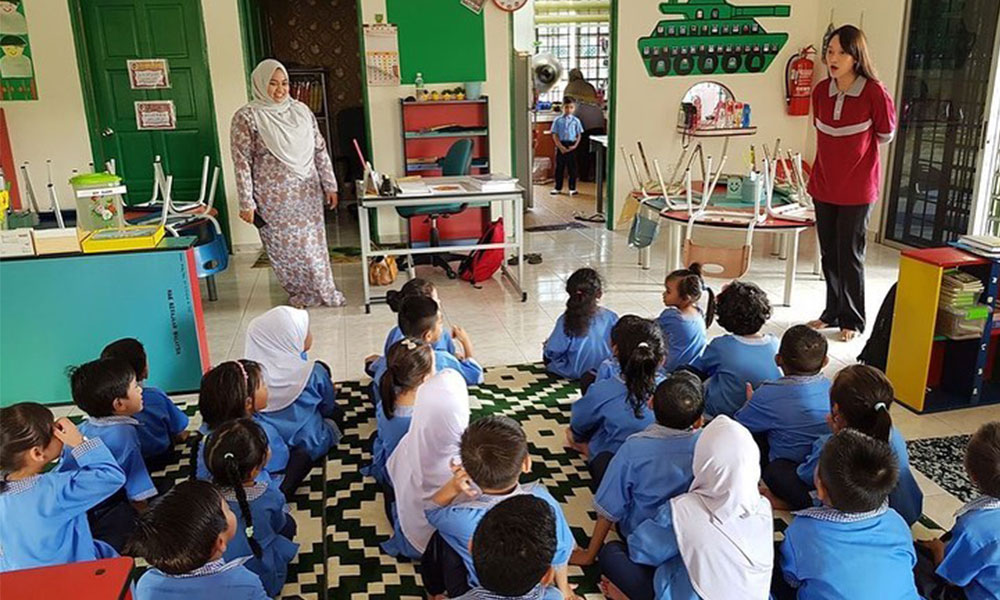
The government currently runs free or heavily subsidised preschools, namely Tabika Kemas run by the Rural and Regional Development Ministry, Education Ministry preschools, and Tabika Perpaduan run by the National Unity Ministry.
Meanwhile, the age grouping suggests that Bersama would maintain the government’s policy for six-year-olds to begin Year 1.
Affordable housing
Bersama wants a robust industrialised building system (IBS) manufacturing sector that builds “next-generation” housing using large-scale prefabricated units.
It states their goal is to ensure “average home prices for middle-income and vulnerable groups do not exceed four times the annual household income”.
More doctors
Bersama aims to reduce the doctor-patient ratio from 1:432 to 1:300 as a key priority for public investment into healthcare.
They said this lower ratio must be achieved by 2030, and if met, can lead to better healthcare as doctors are less strained.
Better education rankings
The party wants any investments or reforms involving education to prioritise achieving an upper-quartile ranking for the Programme for International Student Assessment (Pisa).
In the last Pisa ranking released in 2022, Malaysia ranked 54th out of 81 countries. The latest rankings are expected at the end of the year.
Pisa benchmarks Mathematics, Science, and reading ability amongst 15-year-olds.
University autonomy
Another agenda states that public universities must be given autonomy to adjust course offerings and capacities to reflect national priorities and student demand.
Meanwhile, it also calls for a robust parallel pathway for school leavers who go straight to work to get diploma-level accreditation after slogging for several years.

Such accreditation can already be achieved through the Accreditation of Prior Experiential Learning (Apel) scheme, which can be used to bypass education qualification requirements to enrol in a course.
The Apel scheme does not stop at diplomas, with those with 25 years of experience eligible to enrol in a doctorate programme.
Decentralising power
Bersama aims to transfer the powers to regulate, appoint, and hold key institutions accountable - especially enforcement agencies - transferred from the prime minister to Parliament.
They also aspire to decentralise decision-making for major procurements to mitigate the risks of power abuse and corruption.
Bersama wants Malaysia to realise the National Energy Transition Roadmap (NETR), which Rafizi and Nik Nazmi jointly spearheaded, to position the country as a green energy hub.
Being good for business
Bersama will push for Rafizi's “anti-Ali Baba Act” to clamp down on rent-seeking practices.
They also aspire to empower SMEs through a combination of policy, enforcement, incentives, and public procurement reforms.
The goal is for SMEs to contribute to 50 percent of gross domestic product, 60 percent of jobs, and 30 percent of total exports.
Lower cap for migrant workers
Bersama wants the number of migrant workers in Malaysia capped at five percent of the national workforce, to decrease reliance on foreign labour while encouraging businesses to innovate and create opportunities for local talents.
They also aspire for a national worker database to encourage employers to prioritise local talent.
On social media, it was questioned whether this agenda was anti-immigrant.
However, Rafizi’s aide Farhan Iqbal rejected the label and said the policy was “anti-dependency” on cheap migrant labour. - Mkini

No comments:
Post a Comment
Note: Only a member of this blog may post a comment.