

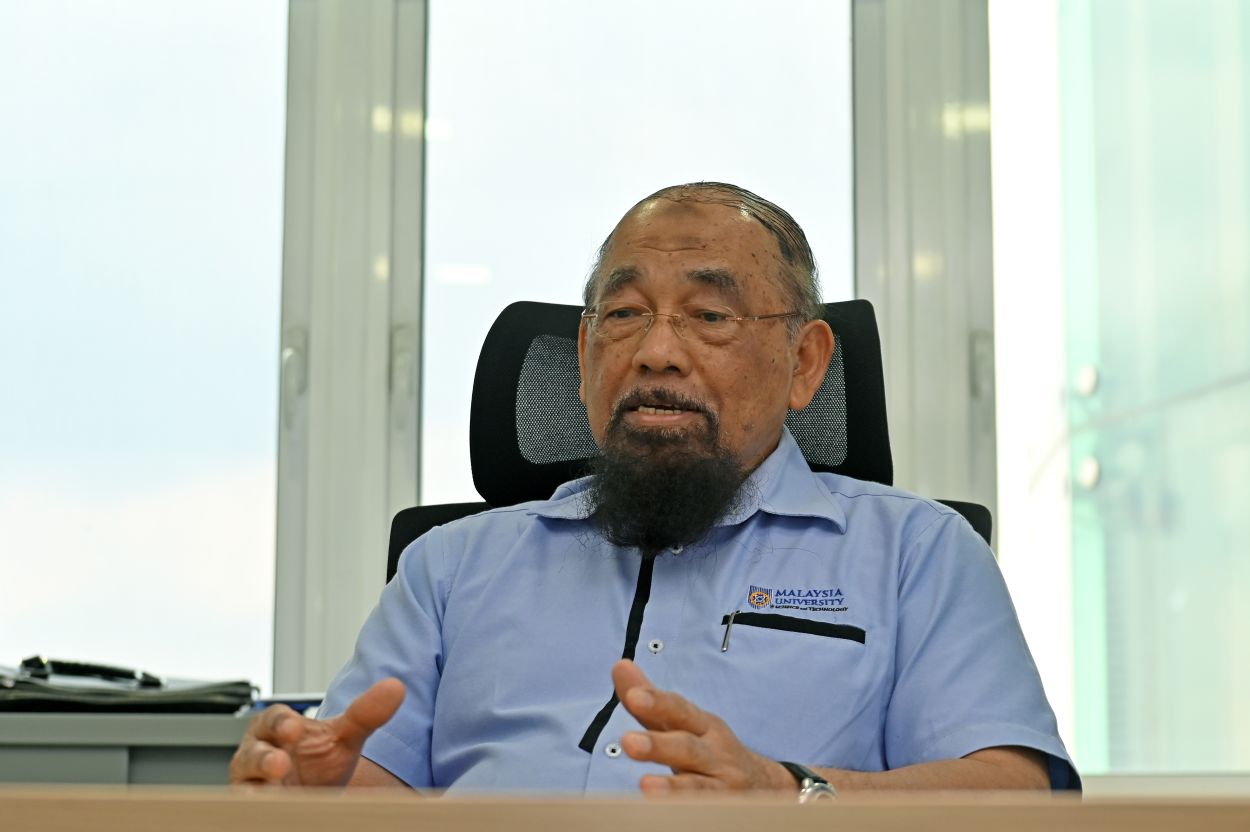
THE GOVERNMENT could end up bearing an additional RM5 bil in costs if subsidy policies continue to be designed without a more refined income classification system, according to economist Prof Emeritus Dr Barjoyai Bardai.
He said relying solely on broad household categories such as B40, M40 and T20 no longer provides an accurate picture of Malaysians’ financial realities, as these groupings fail to account for key variables including regional living costs, household size, debt obligations and actual disposable income.
Barjoyai explained that households within the same income bracket can face vastly different financial pressures, making blanket subsidy policies potentially inequitable.
Without a more detailed classification system, targeted subsidies may miss their intended recipients while still benefiting those with stronger financial capacity.
His remarks come after Economy Minister Akmal Nasrullah Mohd Nasir said Putrajaya does not strictly rely on income labels such as T20 when formulating subsidy mechanisms, opting instead for a broader and more comprehensive assessment.
According to Barjoyai, the government is currently caught between the urgency of reforming subsidy programmes and the slower pace required to collect reliable household data.
Although the government has introduced the Main Database System (PADU) to improve national data collection, he noted that gaps remain, particularly in areas such as housing background and personal financial commitments.
Given these limitations, Barjoyai suggested that the government avoid rushing into a full targeted subsidy rollout and instead maintain the current framework during an interim period.
He argued that while a less targeted model may result in an estimated RM5 bil in extra expenditure, the losses could potentially be recovered by tightening enforcement against leakages such as smuggling, abuse and subsidies benefiting non-citizens.
If leakages are effectively addressed, the savings could exceed the additional subsidy burden, reducing the pressure to immediately implement full subsidy targeting.
Barjoyai also proposed that the government explore temporary windfall-style taxes on highly profitable industries, including oil and gas, palm oil and semiconductors, as an alternative revenue source.
He noted that similar measures had been introduced previously during commodity booms, particularly when rubber and palm oil prices were elevated.
“Such policies can strengthen government revenue without directly burdening ordinary Malaysians,” he added. — Focus Malaysia

No comments:
Post a Comment
Note: Only a member of this blog may post a comment.