


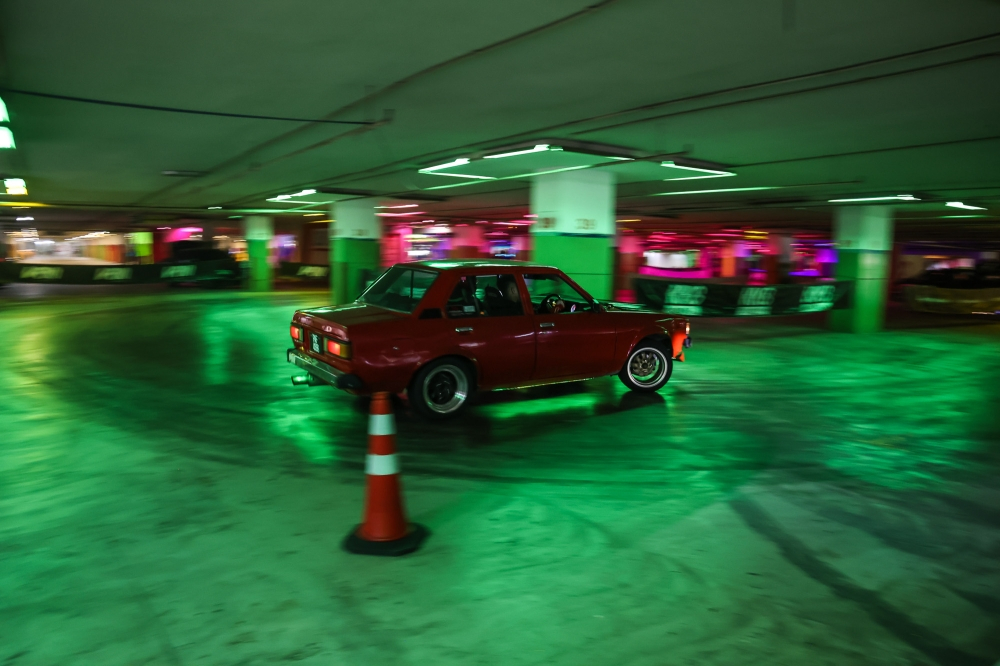
KUALA LUMPUR, May 17 — Long associated with illegal street racing and reckless behaviour, drifting in Malaysia is still often viewed through the lens of its ‘hooligan’ image — a misconception many in the community say no longer reflects the motorsport’s reality today.
Yet for the drivers themselves, that perception misses the point entirely as the appeal is far more nuanced and some even describe it as an experience that goes beyond adrenaline.
“I don’t quite know how to explain it, it’s like putting the car out of control, yet still being in control.
“But if you talk about the biggest misconception everyone has about drifters, which I think is slowing down now, it’s that drifters are street racers,” Beysshwen Dasnamurthy, who goes by “Bear”, told Malay Mail in a recent interview.
For many in Malaysia’s drifting scene, this experience offers a sense of control, expression and escape which continues to draw in newcomers despite the risks and costs involved.
That growing interest has also helped push the scene to evolve into a more organised, community-driven motorsport, as drifters and organisers work to create safer, more structured pathways through grassroots programs and independently organised events.
Beysshwen said drifting is like many things that begin informally on the streets before evolving into something more structured, much like how early human life began in caves but did not remain there.
Drifting traces its roots to Japan in the 1970s, where drivers began experimenting with controlled oversteer on winding mountain roads, or touge.
The technique involves deliberately inducing a loss of traction while maintaining control, allowing the car to slide through an entire corner with precision and balance.
What started as an informal street technique gradually evolved into a defined motorsport, with organised competitions emerging in Japan by the 1980s and 1990s.
“The idea is that the sport has to evolve and become more professional,” Beysshwen said.
Chen Wing Hong, who goes by “Wing” and is also a friend of Bear, said drifting’s relatively low barrier to entry appeals to aspiring drivers looking to start from scratch.
“It’s like if I want to be an F1 driver, I can’t just start now and become an F1 driver because I would need a huge amount of funding and backing.
“But drifting is where with RM15,000, you can buy a second-hand car and start learning,” said Chen, who started drifting with Beysshwen as early as 2019.
While the motorsport remains open to newcomers at the grassroots level, Beysshwen said the gap widens quickly at the competitive level where costs can escalate sharply due to specialised modifications, high-performance parts and professional support teams.
“That is why entering drift isn’t hard but competition-wise, it gets very expensive because you have guys spending RM600,000 to RM700,000 on their cars, with the best tyres in the world and the best teams in the world to compete,” he said.
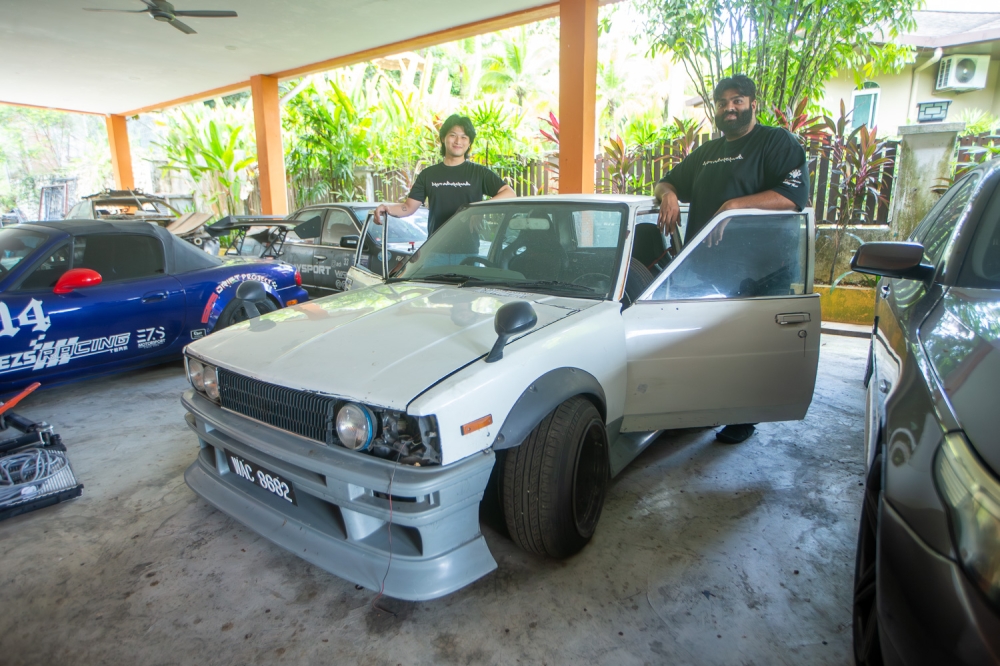
It was for this very reason that Drift Underground — an independently organised annual event started by Chen and Beysshwen in 2024 — was launched, providing drifters an avenue to earn a side income while showcasing their skills in a controlled and safe environment.
“Drivers are given free admission and at the same time they can start making money as well because every taxi ride that they do, they are going to get a certain cut from that,” he said.
A drift taxi ride is a paid passenger experience where a skilled driver takes a passenger for a high-speed drift run on a controlled track.
Overcoming stereotypes
For many in Malaysia’s drifting scene, the relationship between driver and car goes beyond simple control, becoming a near-symbiotic connection where instinct and machine work in unison.
Drifter Bryan Ho Ruey Ren, said aspiring drivers often quickly realise it is unlike conventional driving when they first start out.
“So you are going sideways, it’s going out of control, but you are still controlling (the car) and at the same time they would begin to learn the car’s potential and maximum capability.
“As familiarity builds, the body begins to react instinctively and that is how we feel the car as one,” Ho, who works as a full-time renovation contractor, told Malay Mail in a recent interview.
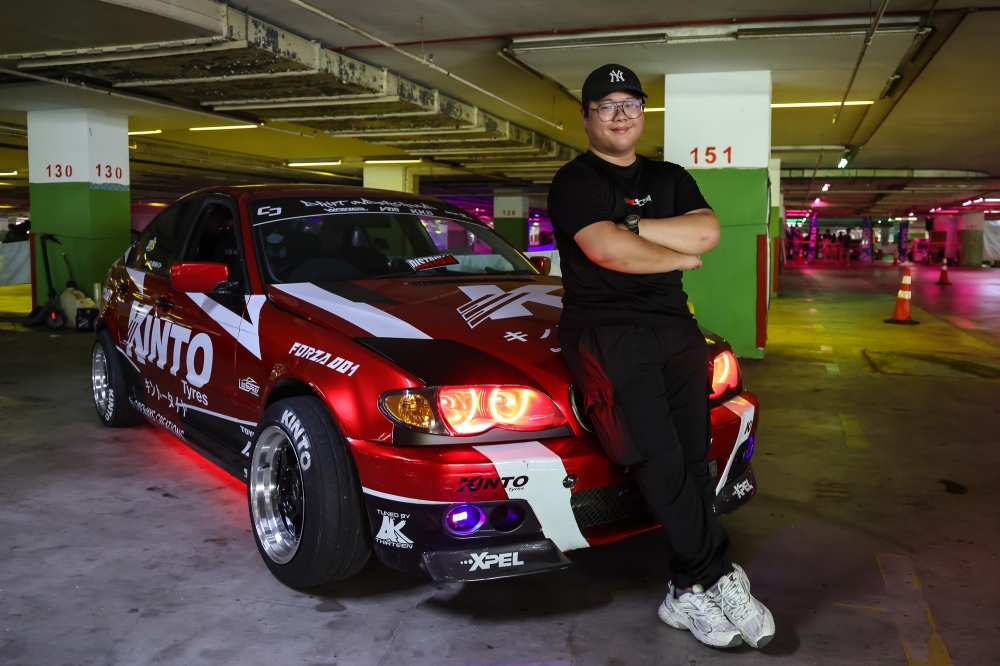
The 30-year-old, who began drifting in 2022, also acknowledged the “hooligan” image often associated with the sport — where drivers are normally seen doing “crazy” and aggressive things — but said the reality is quite the opposite.
“There are many drivers who started on the street but at events like Drift Underground, we want to promote proper and professional drifting,” he said.
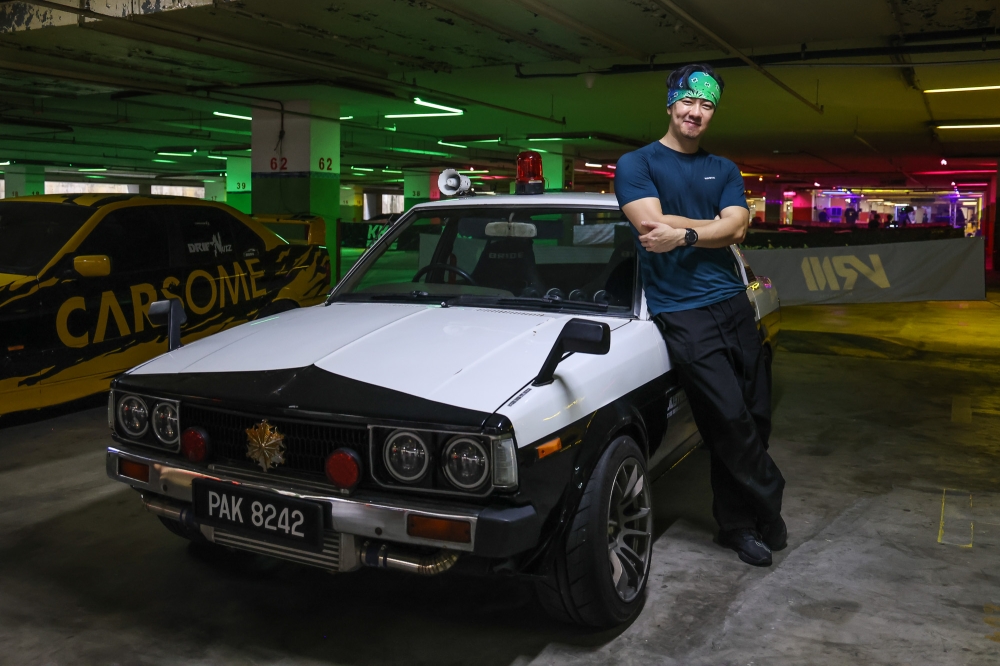
For full-time professional magician Mark Yong, a vehicle mishap during a downhill drive at Genting Highlands became the turning point that motivated him to take up drifting to confront and overcome his fear.
Yong, who drives a modified Corolla E70 featuring a distinctive black-and-white livery inspired by Japanese police vehicles, said he was drawn to drifting for its adrenaline-fuelled nature as well as its ties to Japanese subculture.
“It pumps up my heart, keeps me excited, and makes me want to learn more and improve my skills,” he said.
“After learning drifting, to be honest, I drive pretty slowly on the road now.”
He also acknowledged that drifting is often associated with illegal street activity, where some do it on public roads.
However, he stressed that their approach is very different, saying they aim to keep it professional and avoid causing trouble.
“We do it on a safe course, we rent a place and do it there,” the 41-year-old father said, adding that even when mistakes happen, they remain within a controlled environment and do not endanger others.
Mohd Said Halil, 43, who has been drifting since he was 24, said drifting is still often misunderstood and unfairly associated with reckless street behaviour or “rempit” culture.
“To help people understand, we show them our cars’ specifications.
“These are not simply rempit cars, our vehicles are properly built and equipped to participate in major events,” said Mohd Said who drives a modified Corolla KE70 that belonged to his son.
He stressed that competitive drifting today is far more technical and structured than many assume, involving heavily modified cars built to professional specifications for sanctioned events and controlled environments.
From learning by observing more experienced drivers long before YouTube tutorials existed, to crashing into walls and trees while honing his skills, he said drifting taught him discipline, control and a deeper understanding of the car’s limits.
With greater access to information and technological advancement, Chen said the scene is also evolving, making it easier for newcomers to learn the sport compared to its earlier days.
Where drivers once relied largely on observing experienced drifters and learning through trial and error, he said aspiring drifters today can train using simulators, watch online tutorials, and even receive coaching from former competitors who now mentor the younger generation.
“For some people, drifting serves as a way for drivers to better understand vehicle control and a car’s limits, particularly in situations where it loses traction.
While some may already have experience racing on tracks or driving go-karts, he said many still do not fully understand how to react when a car skids.
“Through drifting, drivers are able to experience that fear (in a controlled environment) and learn to control it,” he said. - malaymail

No comments:
Post a Comment
Note: Only a member of this blog may post a comment.