


How many of you have lamented over a glass of teh tarik or expensive iced coffee (or OTR, as the current generation would call it) that the government of the day may be good opposition leaders, but maybe lack experience when it comes to actually administering the country?
I would be one of those people putting up my hand, but over a glass of teh tarik instead of OTR because of today’s economy. I am quite certain that they are trying their best, but the opposition mentality is still holding strong in many of those who are holding positions for the first time.
One of the most obvious pieces of evidence of this is when you see how those elected and are manning ministries and significant agencies tend to be more critical than they are operational, much like how members of the opposition would be when they are watchdogging an administration.
Now, there is nothing wrong with being critical. When we are critical, we can identify areas that need improvement, and that leads to… improvement.
It becomes a problem when the criticism is all there is and no operational improvements are actually implemented.
Let me veer towards politics now.
Power no longer absolute
If we look at how politics have developed in Malaysia, especially after 2018, we no longer have absolute political power as before.
For example, before 2018, Malaysia had seen no other government other than BN. Up to that point, they were constantly winning elections with a two-thirds majority.
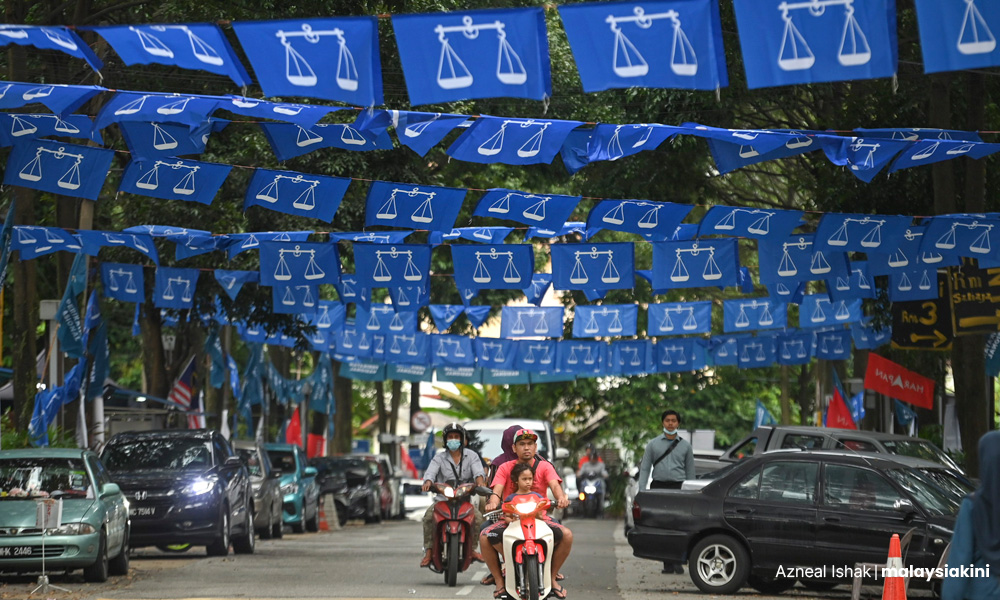
Now, things are different. We, the people, know that our vote can actually count. We decided in 2018 to change the government, and we actually did.
That tipping point also created a new situation where governments of the day may not necessarily hold a two-thirds majority.
Not only that, sometimes, after a general election, there may not even be a clear winner. What happens then is that the different political parties will start negotiating with others to try and form coalitions so that they can get enough seats to pass the halfway mark in order to form a government.
I must stress that there is nothing wrong with that. This happens in many countries considered as more mature democracies than Malaysia, such as the United Kingdom, Australia, New Zealand, Germany, the Netherlands, Sweden, Denmark and so on.
That being said, this also means that the different manifestos from the different political parties during campaigning might be diluted or compromised when they start making coalitions post-elections.
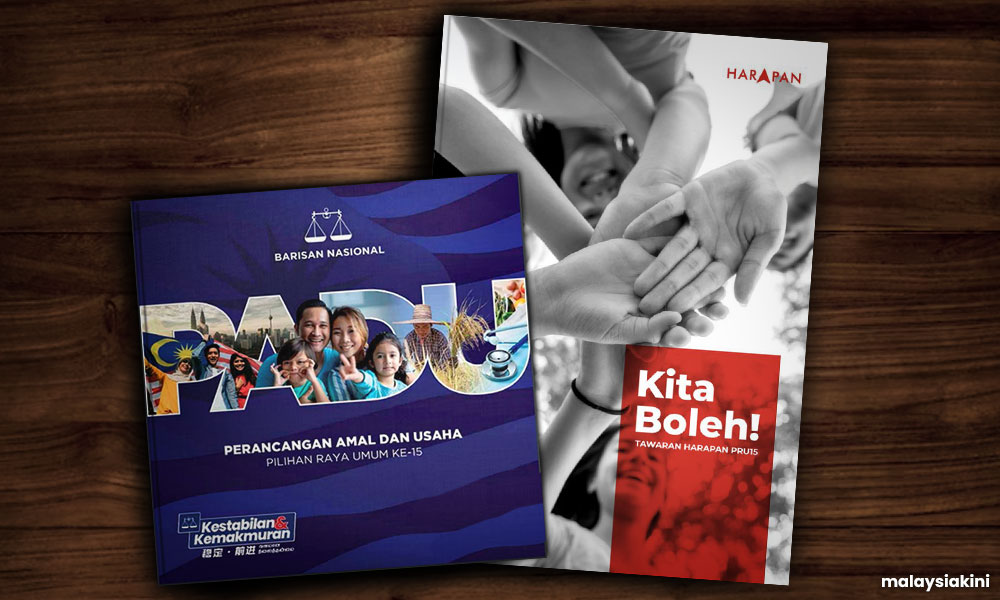
When the parties come together, they would have to merge their manifestos somehow, and not all points will make it.
Again, I don’t think this is a big problem. From my perspective, everyone wins in a situation like this. Every party’s manifesto would make it in, just not the whole thing.
So, they may not win a lot, but they will win something. It also means that all the voters of the parties that enter the coalition will win, just not a lot.
Not finding a good compromise
Now that we have established that, let’s go back to the point of my first two paragraphs - how so many people perceive our government of the day as still being like the opposition instead of the government.
The reason could be that the politicians aren’t able to find a good compromise to work with.
Being in a government where everyone is coming together after the elections, each political leader needs to know how to advance their efforts based on their manifesto and convince their peers in the coalition to agree.
In order to form the government today, a politician needs to know how to bring people together.
It makes me think about the new political party Parti Bersama Malaysia (Bersama) that Rafizi Ramli and Nik Nazmi Nik Ahmad just launched. Both are former ministers and now former members of PKR.

In case you didn’t know, both lost in the party election, and out of principle, they resigned from their positions.
Shifting approaches
Before ever being in the government, Rafizi has always been known as a very good opposition politician. Digging up all kinds of wrongdoings of the government, criticising and provoking.
This is probably a personality trait or habit that he has brought over, even after he entered the government.
This isn’t a bad thing, but it’s just something that he probably had to adapt and change when he became a minister. He shouldn’t continue acting as an opposition because, as a minister, during the bulk of his working time, he needs to administer, execute and operate.
Although I do understand that he should criticise if there is anything wrong, the way and method of it should be different now. He needs to think of the coalition that forms the government and how to criticise and address problems while still maintaining harmony in the coalition.
Now with Bersama, Rafizi needs to decide if he is going to play opposition or if he wants to be a serious contender to be part of the government. If he is happy being the opposition, then he can continue doing what he has been doing all this time. And seriously, there is nothing wrong with that.
But if the party is going to be a serious contender, then he still needs to know how to be diplomatic, even in criticism. Remember, this is how Malaysian politics is these days.
You can never survive on your own anymore. It is always going to be a situation where you will need to work with others. - Mkini
ZAN AZLEE is a writer, documentary filmmaker, journalist and academic. Visit fatbidin.com to view his work.
The views expressed here are those of the author/contributor and do not necessarily represent the views of MMKtT.

No comments:
Post a Comment
Note: Only a member of this blog may post a comment.