


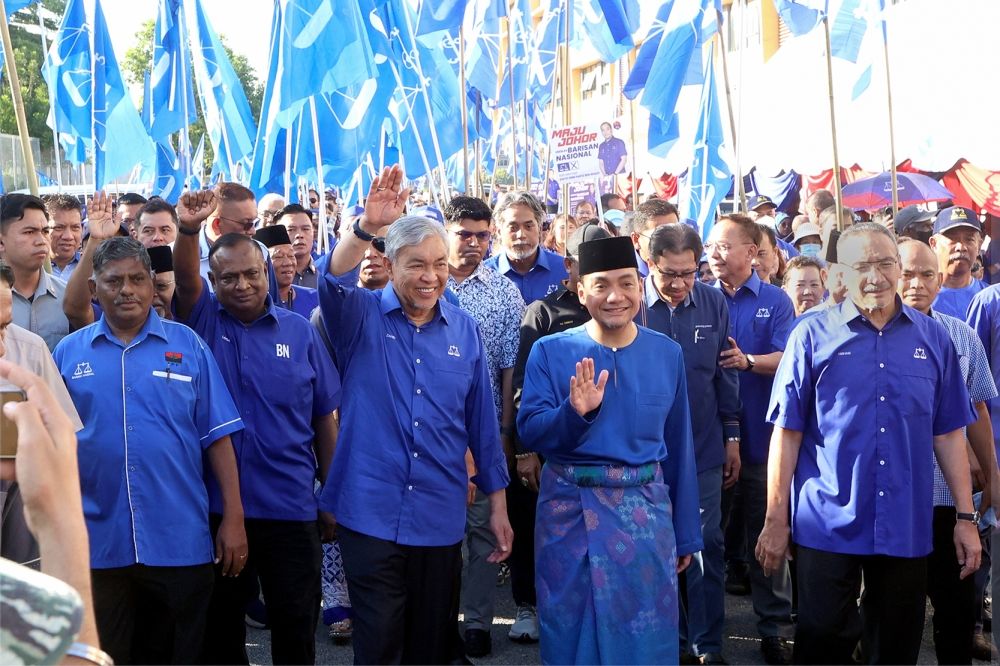
Experts say fewer candidates reflects more strategic approach from parties
PETALING JAYA: Fewer candidates, fiercer battles: political analysts say the drop in the number of contenders for the upcoming Johor state election reflects a more strategic and intensely competitive electoral landscape rather than waning interest.
Universiti Teknologi Mara senior political science lecturer Mujibu Abd Muis said the smaller number of candidates compared with the previous state election should not be interpreted as reduced political interest.
“Rather, it reflects a more consolidated and strategic electoral landscape.
“Political parties are becoming more selective in allocating resources and are avoiding unnecessary multi-cornered contests that could split votes and weaken their chances,” he said.
According to the Election Commission (EC), a total of 172 candidates will contest the 56 state seats, down from 239 – including 16 independents – in the 2022 polls.
There will be 14 straight fights, 27 three-cornered contests, 12 four-cornered battles and three five-cornered fights this time.
With nominations over, campaigning has begun and will run for two weeks before polling day on July 11. About 2.7 million voters are eligible to cast their ballots.
A simple majority of 29 seats is needed to form the next state government.
Mujibu said the drop in the number of candidates was partly driven by new political alignments and a more pragmatic approach among parties.
“Compared with previous elections, there is greater emphasis on electoral efficiency rather than symbolic participation,” he said.
“Smaller parties are also becoming more cautious, recognising the high financial and organisational costs of contesting without a realistic path to victory.”
However, he stressed that it will not necessarily translate into a less intense campaign.
“In fact, the contest may become even more competitive as battles are concentrated in marginal and swing constituencies.
“Resources, campaign machinery and messaging will be focused on key battlegrounds, making the fight more targeted and strategic,” he said.
He added that Johor’s political landscape appeared to be entering a more mature phase.
“The real contest is no longer about who fields the most candidates, but who can build the most effective electoral coalition and convert support into seats under the first-past-the-post system,” he said.
Universiti Malaya political analyst Dr Mohammad Tawfik Yaakub said the smaller number of candidates “suggests a more structured, strategic and less fragmented electoral field compared with 2022”.
The previous state election saw a crowded field as parties adjusted to shifting political alignments following the collapse of the Pakatan Harapan government, the rise of Perikatan Nasional and the emergence of new parties such as Muda and Pejuang.
“Many parties contested widely not only to win seats but also to test their support base, build visibility and position themselves for the next general election,” he said.
This time, parties appear more selective, focusing on seats where they have machinery, local influence or realistic chances of winning, he added.
“The main contests are now more clearly defined. The battle is likely to revolve around Barisan Nasional’s claim of stability, Pakatan’s push for state-federal alignment, Perikatan’s effort to remain relevant as an opposition force and the role of smaller parties such as Bersatu and Muda in selected urban and mixed seats.” - Star

No comments:
Post a Comment
Note: Only a member of this blog may post a comment.