


I welcome the government's continued commitment to separating the offices of the attorney-general and the public prosecutor.
This reform has been debated for decades and represents one of the most significant constitutional reforms to the justice system since Merdeka.
For far too long, one individual has been expected to perform two fundamentally different constitutional functions.
As AG, the officeholder serves as the principal legal adviser to the government.
As PP, the same individual is expected to exercise independent prosecutorial discretion, including deciding whether criminal proceedings should be instituted against members of the very government they advise.
The decision to separate these roles is therefore both necessary and welcome. It reflects an important recognition that the administration of justice must not only be fair but also be seen to be independent.
However, the success of this reform should not be measured simply by creating two offices instead of one.
The real question is whether the proposed framework genuinely strengthens institutional independence, transparency, and public confidence.
Need revision
In this regard, I share the concerns expressed by The Center to Combat Corruption and Cronyism (C4 Center), Rasuah Busters, and several MPs that the proposed amendments do not yet provide sufficient safeguards to ensure that the office of the PP is genuinely insulated from actual or perceived executive influence.
The PP exercises one of the most significant constitutional powers in Malaysia. The authority to prosecute or not has profound implications for the rule of law, the fight against corruption, and public confidence in our justice system.
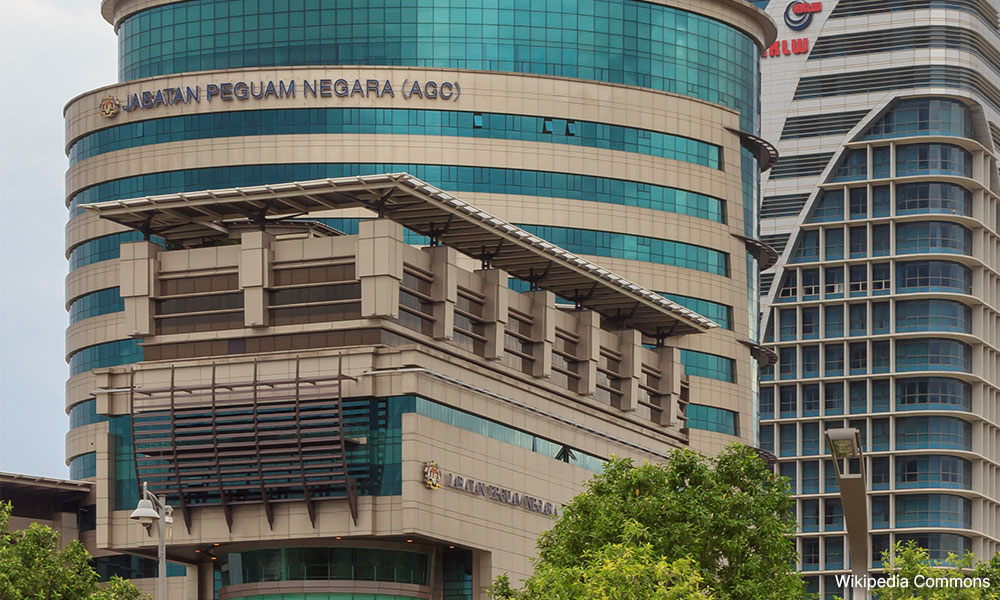
Such powers must be exercised independently and within a governance framework that commands the confidence of Malaysians.
The proposed amendments remove the appointment of the PP from direct executive discretion by involving the Judicial and Legal Service Commission.
While this is a positive development, it does not fully resolve the broader question of institutional accountability.
Under the proposal, Parliament's role is largely limited to receiving the names of proposed candidates and providing comments that need not be acted upon.
Such an arrangement falls short of meaningful parliamentary oversight.
This raises an important constitutional question: who ultimately holds the PP accountable?
Independence should never be confused with isolation. An independent PP must be protected from improper influence, but that independence must also be accompanied by appropriate mechanisms of accountability.
Public confidence is strengthened not by concentrating power within institutions, but by ensuring that those institutions operate transparently and remain answerable to the public through Parliament.
Parliamentary oversight vs political interference
It is equally important to distinguish parliamentary oversight from political interference.
Parliament exists precisely to provide democratic scrutiny over appointments to offices that exercise extraordinary constitutional powers.
Proper parliamentary scrutiny does not weaken prosecutorial independence - it strengthens its legitimacy.
In my view, the proposed framework should therefore be enhanced in several important respects.
First, a bipartisan parliamentary select committee should undertake comprehensive scrutiny of shortlisted candidates before any appointment is finalised.
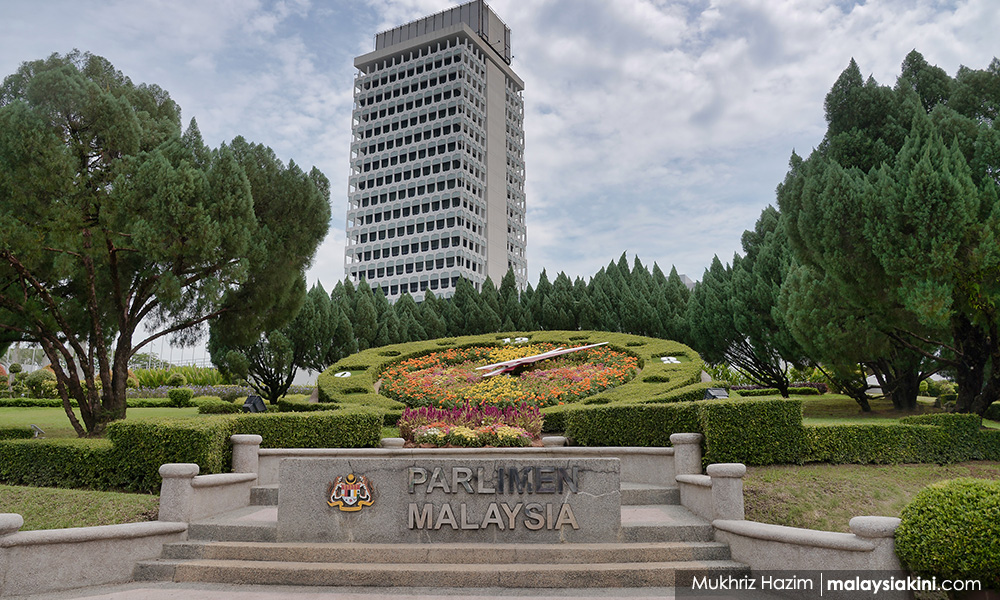
Such scrutiny should include an assessment of professional competence, prosecutorial experience, integrity, potential conflicts of interest, and independently verified asset declarations.
Parliament should then make a formal recommendation before advice is tendered for appointment.
Second, the debate should not end with how the PP is appointed. Genuine institutional independence also requires clear safeguards governing tenure, removal, disciplinary proceedings, conflict-of-interest management, asset declarations and regular reporting obligations to Parliament.
Appointment is only the beginning of accountability - not its conclusion. These safeguards are not obstacles to reform. They are the very foundations upon which independent institutions are built.
Strengthening reforms
Malaysia has waited decades for this constitutional reform. We should therefore ensure that we do not replace one imperfect system with another.
A new appointment mechanism, without robust safeguards for transparency, parliamentary oversight, and institutional accountability, risks changing the structure without fully addressing the underlying governance challenges.
Constitutional amendments are rare. They shape institutions that will serve the nation for generations.
Parliament, therefore, has both the opportunity and the responsibility to ensure that this legislation reflects the highest standards of constitutional governance and democratic accountability.
This should never be viewed as a contest between the government and the opposition. It is about establishing an institution that every Malaysian can have confidence in, regardless of who forms the government today or in the future.
History will not judge Parliament by how quickly this bill was passed. It will judge whether parliament has the wisdom to ensure that the PP is not only independent in law, but also accountable in practice. - Mkini
PUSHPAN MURUGIAH is a governance, integrity and anti-corruption consultant.
The views expressed here are those of the author/contributor and do not necessarily represent the views of MMKtT.

No comments:
Post a Comment
Note: Only a member of this blog may post a comment.