Minister in the Prime Minister’s Department (Federal Territories) Hannah Yeoh’s recent announcement on the establishment of five MP-led monitoring committees to oversee Kuala Lumpur City Hall’s Budget 2026 is commendable.
This is a positive step towards greater transparency, accountability, and collaboration with Kuala Lumpur’s elected representatives.
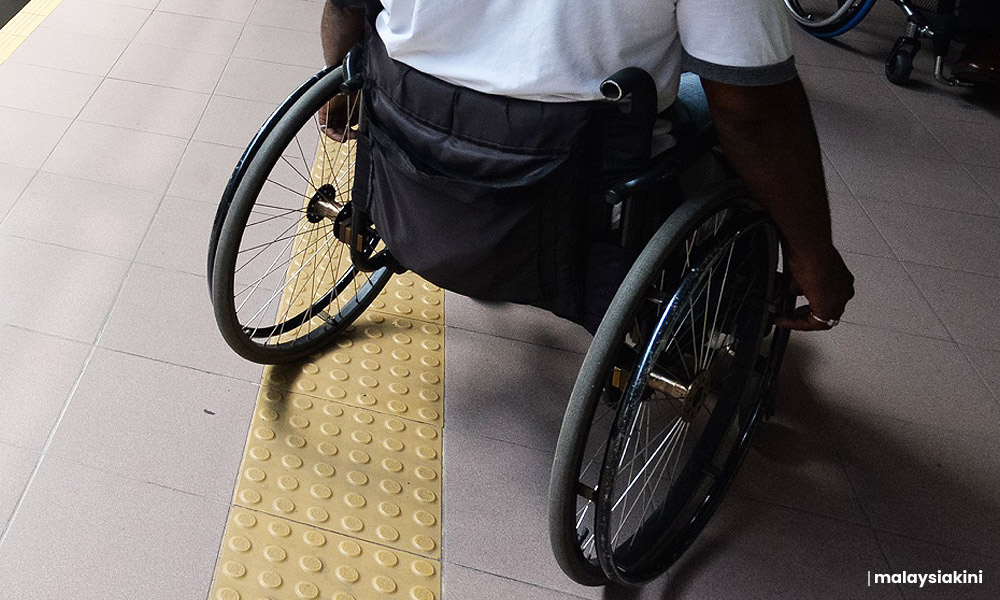
However, one critical area remains inadequately addressed: the safety, continuity, and usability of our pedestrian network for all members of society, including persons with disabilities and older persons.
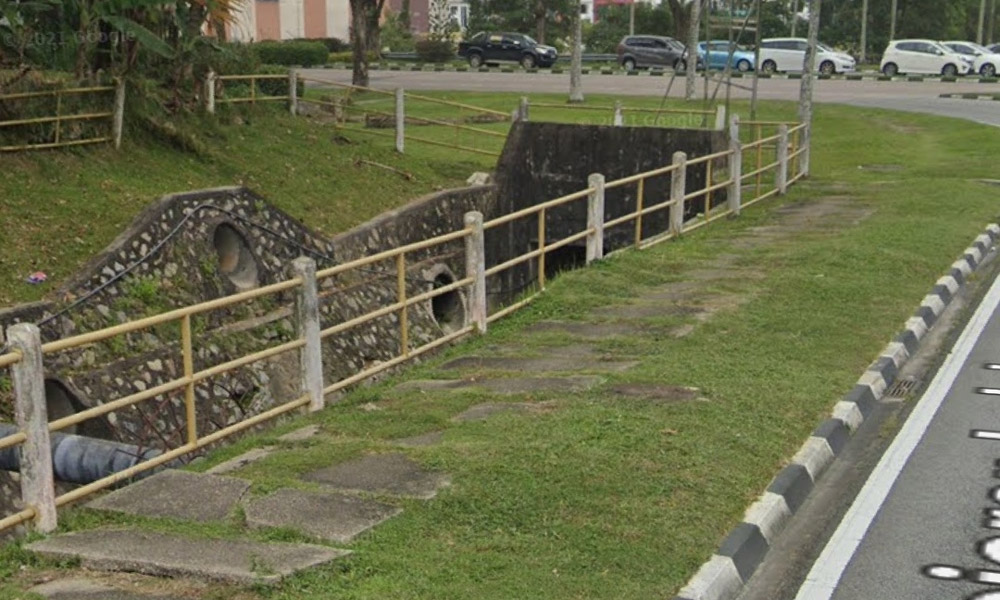
For many disabled and older persons, every journey begins with uncertainty and anxiety. Will the walkway be broken today? Will the kerb ramp be missing? Will the path be blocked? Will the tactile block ends abruptly?
Will we be forced into heavy traffic? These barriers are not minor inconveniences; they pose safety hazards and endanger lives.
We do not want to be trapped in isolation simply because our city is built without us in mind. We do not want to be excluded from mainstream activities. We need to study, work, worship, shop, seek medical care and run errands – just like everyone else.
Safe and accessible walkways are not luxuries; they are the foundation of our freedom and independent living. Inaccessible walkways and pedestrian facilities disable us and shut us out of society.
As disabled individuals and organisations deeply concerned with the lived realities of universal accessibility and mobility in Kuala Lumpur, we respectfully propose the creation of an additional monitoring committee: the Walkability, Universal Access, and Connectivity Committee.
Why the committee is needed
The committee is necessary to address the unresolved accessibility challenges that affect the disabled community and the public at large. These include:
obstructed pathways;
uncontrolled crossings;
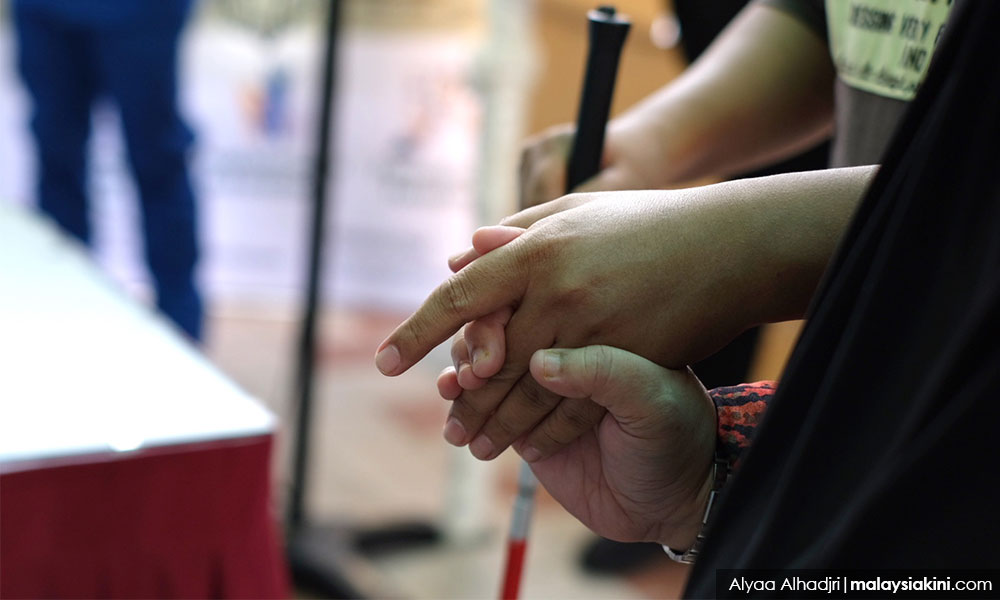
In a dense and busy city like Kuala Lumpur, pedestrian movement is a daily necessity for members of the public including wheelchair users, older persons, people with mobility limitations, the blind and visually impaired persons, deaf people, parents with strollers, children walking to school, pregnant women, working adults, commuters accessing MRT/LRT/bus stations, and tourists navigating the city on foot.
Yet, the current pedestrian environment often remains fractured and unsafe, putting persons with disabilities and others at risk.
Proposed functions of the committee
A dedicated committee would allow DBKL and KL MPs to address these universal access issues systematically. Proposed committee functions include:
Such a committee would complement and not duplicate the work of the existing five committees. It would fill a long-standing gap by ensuring that Kuala Lumpur’s pedestrian network is universally accessible and safe for everyone.
Prevent wastage and save public funds
When walkways, kerb ramps, crossings or related pedestrian facilities are built without proper safety or accessibility considerations, they frequently become unusable or dangerous.
These facilities must then be repaired or reconstructed, resulting in duplicated costs borne by taxpayers.
Building correctly for the first time ensures long-term cost savings and reduces avoidable maintenance expenditure.
Broader benefits
Beyond safety, accessibility and cost savings, a dedicated focus on walkability delivers wider benefits:
Environmental sustainability: Safe, continuous walkways encourage walking and public transport usage, reducing car trips, traffic congestion and carbon dioxide emissions, thereby supporting Malaysia’s climate and low-carbon commitments.
Social inclusion: Universal access benefits everyone, including seniors, pregnant women, people with temporary injuries, children, and visiting tourists.
Ageing nation: Malaysia is fast becoming an ageing nation. Ageing is irreversible, and our infrastructure must be planned with foresight.
Safe, accessible pedestrian routes are essential for older adults to continue living independently.
Accessible tourism and economic gains: Globally, 1.3 billion people, or one in six, are estimated to have a disability, representing one of the world’s largest and most untapped travel markets. This excludes accompanying carers, family members, parents with strollers and older travellers.
Accessible, safe and seamless walkways attract longer stays, higher spending, repeat visits and a stronger global reputation. This will unlock significant economic potential for local businesses, hotels, transport services and the wider tourism ecosystem.
Visit Malaysia Year 2026: As Visit Malaysia Year 2026 begins, enhancing walkability and universal access is both timely and strategic.
Kuala Lumpur must be ready to welcome disabled visitors and older travellers. By strengthening universal access, Kuala Lumpur positions itself as an attractive travel destination for Visit Malaysia Year 2026 and beyond.
A truly liveable world-class city is one where every resident and visitor, regardless of age or disability, can navigate with dignity, confidence and safety.
With structured monitoring and genuine collaboration, Kuala Lumpur can lead by example in building an inclusive, connected and universally friendly city for all its residents and visitors.
We therefore strongly urge Yeoh to heed the concerns of the community and to establish this critically needed “Walkability, Universal Access and Connectivity Committee,” which will strengthen Kuala Lumpur’s liveability and safety for all.
This letter is issued by:
Christine Lee (wheelchair user, advocate and co-founder of Barrier-free Environment and Accessible Transport)
Murugeswaran Veerasamy (president, Damai Disabled Person Association Malaysia)
Pua Ghin Chu (executive director, Beautiful Gate Foundation for the Disabled)
Nadhir Abdul Nasir (chair of communication, Advocacy & Human Rights Committee, Society of the Blind in Malaysia)
Endorsed by the following CSOs:
1. Damai Disabled Person Association Malaysia
2. Beautiful Gate Foundation for the Disabled
3. Malaysian Council for Rehabilitation
4. Selangor Cheshire Home
5. Dual Blessing Berhad
6. Pertubuhan Advokasi dan Kesejahteraan Pekak Malaysia
7. Asia Pacific Network on Accessible Tourism
8. Persatuan Kebajikan Masyarakat Permata Warga Istimewa Malaysia
- Mkini
The views expressed here are those of the author/contributor and do not necessarily represent the views of MMKtT.




No comments:
Post a Comment
Note: Only a member of this blog may post a comment.