


Malaysia’s contemporary political economy is no longer shaped solely by growth forecasts, fiscal arithmetic, or coalition manoeuvring.
Increasingly, it is defined by how the state manages accountability when power, money, and institutions converge.
A cluster of high-profile governance cases, spanning defence procurement, former prime ministers, and influential figures in Islamic finance, has placed the rule of law under sustained public, market, and institutional scrutiny.
The central national question has shifted from whether accountability exists in theory to whether it is applied consistently, predictably, and without political distortion when elite interests and sensitive sectors are involved.
At the centre of this governance stress test stands the MACC operating alongside the Attorney-General’s Chambers and the courts. Together, these institutions form the backbone of Malaysia’s accountability architecture.
Their credibility does not hinge on dramatic arrests or headline seizures, but on procedural integrity: how investigations are framed, how prosecutorial discretion is exercised, and how cases ultimately withstand judicial scrutiny.
In a low-trust political environment, every action or delay reverberates beyond the courtroom, shaping perceptions of fairness, competence, and institutional independence.
Matter of national security
The defence procurement probe announced in January 2026 illustrates why governance failures in certain sectors carry disproportionate national risk.
The MACC’s confirmation of charges against two former top military leaders, including a former armed forces chief and a former army chief, alongside allegations of bribery, abuse of power, criminal breach of trust, and illicit gifts tied to army procurement, triggered immediate institutional and political responses.
Precautionary procurement freezes and a governance review announced by the executive branch, led by Prime Minister Anwar Ibrahim, were undertaken within the broader constitutional context, reflecting due regard for the Yang di-Pertuan Agong’s role as supreme commander and his advisory emphasis on integrity, accountability, and public confidence in defence procurement systems.
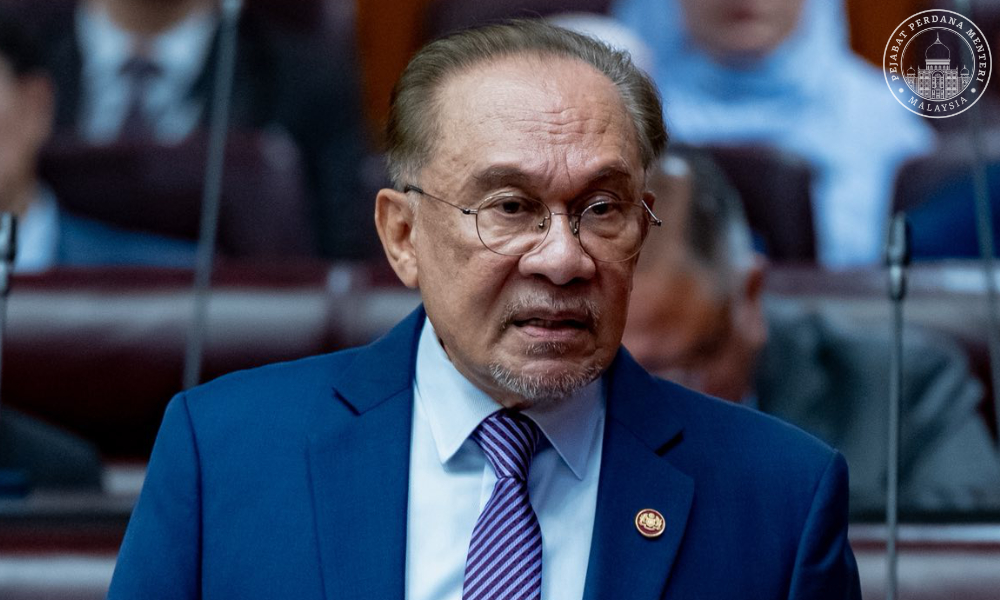
From a political-economic perspective, this response functions as a classic tone-from-the-top intervention.
Defence procurement combines large budgets, opaque vendor ecosystems, and operational discretion justified by national security. This mix makes it a high-risk governance domain globally.
When integrity is questioned, the damage is twofold: fiscal efficiency erodes through potential leakage, and national security credibility weakens when procurement decisions are suspected to reflect private gain rather than operational need.
Executive signals to tighten controls, therefore, matter regardless of eventual convictions.
Public discourse can undermine justice
Yet the case also exposes a recurring vulnerability in public discourse. Charges are allegations, not findings of guilt. Procurement freezes are precautionary governance tools, not judicial verdicts.
Conflating investigation with conviction risks undermining due process and eroding the rule-of-law norms reform advocates seek to strengthen.
The unresolved policy question is whether procurement reforms will be institutionalised through stronger conflict-of-interest declarations, beneficial ownership verification, and post-award audits, or fade once political attention shifts.
A different governance tension emerges in the investigation linked to former prime minister Ismail Sabri Yaakob.

Here, scrutiny centres on alleged irregularities involving government publicity expenditure and procurement during his premiership.
Authorities confirmed that he submitted a wealth declaration and provided statements, while investigators seized substantial sums of cash and gold and detained senior officials associated with the probe.
By mid-2025, investigation papers were submitted to prosecutors, with forfeiture proceedings initiated thereafter.
Investigations involving a former prime minister are inherently high-voltage. They test the claim that no one is above the law while inviting accusations of selective enforcement.
Economically, the stakes lie in public spending credibility. Leakages in procurement or publicity expenditure translate directly into fiscal waste, undermining confidence as Malaysia manages subsidy rationalisation, deficit discipline, and investor signalling.
Two distortions have dominated public narratives. The first assumes that seizures automatically prove personal guilt; they do not. Forfeiture proceedings and criminal liability are distinct processes requiring proof in court.

The second treats the absence of immediate charges as evidence of political stalling. In reality, complex financial investigations demand prolonged evidentiary review.
While civil society concerns about reputational drag from silence are understandable, only prosecutorial decisions and judicial outcomes carry legal weight.
The case involving former prime minister Muhyiddin Yassin has advanced further along the judicial pipeline.
He faces charges related to alleged abuse of power and receipt of unlawful proceeds widely reported at RM432.5 million, with trial scheduled for March 2026.
The alleged conduct is linked to the pandemic-era governing period, placing the matter at the intersection of emergency procurement, political finance, and crisis governance.
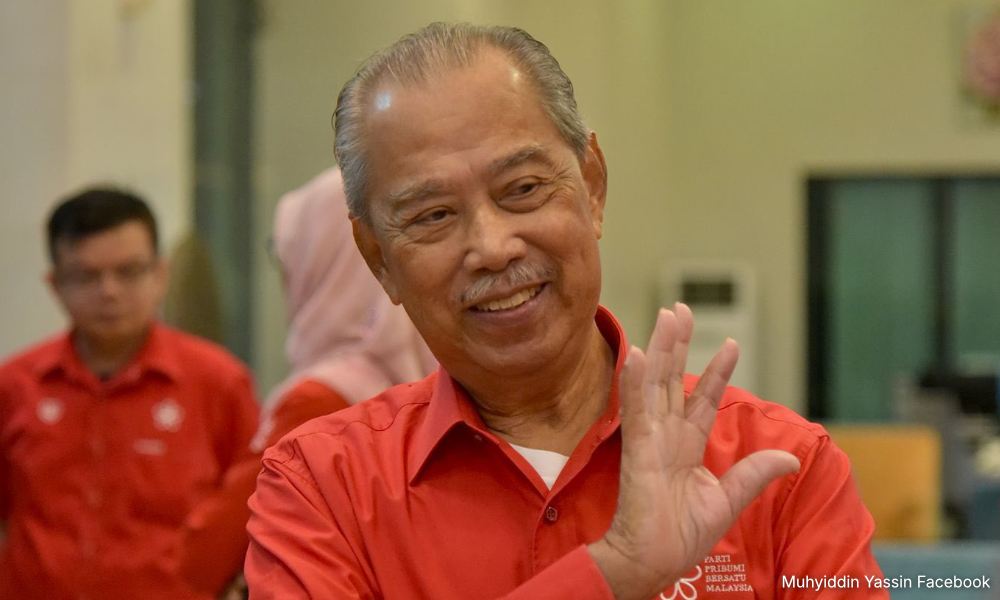
From a rule-of-law standpoint, this case illustrates both institutional resilience and public misunderstanding.
Earlier judicial decisions discharging certain charges for vagueness, followed by appellate reinstatement, demonstrate that prosecution is not merely about charging, but about legal specificity capable of surviving scrutiny.
A procedural discharge is not factual exoneration, just as reinstated charges do not imply guilt. The decisive test lies in the trial itself.
A test of governance
Taken together, these cases form a composite stress test of Malaysia’s governance architecture.
The defence probe tests institutional courage in a high-secrecy environment. The Ismail Sabri investigation tests prosecutorial timeliness and communication discipline. The Muhyiddin trial tests whether sensitive prosecutions can withstand rigour without collapsing into perceptions of selective justice.
Their combined effect shapes confidence through investor pricing, bureaucratic morale, and public trust.
A fourth dimension sits outside the courtroom but is no less consequential. Matters involving businessperson Daud Bakar of IJM highlight governance challenges in corporate and financial ecosystems rather than criminal liability.

As a globally recognised Islamic finance authority, his extensive advisory roles reflect Malaysia’s success in exporting syariah expertise, while exposing tensions around role concentration and conflict management.
No criminal wrongdoing has been established; the issue is governance design and perception. The unresolved challenge is systemic: how to balance global competitiveness with institutional resilience so credibility remains system-centric rather than person-centric.
Ultimately, Malaysia’s rule-of-law credibility will not be determined by who is charged, but by how consistently processes are followed from investigation to verdict.
These cases are not about personalities alone; they test whether institutions can deliver accountability that is firm, fair, and predictable.
In that sense, the moment is less a crisis than an opportunity to embed reform as an institutional habit rather than a political slogan. - Mkini
AZAM MOHD is an independent political and economic analyst.
The views expressed here are those of the author/contributor and do not necessarily represent the views of MMKtT.

No comments:
Post a Comment
Note: Only a member of this blog may post a comment.