


I attended a recent Fide Forum on the 2026 economic outlook with a key takeaway from the keynote by former central banker Andrew Sheng.
The global economy is now defined by fragmentation and policy shocks, so Malaysia must stay nimble, build resilient middle-tier capabilities, and avoid self-inflicted drag from domestic bureaucratic overreach. From there, two lessons should worry policymakers.
First, volatility is no longer episodic. Shocks arrive faster than institutional responses, and countries that cannot act quickly will lose competitiveness through higher costs, slower decisions, and weaker confidence.
Second, trust has become a hard economic variable. When policies are predictable and institutions are fair, businesses invest, and households will comply. However, when policies stray and rules change midstream, enforcement feels discretionary, and people hedge, delay, and disengage.
Malaysia is at a critical juncture precisely because we need better execution and higher trust in today’s chaotic world, yet we are still arguing about fundamentals: what the rule is, who it applies to, when it starts, and what the enforcement will look like.
This is the recurring playbook. Start with a legitimate policy objective. Add an administrative mechanism. Expand government discretion. Public questions new policy for hidden traps and future abuses. Rinse and repeat; the cycle continues.
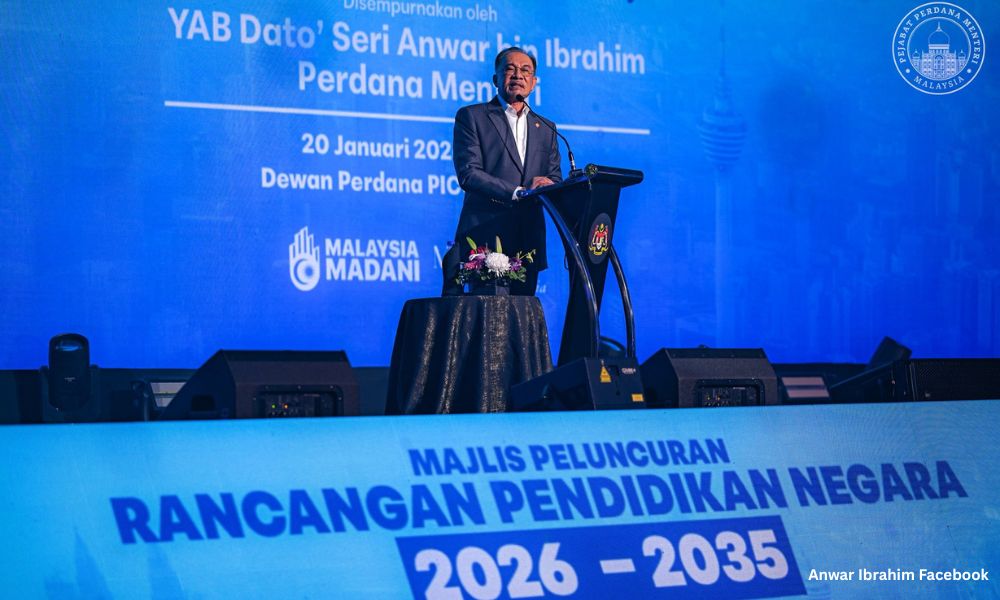
Take education. Malaysia’s Education Blueprint 2026–2035 is presented as a long-term reform blueprint. Yet the debate has quickly centred on implementation signals that many parents and teachers interpret as a return to old instincts rather than a leap forward.
For example, the government’s announcement of proposals around earlier entry pathways for six-year-olds into Year One has triggered anxiety about implicit tiering, where a policy can be labelled “voluntary” but still create social pressure and perceived ranking, especially when parents do not trust that readiness assessments will be consistent across schools or that classroom capacity will match the policy ambition.
Even welfare delivery is sliding into the same bureaucratic instinct. Deputy Finance Minister Liew Chin Tong had to clarify recently that Malaysians who frequently cross into Singapore are not automatically disqualified from the Rahmah Cash Aid (STR), but rather applications may be flagged as “not approved” for being deemed to live, work, or study abroad, with an appeals process available.
The intent is to ensure STR assistance reaches deserving Malaysians. However, the real impact is that legitimate cross-border commuters can be drawn into a bureaucratic loop in which assistance depends on proving innocence through appeals, as if one is deemed unqualified until proven otherwise.
Trapped in shifting rules
The Urban Renewal Bill (URA) fits the same pattern. The cabinet’s withdrawal of the bill for amendments was a responsible step, but the real trust test is what happens next. Retabling cannot proceed as another top-down mechanism, and the public must be able to see the implementing regulations and enforceable safeguards in advance, not after the fact.

This is what “permission-based governance” looks like, and the clearest expression of bureaucratisation is on the economic policy side because this is where the government can squeeze money, cash flow, and time through rule design.
Start with e-Invoicing. Modernisation is not the issue; rather, the issue is moving goalposts and compliance architecture that expands regardless of postponements.
Individually, each adjustment can be defended as “responsive governance”. Collectively, it forces SMEs into repeated planning and implementation cycles, forcing companies to re-scope software, re-budget, re-train staff, and re-interpret guidance every time.
The direct cost is not only the vendor fee but also management attention diverted from sales, productivity, and hiring. The hidden cost is enforcement anxiety, where the fear that a technical mistake becomes a penalty, even when the policy itself is still shifting.
Costs quietly pile up
Mandatory Employees Provident Fund (EPF) contributions for non-Malaysian employees add another layer of administrative and cost pressure, especially in labour-intensive sectors.
EPF has directed that wages from October 2025 onwards, both employer and employee, must contribute two percent for eligible non-citizen workers. Social protection goals can be defensible, but implementation still matters.
When multiple reforms land close together, even “small” contribution changes become part of a wider compliance stack.
Sales and service tax expansion further compounds the problem because cascading taxes travel through supply chains in ways that are harder for the public to see until prices move.
The Finance Ministry framed the July 2025 changes as broadening the tax base while mitigating the impact on basic items and small businesses.
Yet industry groups have warned that expanding coverage across goods and taxing inputs, including capital goods, raises investment costs and creates knock-on effects across production networks.
This is how “tax on tax” dynamics emerge. When inputs and equipment are taxed, the tax becomes embedded in costs, then reappears downstream as higher prices and weaker expansion appetite.
Govern for outcomes, not paperwork
None of this is an argument against rules. It is an argument for better rules and fewer permission gates.
Before introducing reforms that expand discretion or compliance, Malaysia should apply a public interest test of necessity, proportionality, transparency criteria, appeal rights, independent oversight, published outcome metrics, and time-bound implementation with stable, credible timelines.
A country cannot remain nimble in a hostile world if it is turning business survival into an administrative obstacle course.
If the government wants genuine resilience, it must treat friction as an economic risk and trust as strategic capital.
Reduce administrative burden, stop midstream rule changes, narrow discretionary power and govern for outcomes rather than paperwork. - Mkini
WOON KING CHAI is the director of the Institute of Strategic Analysis and Policy Research (Insap). He previously served in senior roles in the federal government and the private sector.
The views expressed here are those of the author/contributor and do not necessarily represent the views of MMKtT

No comments:
Post a Comment
Note: Only a member of this blog may post a comment.