


I’ve spent a lot of time telling young, wide-eyed journalism students that there’s no such thing as a stupid question.
I usually say it with a straight face, sitting on a desk in a classroom, trying to look cool like Robin Williams in “Dead Poets Society”, trying to look like I’ve seen it all.
But after watching the clip of Rex Tan at the George Galloway forum recently, I might have to take back that statement. Just a little bit. Like, maybe five percent.
Honestly, it was very much a facepalm moment. Tan, a young journalist formerly with Free Malaysia Today (he has resigned), stood up to ask the fiery Brit a question.
It was about Gaza, but instead, he ended up making a distasteful comparison about Malay-Chinese relations and the history of Malaya with the treatment of Palestinians by Israel. It was distasteful, even though what he said isn’t as extreme.
Galloway, who obviously knows how to take advantage of this situation to school someone, did what he did. He destroyed the question, the logic, and most probably Tan’s confidence for the next three to five years as well.

The crowd applauded and, of course, the internet exploded. The next morning, Tan had apologised and resigned.
And that, in a world that isn't obsessed with drama, should have been the end of it. But knowing our society, we know to expect more.
No to cancel culture
Firstly, we take a look at the reaction on the internet. I’m not a fan of cancel culture. It’s like a digital version of villagers with pitchforks and torches, but instead of all that, they have 5G connections.
Don't get me wrong. If someone says something factually wrong or insensitive, they should be called out. That’s how we learn. But what we’ve done is not just call them out, but just totally erase or delete the person altogether.
Tan was doxxed, his employer was harassed, and people were acting as if he’d personally insulted their ancestors at the altar.
Why couldn’t it have just been like “Eh, bro, what are you talking about?” or just a witty rebuttal? Instead, we demand people lose their jobs, their reputations, and their lives over a mistake.
If we cancelled everyone who said something silly in their youth, then half of our current leaders wouldn't have made it past the youth wing stage.
Not only that, but the authorities also decided to join the party. Tan was arrested and investigated under the Sedition Act, which, in my opinion, is a bit excessive.

Investigating a journalist for a poorly phrased question is like calling the fire department because someone burnt their toast.
Learning by failing
Here’s the thing about journalism, or life in general. You learn by failing. Whatever mistakes we make, make us better people. I remember some of the questions I asked when I first started as a journalist.
I’m sure I’ve asked things that made people take a second look at me and wonder if I had actually gone to school.
But that’s the process. You ask a dumb question, you get embarrassed, you go home, you read a bit more, and maybe talk to some other people, and next time, you ask a better question.
Young journalists like Tan need these cringy moments. They are the scars of the profession.
Being humiliated by Galloway is actually a great story to tell at the mamak 10 years from now. It’s a rite of passage, but being arrested is not, because that just becomes a deterrent.
If all young reporters who make stupid mistakes get arrested, I don’t think we’ll get better journalists; we’ll just get scared, robot, copy-paste journalists.
Look, I understand that the topic of Palestine is incredibly sensitive. As Malaysians, we feel it in our bones. We want to show the world that we are united in our stance against injustice.
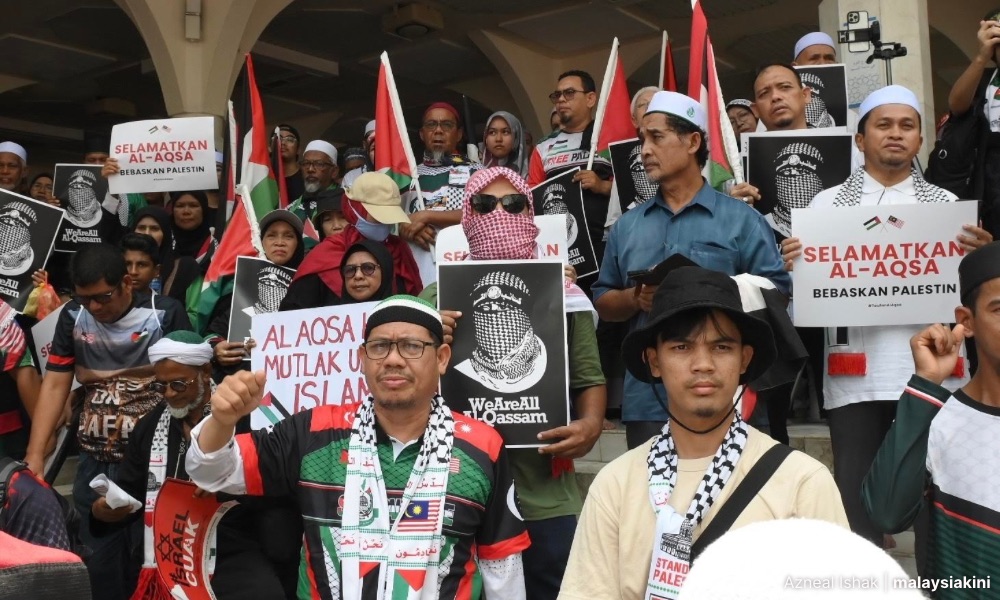
But this doesn't come from silencing the so-called wrong questions. It actually comes from having the best answers.
Public discourse at its best
What happened with Tan and Galloway is a good example of public discourse. Tan had a bad question and an opinion; Galloway had the right answer, and so he won the discourse.
The audience who were there, and everyone who read or listened to it, learned something. Mission accomplished for a good public discourse.
By turning this into an investigation, what is really happening is that the spotlight is being taken away from the real issues and put on a young guy who just had a really bad day at work.
We’re making ourselves look a bit fragile and insecure. It’s as if our national harmony is so delicate that one silly question could destroy everything.
I believe Malaysia and Malaysians are stronger than that. What I really hope is that Tan learns something from this experience, and, as a society, so can we as well.
We should also let our youths make mistakes. Let them get schooled and let them grow some thick skin, then become better. Remember, we all become better when we learn from our mistakes. - Mkini
ZAN AZLEE is a writer, documentary filmmaker, journalist and academic. Visit fatbidin.com to view his work.
The views expressed here are those of the author/contributor and do not necessarily represent the views of MMKtT.

No comments:
Post a Comment
Note: Only a member of this blog may post a comment.