


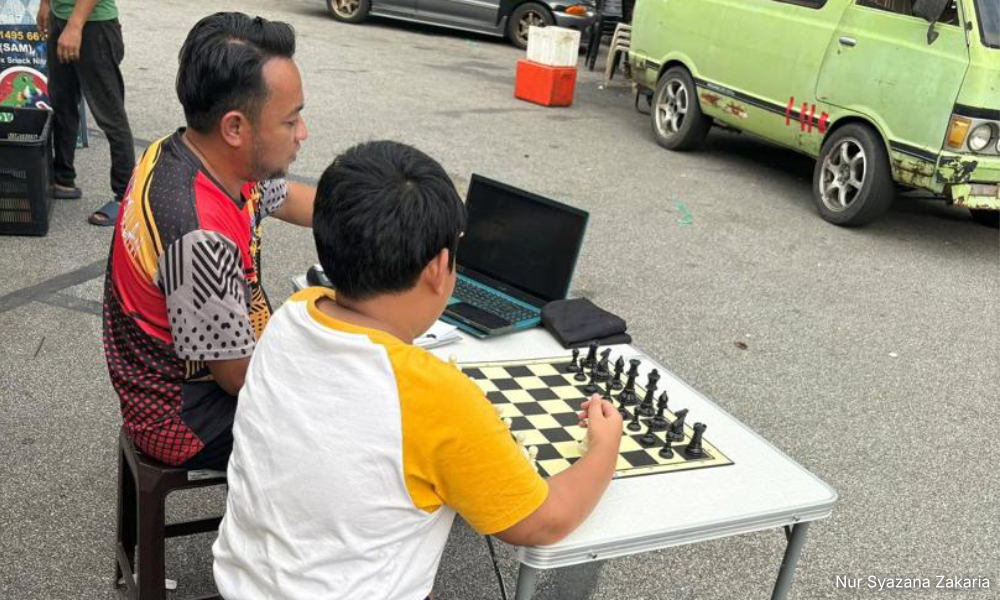
MALAYSIANSKINI | Amid the clatter of plates and the hum of evening traffic at the Senawang Prima hawker area in Seremban, a 12-year-old boy sits quietly behind a chessboard, waiting for his next opponent.
The roadside chess table, set up by his mother, has become an unlikely classroom - one where Nur Raziq Nur Qisti learns confidence, focus, and connection one move at a time.
The chess table is the result of his mother’s determination to nurture her son’s talent and build self-confidence by playing chess with the public.
For Nur Syazana Zakaria, 36, a food vendor, a game once regarded as a simple hobby has become a form of therapy, a tool for emotional regulation, and a source of hope for her autistic son.
The story of Raziq inviting passers-by to play chess at the hawker area went viral after Syazana shared their experience on Facebook.

“Raziq doesn’t talk much and prefers to keep to himself,” she told Malaysiakini, describing the personality of her eldest of two children.
Raziq was diagnosed as being on the autism spectrum at the age of two. As first-time parents, Syazana admitted that accepting the diagnosis was not easy.
“When we found out he was autistic, we held on to one thing - we had to help him,” she said.
One of the biggest challenges in raising Raziq, she added, has been managing his frequent emotional meltdowns.
Raziq’s interest in chess began almost by accident. A primary school teacher noticed his ability and encouraged him to take part in a chess competition.
“We didn’t expect him to make it to the next level. From there, chess became something he took seriously,” Syazana shared.
First introduction
Syazana first introduced chess pieces to Raziq when he was around seven or eight years old through online resources and gadgets. Much of the rest he learned on his own - in the early stages, he even played chess at home without a chessboard.
As he became more immersed in the game, Syazana began to notice clear changes. Raziq grew quieter, more thoughtful, and better able to regulate his emotions.
Although Raziq has attended chess classes, Syazana feels the training has not been sufficient. Online training, she said, is also not very suitable for him.
“Raziq’s condition limits him. I’ve long been looking for people for him to train with, but there are constraints of time and place,” she explained.
As a small-scale food vendor, Syazana cannot afford to send Raziq for additional training.
That was how the idea of setting up a chess table at her stall came about.
“I thought, if I can’t go out, I’ll invite them to come to the stall. At the same time, I can do business, look after my children, and Raziq can practise too,” she said.
Her business income is used to cover the costs of chess training and tournament participation.
The RM2 challenge
At the chess table, Syazana offers a small RM2 reward to anyone who can defeat Raziq twice.
But the offer serves a specific purpose.
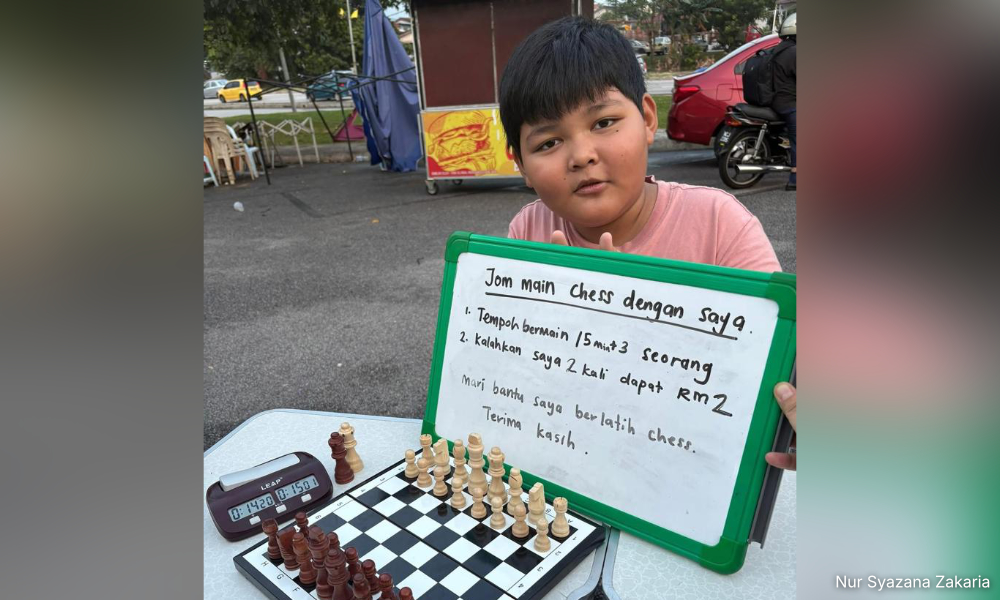
“Raziq really values money and is very thrifty. So he has to sacrifice his own money if he doesn’t play seriously,” she said.
The approach is meant to ensure Raziq remains focused and committed, even though he is practising by the roadside.
Not everyone understands the intention. Some have questioned the challenge and linked it to gambling.
“As a mother, of course, it affects me emotionally.
“We spent a week discussing and persuading Raziq to make this idea a reality. When there are negative comments, I worry about someone saying something in front of him,” Syazana said.
Still, she said many people have reacted positively; some have stopped by to play with Raziq, while others brought their children to play chess with him.
So far, Raziq has faced seven opponents at the stall - winning four matches, drawing two, and losing only once.
At the same time, he trains online on the Lichess platform, where he has achieved a rating of 1,466, a level considered above average.
Positive changes
In terms of personal development, Syazana observed positive changes in Raziq’s daily routine. He is now more confident when interacting with strangers and more disciplined in managing his time.
“Raziq is more confident about playing now. He has a more positive view of himself in chess,” she added.
The game has also helped him improve his focus, sit longer in one place, and spend more time practising rather than playing other online games.
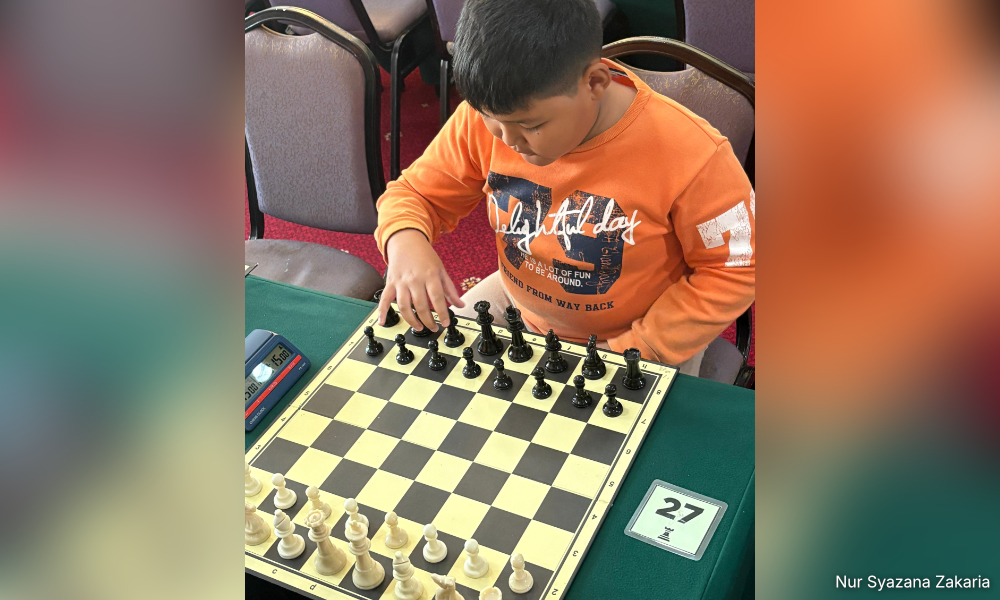
Most importantly, she said, Raziq is happy and does not feel pressured by expectations.
Syazana hopes her son will continue to grow and develop in the world of chess despite the challenges ahead.
“With great hope, I plan to send Raziq for formal training and competitions, including at national and international levels,” she said.
She further shared a message for the public about children with autism.
“Don’t judge them without knowing them.
“They can be amazing children if they are accepted and supported in the right way,” she said.
MALAYSIANSKINI is a series on Malaysians you should know.

No comments:
Post a Comment
Note: Only a member of this blog may post a comment.