


Today, 48,526 Sabahans go to the polls in the parliament constituency of the interior constituency of Kinabatangan, with 13,703 of these also able to vote in the state seat of Lamag, one of the three seats in this constituency.
The others state seats in Kinabatangan are Sukau and Kuamut.
The by-election was called after the passing of Umno stalwart Bung Moktar Radin last month. Bung served in parliament for six terms since 1999, and in the state assembly for one, elected both in 2020 and 2025.
Kinabatangan is one of the most magical parts of Malaysia. Named for its long river [also called the Chinese (Kina) River (Batang)], it is known for its biodiversity - the corridor of life.
Lucky visitors can see the Bornean elephants, orangutans, proboscis monkeys and vast range of birds, while avoiding the increasing number of crocodiles in these infested waters.
Politically, this by-election is also a test of the corridor of life of political parties. For Umno/BN in Sabah, this election will test its ability to hold onto a core base for the party. The contest will simultaneously showcase Warisan’s strength (and weakness) in interior Sabah.
Umno/BN has the advantage in both seats, and is confident of winning, but electoral patterns and local dynamics suggest that the contest remains competitive, especially the state seat of Lamag.
A look at the constituency composition
Both seats are ethnically diverse, with the main group the Sungai communities, the peoples of the river.
Predominantly Muslim, Orang Sungai are actually many different communities, predominantly Muslim. Usually, non-Muslims living along the river adopt their specific community and are classified under the Dusun (Kadazan Dusun Murut Rungus - KDMR) grouping.
The non-Muslim communities are concentrated in the state seat of Kuamut. The other main communities are Bugis, Malays, Suluk and Bajau.
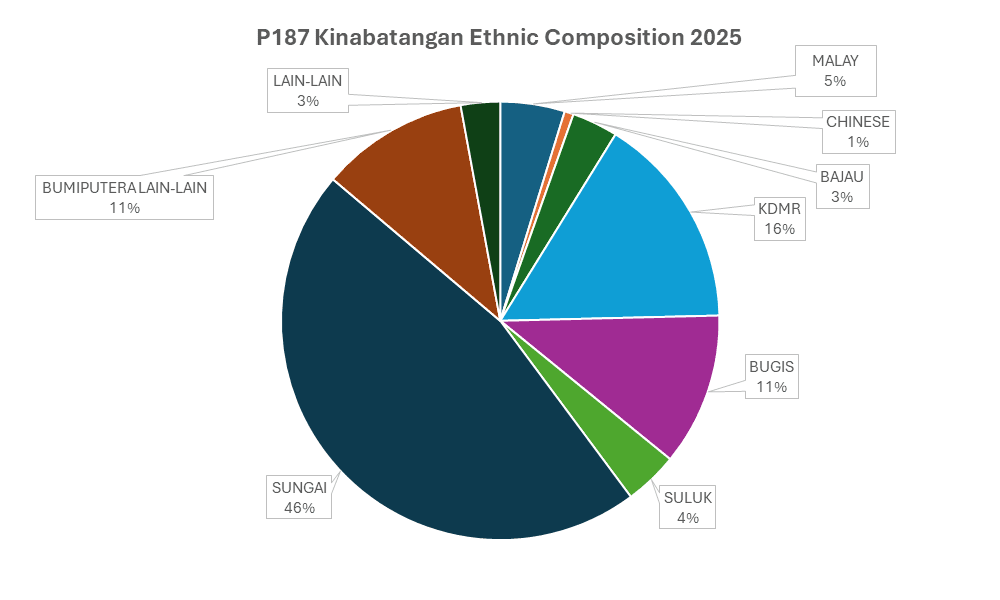
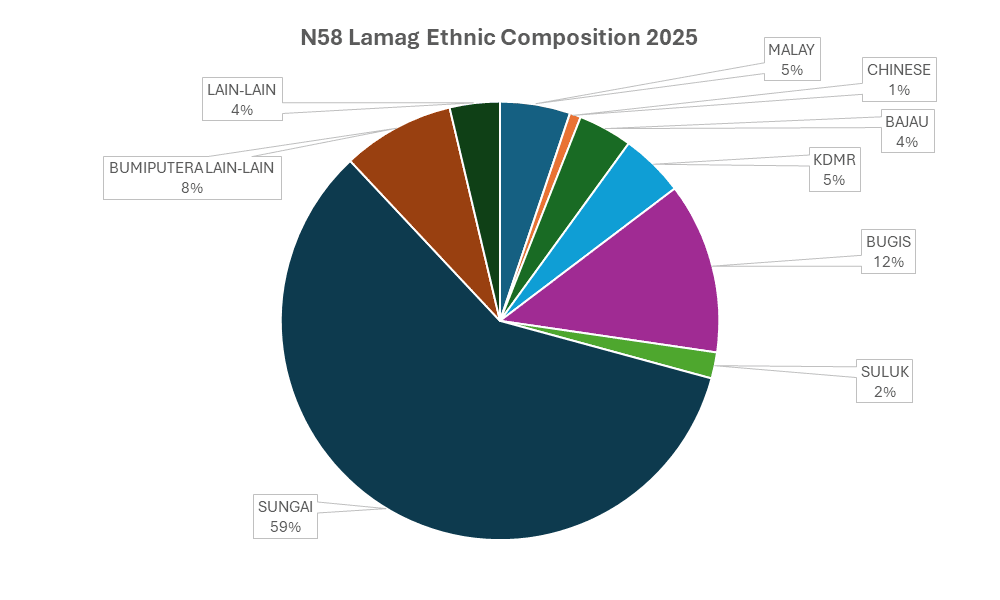
Bung came from the Sungai communities, and this group comprised the base of his support until recently, as shown below.
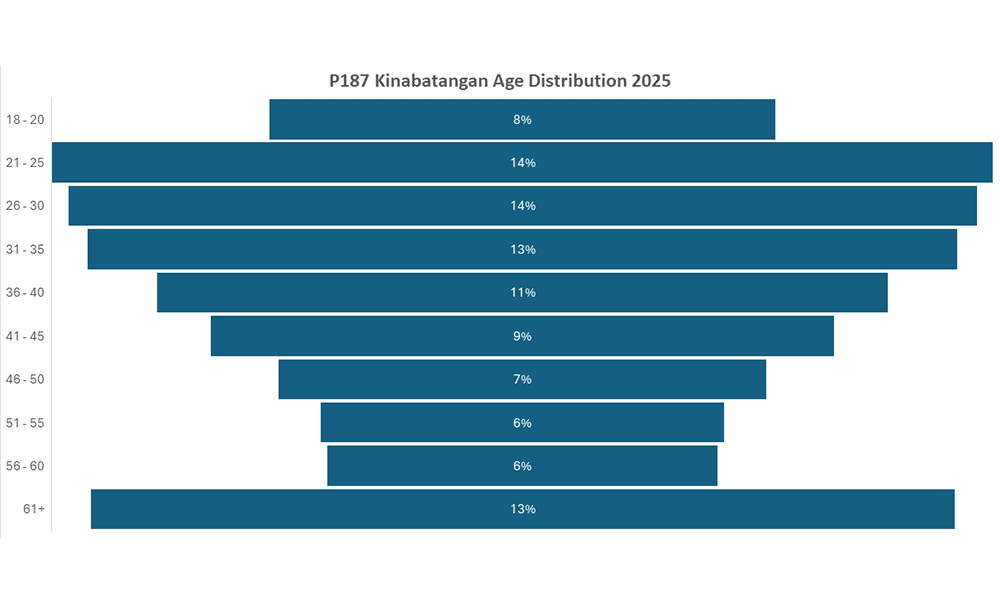
The seat reflects the common pattern of age distribution in Sabah, with over a third of the voters, 36 percent, 30 years old or under.
The most important social feature of Kinabatangan is its poverty. Over a third of the population, 37 percent were classified as “absolute poor” in 2022 according to the Department of Statistics Malaysia (DOSM).
The largest share is in Kuamut, 52 percent, with 26 percent in Lamag and 28 percent in Sukau. These numbers fail to capture the challenges that ordinary citizens living in the interior face from accessing health care to making a living. Land issues in particular remain unresolved.
Importantly, there have been significant improvements in recent years with services and infrastructure, especially in Bukit Garam town.
Bung is credited for transforming local services and bringing new roads. Yet, conditions remain serious and in need of greater attention, especially roads and access to health care.
Kinabatangan showcases inadequate provision of basic services to Sabah. Conditions in Kinabatangan are far from what should be provided.
The village of Kuamut is only accessible by river boat, for example, with other parts of the constituency requiring four-wheel drive for access and luck to avoid regular flooding.
A look at voting patterns: Greater Umno/BN electoral vulnerability
Given vulnerabilities and needs, the role that a representative play in the interior is essential, a lifeblood tie for survival for communities.
Bung was known as an “interior” warlord, representing an area with those that loved him and others who expected more from him.
While outside he was known for his brashness and controversial/inappropriate comments, he was seen as a Sabah fighter for the state and the communities he represented.
Over the years, he faced greater electoral competition as an analysis of voting trends show.
The analysis uses ecological inference to determine group voting and looks at the parliament elections of 2018 and 2022, as well as the state elections of 2020 and 2025.
For an analysis of Kinabatangan voting for 2025, state results were used as proxies. Do note that these should only be interpreted as indicating trends, as Umno/BN did not contest in Kuamut.
Ethnic voting variation is the most pronounced in these constituencies. Bung’s traditional base of support came from the Sungai communities, followed by Bugis voters. These communities have long supported Umno/BN.
With the exodus of Upko from BN in 2018, there was a decline of support among Dusun voters. In 2025, support declined further, in part due to Umno/BN not fielding candidates in Kuamut where the majority of Dusun in Kinabatangan live.
The year 2025 also brought a decline of support for Umno/BN in the Sungai community, with Gabungan Rakyat Sabah (GRS) and independent candidate both winning and dividing Sungai support that had traditionally gone to Umno/BN.
In Lamag, for example, Sungai support dropped by 18 percent. It was the gain in support from Bugis voters that saved Bung, who won the constituency in 2025 by a mere 153 votes.
The independent candidate of 2025, Mohd Ismail Ayob, is now the Umno/BN by election candidate, with the view that his support and that of traditional Umno/BN supporters will win the seat.
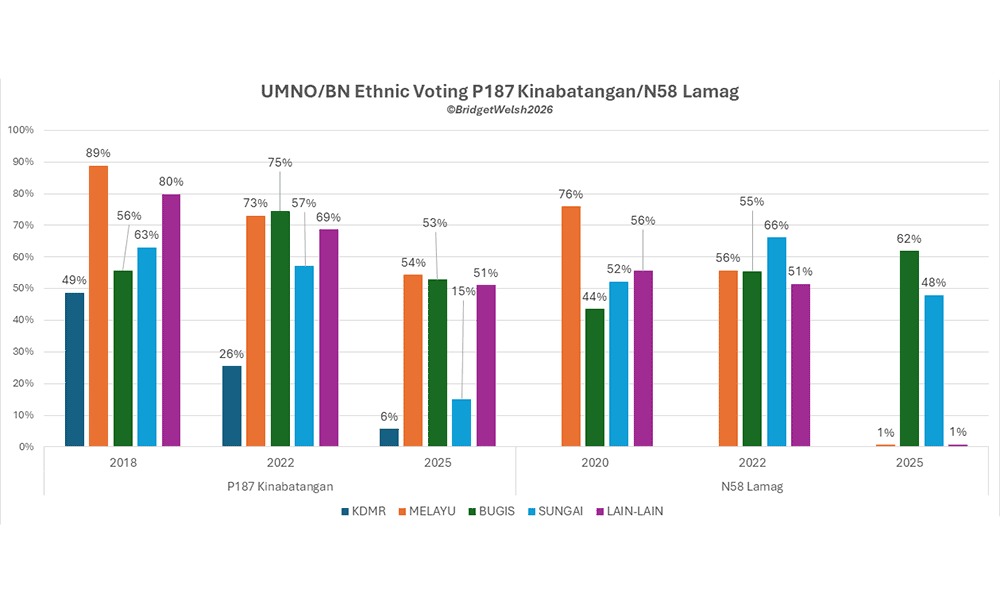
One of the main Umno/BN’s weakness is the loss of support across communities in Sabah and a narrowing dependence on support of only a handful of communities. This is the case in these two contests.
The age voting patterns point to little variation, as youth support for Umno/BN is also another state-wide weakness, but it is not pronounced in these contests.
What matters instead is support of families, as voting practices remain tied to family loyalties rather than age cohorts in interior areas such as Kinabatangan.
Of the two seats, Lamag is the most competitive and shows Umno/BN’s electoral vulnerability. GRS and Upko not contesting in these by elections gives Umno/BN its electoral advantage in a context where there has been electoral erosion of support.
Warisan interior weakness
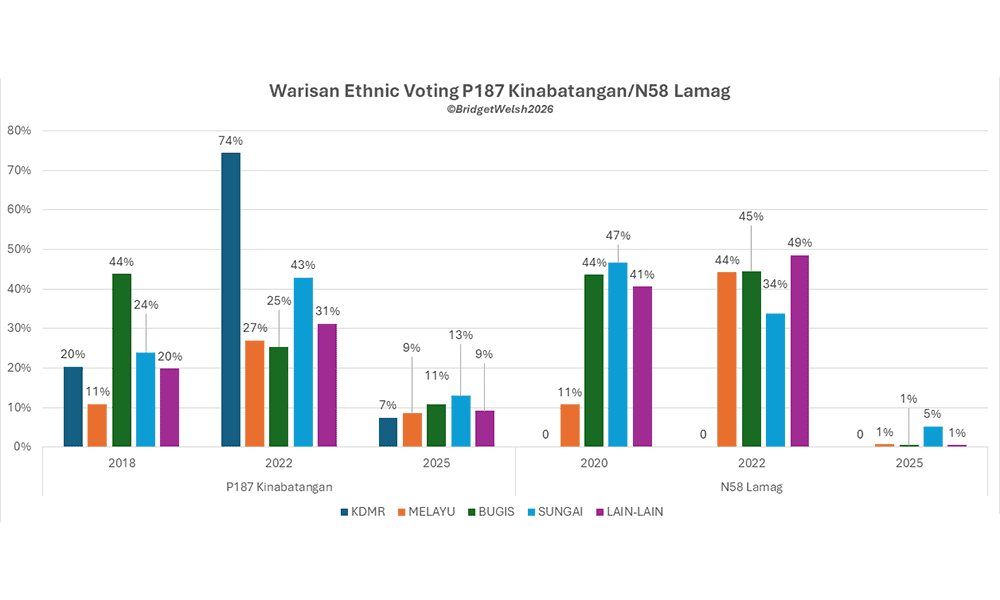
Yet, Umno/BN is not the only party facing electoral losses. Warisan is as well; since 2022, Warisan support in interior areas has declined.
As with Umno/BN it lost its support from Upko and faced competition from GRS in 2025. It performed poorly in 2025, winning only 372 votes, with an overall decline of 37 percent in vote share.
This pattern of interior weakness extends across multiple constituencies for many reasons. The main factor is that they do not have access to resources as opposition, and in the 2025 campaign did not focus resources and mobilisation in winning these Bung incumbent’s seat.
In 2025, Warisan fielded a particularly weak candidate against Umno/BN. In the 2026 by-election, Warisan faces an uphill battle in turning this pattern around.
Interior trifecta - Family, personality and resources
Looking at support by party, however, does not properly capture electoral realities in Sabah’s interior constituencies.
What gives life to this electoral corridor are social ties - the role of families, views of the candidate and resources to mobilise support, including support to get to the voting centre in these remote areas.
Money does matter, but what is also essential is social acceptance and support within communities. The candidate factor is especially important.
This is where the two constituencies are more interesting than they seem. For the Kinabatangan contest, Umno/BN is tapping into the support for Bung, fielding his son 31-year-old Naim Kurniawan Moktar.
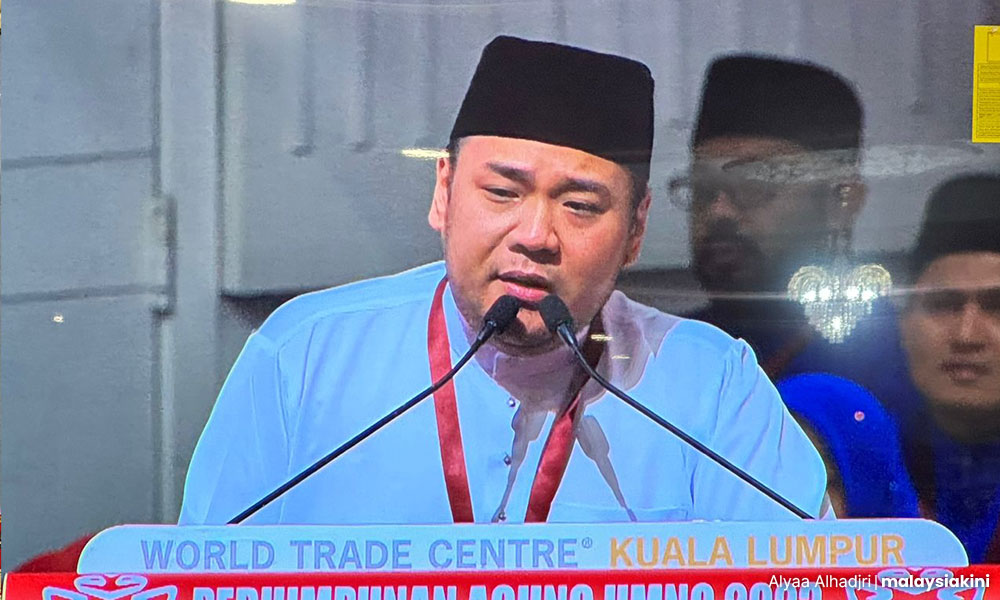
Of the 22 parliamentary by-elections held since 2008, it is only in one seat where a family member fielded lost the by-election, in 2010 in Sibu when DAP’s Wong Ho Leng pipped the cousin of the incumbent Robert Lau Hui Yew.
In the parliament seat of Kinabatangan, Naim has sympathy from voters and has been able to connect to the ground, as his father was able to do.
Naim is facing a Warisan - formerly Umno stalwart Saddi Abdul Rahman, who served as the assemblyperson for Sukau for three terms from 2008 to 2018, and an independent candidate Goldam Hamid.
Saddi’s not only faces the obstacle of Warisan interior weakness, but he also has a challenge of winning youth support.
Saddi has resources and is well connected socially. Goldham’s anti-party campaign message has struggled to resonate in a by-election contest where voters are looking for security through access to government.
Lamag is the more interesting contest of the two, as the test will be whether Ismail is able to navigate resentments for challenging both Umno/BN and GRS in the recent past as he moved party loyalties.
The Warisan candidate, Mazliwati Abdul Malik Chua is the daughter of Abdul Malik Chua who was the state assemblyperson for Kuamut for four terms, 1976-1986 and 1999-2004.
She contested against Bung in 2022 in the Kinabatangan contest, winning 43 percent of the vote in a one-on-one contest. She has strong family ties in the area and is hoping that these loyalties will work in her favour. She has a chance to win, although BN retains the clear advantage.
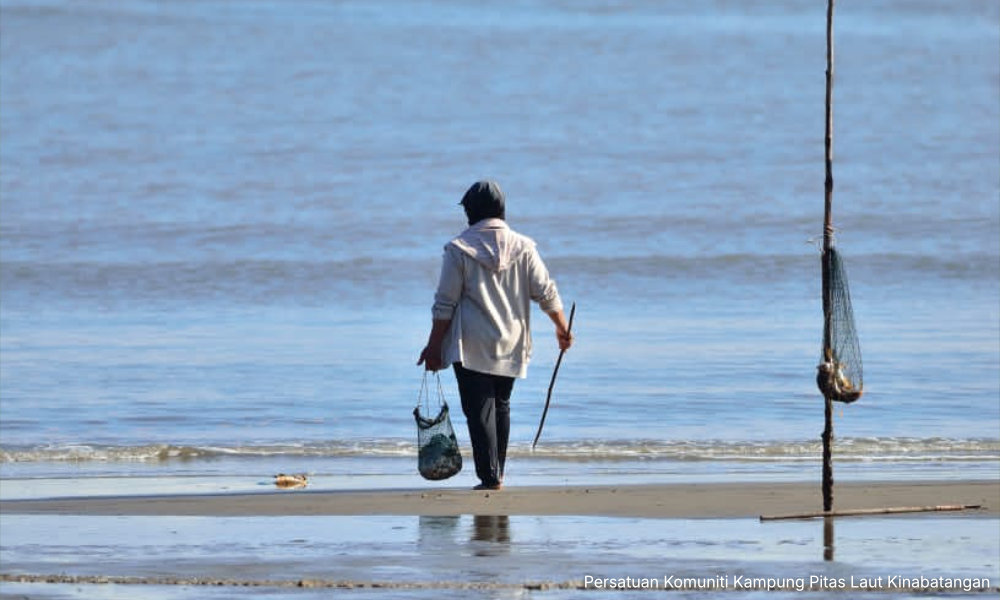
The campaign has been a quiet one, with less fanfare than that of 2025. Distances are remote and campaigning is highly personalised in local communities. Turnout is expected to be comparatively lower.
For both parties, however, the contest speaks to their political corridors - for Umno/BN losing in a core interior area would be a significant erosion, while for Warisan hoping for the upset, the party is wrestling with support across Sabah as a whole, especially in the interior.
No matter who wins, however, Kinabatangan speaks to the need for whoever wins to do more for the communities in these constituencies.
The gaps in basic needs and livelihoods need to be addressed, and the fight for the needful will remain alive for this beautiful diverse corridor. - Mkini
BRIDGET WELSH is an honorary research associate of the University of Nottingham’s Asia Research Institute, a senior research associate at Hu Fu Centre for East Asia Democratic Studies, and a senior associate fellow at The Habibie Centre. Her writings can be found at bridgetwelsh.com.
The views expressed here are those of the author/contributor and do not necessarily represent the views of MMKtT.

No comments:
Post a Comment
Note: Only a member of this blog may post a comment.