


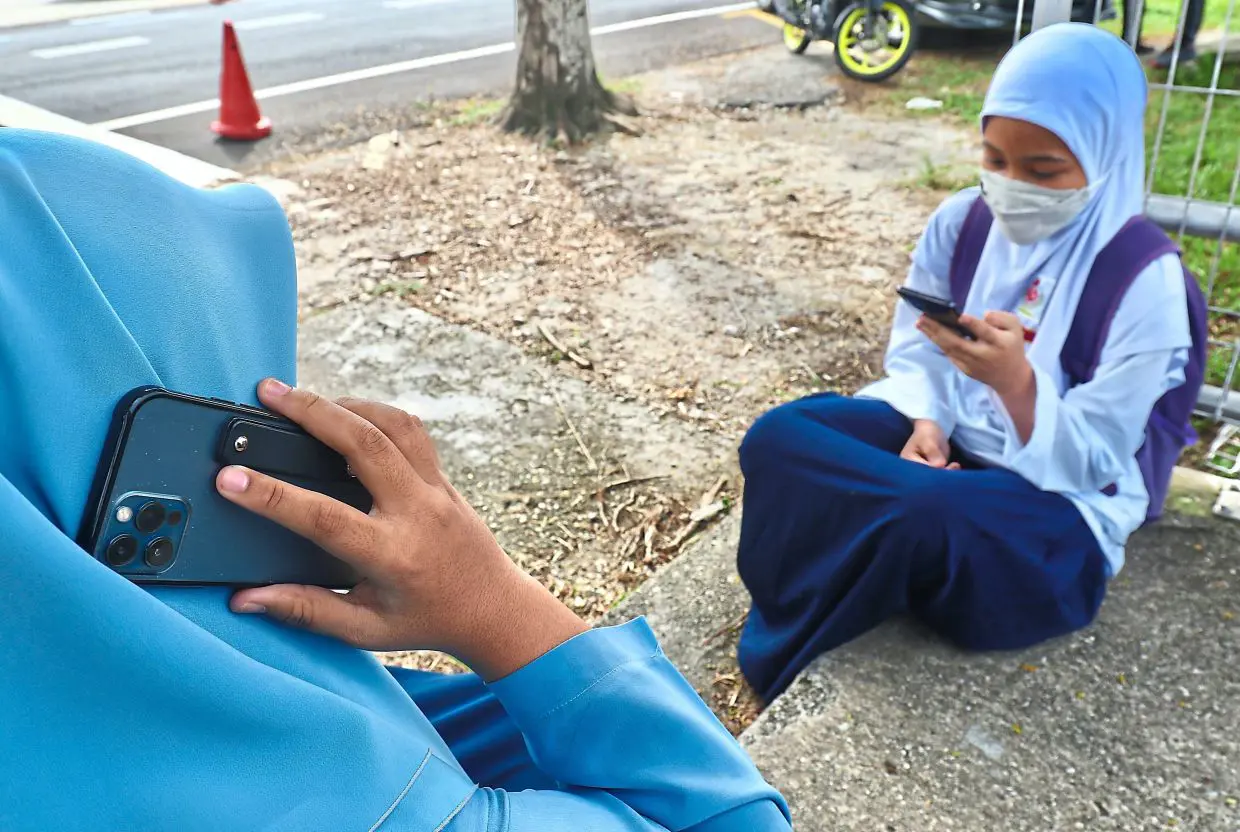
The ban is intended to shield children from cyberbullying, grooming and harmful content.
FIFTEEN-year-old Azira Khairuddin from Cheras has a beef with an upcoming ruling that will likely see her taking a “forced” break from social media platforms.
She complains to her father, Khairuddin Razak, 43, about her predicament, but he is all for it.
“My daughter says this will be a setback in her life, her social circles and everything that follows. I tend to monitor her usage and who she engages with on social media, but with the ban, as a parent, I feel my burden is lifted.”
For Azira, however, banning social media use for her age group is akin to denting her “identity” as a youth.
“I grew up with social media in tow. It is a part of me. Taking it away, even if it is just for a year, is like pushing me out of my comfort zone,” she says, alluding to her status as a digital native.
Azira’s predicament – and Khairuddin’s relief – comes on the heels of a ruling to be implemented under the Online Safety Act this year, which will bar youths under 16 from using or creating accounts on social media platforms. The ban is intended to shield children from cyberbullying, grooming and harmful content.
Nevertheless, the government is taking a cautious approach to enforcement by implementing a sandbox model to gather feedback from affected parties, while observing developments in countries with similar laws such as Australia, where the ban also applies to tourists, and France.
Globally, interest in protecting children from online harms is gaining ground. Recently, in the United Kingdom, the House of Lords backed the country’s move to ban under-16s from social media platforms.
Back home, some experts and parents concur with the need to limit social media use or overall screen time among the young. However, others argue that such measures could restrict access to information and stress the need to prioritise digital and online safety education instead.
The ban is expected to affect millions of children in the country. While there is no official figure yet, the sheer volume can be illustrated by a Cybersecurity Malaysia study which found 92% of students aged 13 to 17 had social media accounts in 2017 alone, and as of last year, Facebook reported that 10.4% of its Malaysian users are of the same age group.
Will it help?
An Ipsos Malaysia Education Monitor 2025 survey released in September 2025 found that 72% of Malaysian respondents agreed that children’s social media use should be restricted due to concerns over content and harm, says International Islamic University Malaysia cybersecurity expert Emeritus Prof Datuk Dr Mohamed Ridza Wahiddin.
“This aligns with the government’s plans to introduce the Online Safety Act 2025 to regulate platforms and protect youth.”
However, Prof Mohamed Ridza says evidence on age-based social media bans is mixed. While correlational studies link youth social media use to declining mental health, there is limited causal proof that bans improve outcomes.
“The Australian government’s data shows that 70% of 10- to 15-year-olds encounter harmful content such as cyberbullying or grooming, justifying the under-16 ban effective December 2025.
“Interestingly, most research shows associations, not causation, between social media use and rising mental illness. Bans may not address the root causes.”
 Prof Mohamed Ridza warns of potential gaps, including weaknesses in age verification and migration to unregulated platforms.
He notes that critics point to inconclusive evidence, potential erosion of youth rights and the ease of circumvention.
“A comprehensive study by the Oxford Internet Institute, which analysed data from over two million people across 168 countries between 2006 and 2021, found that, on average, Internet access and use were not associated with a decline in mental health, and were instead consistently linked with positive well-being.”
It is understood that under the proposed system, Malaysian users would need to input MyKad details or use the MyDigital ID for age verification.
Still, Prof Mohamed Ridza warns of potential gaps, including weaknesses in age verification and migration to unregulated platforms.
“If enforcement relies on self-declared age, children can still bypass controls, creating a false sense of security. At the same time, they may migrate to encrypted messaging apps, gaming chat systems or overseas platforms outside Malaysian jurisdiction.
“These spaces often have weaker moderation and less transparency.”
He also flags household-level risks.
“The ban does not yet address shared family devices, unsafe Wi-Fi networks or exposure through siblings’ accounts.”
In a broader spectrum
Could the ban unintentionally entrench surveillance and inequality?
Centre for Independent Journalism (CIJ) executive director Wathshlah Naidu says that while CIJ recognises legitimate child protection concerns, a broader child rights framework – particularly its intersection with freedom of expression, privacy and the right to information – must also be considered.
“We always start by saying that child protection needs to go beyond a symptomatic approach and really address the root causes. What is the actual problem children face on social media?
“It’s not just exposure to child sexual abuse material or harmful content. There are larger issues, including how children now rely on social media as a space for social interaction and self-expression, especially when offline support or spaces are limited.”
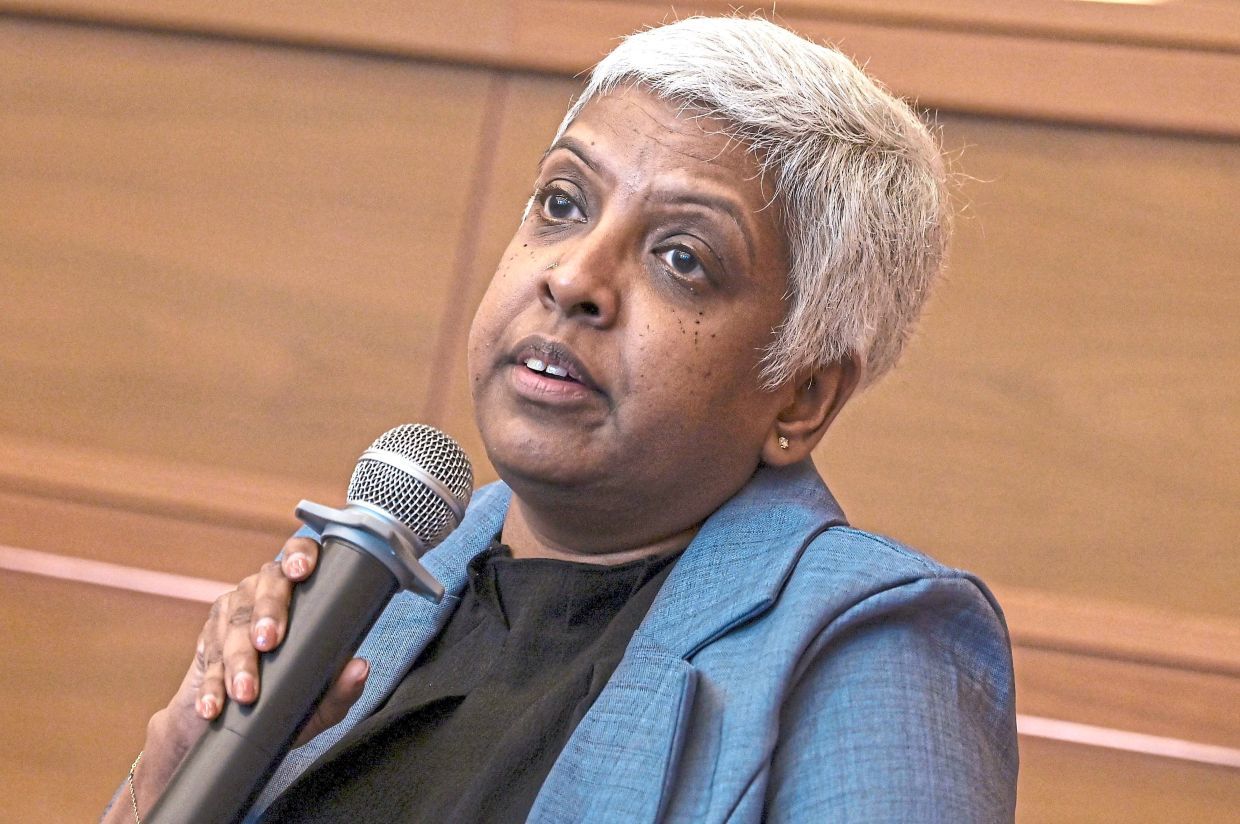 Wathshlah says, in a broader sense, the ban risks punishing children rather than holding platform owners or other actors accountable.
She adds that a larger issue lies with big tech companies’ failure to design age-appropriate systems and products.
“As a result, what we are doing with social media bans is addressing the symptoms, not the root causes.
“In a broader sense, it risks punishing children rather than holding platform owners or other actors accountable for harmful interactions or content.”
Wathshlah also warns of unintended social and developmental consequences from abruptly cutting off under-16s from social platforms.
“Many child rights experts describe this as a ‘cliff-edge effect’. We cut off access entirely and when children reach a certain age, they suddenly regain it.
“This exposes them to a potentially disproportionate increase in harm, especially if they migrate to unregulated platforms or regain access at 18 to spaces with unmoderated harmful content.”
She says a blanket ban could limit opportunities for children to develop critical thinking and digital skills.
“A hard ban doesn’t prepare children for online dangers; it simply delays exposure. Without other measures in place, children may be ill-equipped to cope when they gain full access.
“Rather than fostering resilience, the ban may delay digital engagement without equipping children – or society – with the knowledge to navigate it safely throughout their lives.”
For the greater good
As a parent, Mohd Kamarul Azrai Ainuddin, 42, says the biggest benefit of the ban is protecting children from negative content, including material that promotes self-harm or extreme ideologies.
“Children are easily swayed, and this ban will deter them from being misinformed. At the same time, I’m glad my child doesn’t face peer pressure to have a social media account, as she prefers meeting friends offline.”
Correspondingly, Taylor’s University All Impact Lab education director Dr Joseph Malaluan Velarde says the core objective of the Act is to protect the public – especially children aged 16 and below – from potentially harmful online content.
“Some may see this as a restriction of freedom, but the Act defines what constitutes harmful content, such as child sexual abuse material, scams, harassment and terrorism.
“Given the current online landscape – what some digital experts call the ‘Dead Internet Theory’ (DIT) – it may be overdue for governments to step in.”
DIT refers to the present Internet environment which is dominated by AI-generated content or corporate agendas that contribute to the decline in real human engagement.
 Velarde says policymakers must ensure the public understands the intent behind the ban.
Still, does prohibition intensify the allure of forbidden platforms or foster hidden online cultures?
Velarde says experience from other areas suggests otherwise.
“In cases involving alcohol, smoking or illegal drugs, prohibition has saved many individuals, especially children, from serious health and social risks.
“From a psychological perspective, prohibition shapes behaviour by signalling limits. It only becomes an ‘allure’ if framed that way.”
To counter this, he says policymakers must ensure the public understands the intent behind the ban.
“Parents and children should see this as a shared responsibility – not a restriction of freedom and certainly not an allure.”
He is optimistic that the ban could encourage youths, including aspiring content creators, to become more responsible and discerning.
“If implemented seamlessly, children could be better protected from harmful content and guided towards safer forms of entertainment and information, with support from parents, teachers and peers.
“This could also accelerate investment in platforms, tools and applications designed to safeguard children.” - Star

No comments:
Post a Comment
Note: Only a member of this blog may post a comment.