


Deputy Communications Minister Teo Nie Ching has strongly defended her longstanding advocacy for Unified Examination Certificate (UEC) recognition, dismissing allegations that she speaks differently to different communities or acts as a "provocateur" on the issue.
Teo took to Facebook today to respond to former UEC task force chairperson Eddin Khoo, who launched a scathing critique against her in a podcast show last week, accusing the DAP vice-chairperson of deliberately politicising the UEC issue for narrow political gains.
The cultural historian and writer, who chaired the task force from 2018 to 2020, painted the DAP politician as “exploitative, manipulative and racialist”, and accused her of acting as a provocateur throughout the committee's tenure.
He said that Teo should have also “been trashed somewhere”, and that she has “nothing to afford anybody”. Khoo also accused Teo of consistently engaging in double-speak during her tenure as deputy education minister, by addressing the Chinese and non-Chinese press differently on the UEC issue.
In her statement, however, Teo acknowledged that failing to achieve UEC recognition during the Pakatan Harapan administration from 2018 to 2020 remains one of her regrets, citing constraints beyond her control.
‘My position is consistent’
She stressed that she had never denied the shortcomings associated with attempts to recognise the UEC, and that she had apologised to supporters during an online lecture in 2020 regarding the coalition's pledge to recognise the UEC “within one year”.
However, she firmly rejected Khoo's accusation that she presents the issue differently to the media.
“I must emphasise here that I have never avoided or denied these shortcomings. What I reject are allegations that I ‘speak differently to different communities’ or that I am a provocateur on the UEC issue.
“My position has been consistent regardless of the audience. I have never hidden my advocacy for UEC recognition, nor have I tailored my principles to suit the room. Therefore, any suggestion that I am not interested in finding a solution for UEC is simply baseless,” she added.
Teo, who is a UEC holder herself, said that her stance on the matter has always been consistent from the get-go: that recognising the UEC is good for Malaysia.
“And let me be clear on one more point: I am not apologetic for being firm on UEC recognition. I believe it is the right policy direction for Malaysia, and I stand by that conviction. The conversation about UEC recognition must be grounded in facts, not insinuations,” she added.
In the Let’s Get It podcast show last Friday, Khoo said that during his tenure as chairperson, the group consistently engaged with what he called “extreme” Malay and Chinese groups, referring to Ikatan Muslimin Malaysia (Isma) and Dong Zong, respectively.
However, he lamented that whilst the discussions went well, he was deeply disappointed with the instigators who he said were mostly politicians.
He also accused politicians like Teo of not wanting a solution, saying that they prefer to remain “communal champions” rather than resolve the long-standing issue.
Committee's conduct questioned
When contacted by Malaysiakini for clarification on what Teo did during her tenure in the Harapan government, Khoo justified his criticisms, alleging that she had claimed the committee was not expediting its work when, in fact, it was making substantial progress.
“There was at least one or two incidents in which she was making statements to the Chinese press about the conduct of the committee, which was totally unjust and unjustified. I have a whole list of the conversations, by the way, and the reports.
“Basically questioning why we were not doing our job, which is totally erroneous because we did our jobs in a particular kind of way.
“As I said numerous times, ad nauseam, including to her, because she was, at that time, the deputy education minister,” he said, adding that the committee members had also met with many stakeholders over the course of their study.
Justifying the efforts taken during his leadership, Khoo said that the committee had also conducted town halls in which people with opposing views came together and discussed.
“So if there were delays in the final report, it is due to the fact that we were continuously engaging with people.
“It's not something she did not know. I would think as a deputy education minister who chooses not to politicise this issue, that's what you say, but I'd think when you choose to speak to vernacular press and not make a general statement for the consumption of everybody, I think that is quite divisive, don't you?” he asked.
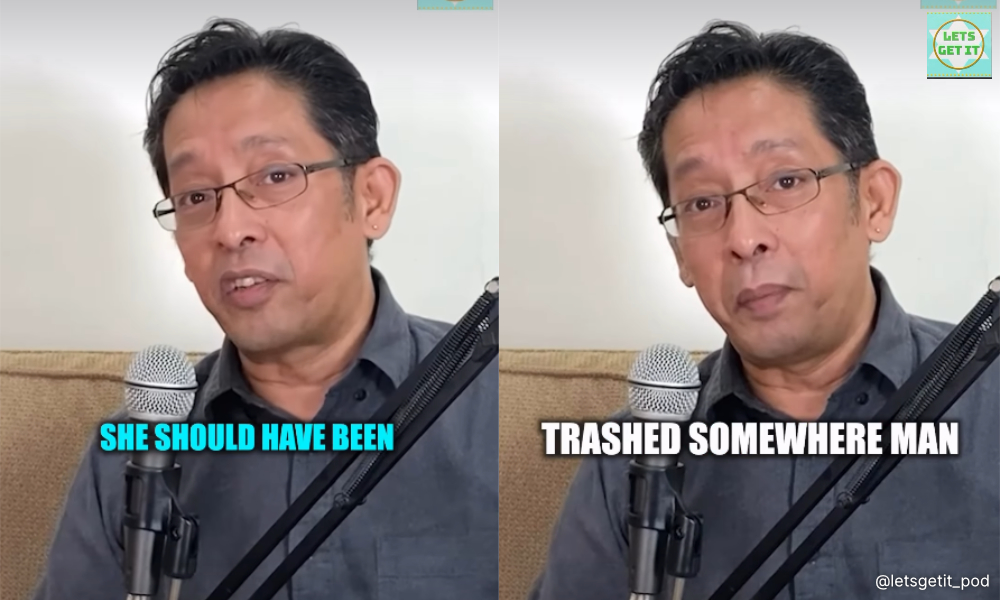
Khoo said this sentiment was also conveyed to Teo on two occasions, about three years ago.
“She was claiming that the committee was not hastening the work and in a Nanyang (Siang Pau) article, claimed that if we were unable to complete our work, she could complete it for us…
“You’d have to verify the Nanyang article. It was many years ago,” Khoo said, adding that the alleged criticism came after the fall of the then Harapan government in 2020, during which Teo also lost her position.
Khoo said that when Teo was making the alleged comments, the committee members had already completed their work.
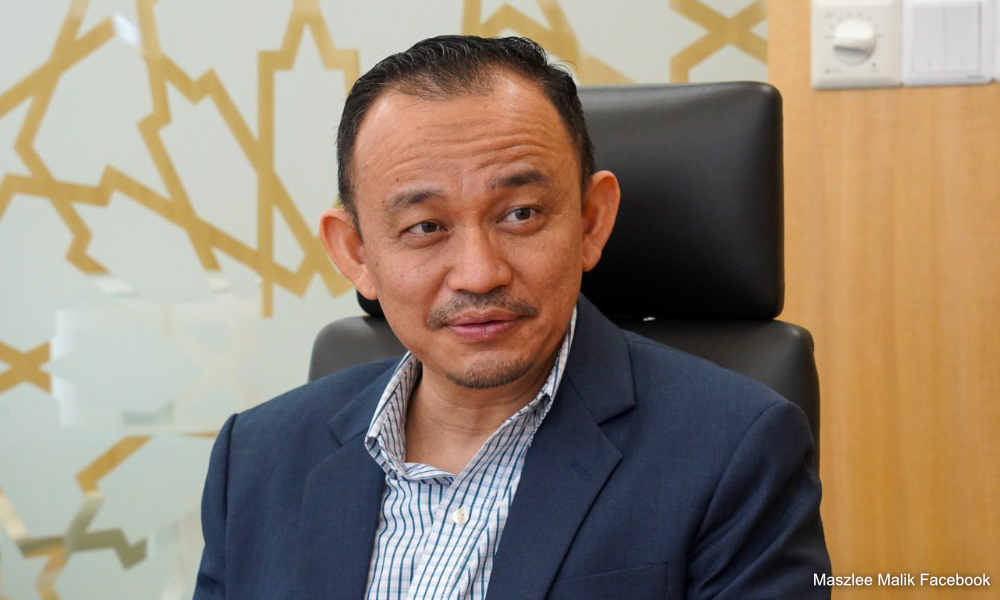
When asked if Teo had ever engaged with the committee, and whether there were meetings between the UEC committee and her, Khoo said that he had only regularly met with Maszlee Malik, the education minister at that time, to whom he reports to.
'Nobody asked us to submit the report'
When asked about the UEC task force’s report, which was never submitted, Khoo said that this was because “nobody asked to submit the report”.
“So you don't expect me to stand around like a donkey in the Education Ministry, waiting to hand in the report. A committee is a very serious thing; it ought to be treated with dignity and respect. So I am not going to badger people to accept the report, if you don't want to,” Khoo added.
To date, he claimed that no one has taken the initiative to ask for the report.
Khoo also trained his guns at Radzi Jidin, who was made education minister after the Perikatan Nasional government took over, and labelled him a “limpid” minister.
“Radzi, also, whom I described as a limpid minister by the way in the podcast, was also talking about how the report was never submitted. Well, for the report to be submitted, you have to call me, have a discussion with me, and talk to the committee.
“What do you expect me to do? Go and put it in a brown envelope and put it on the Education Ministry's reception desk, is it?" Khoo questioned.
Maszlee passes buck back to Khoo
Khoo, however, stopped short of revealing the recommendations made in the findings report.
“That can only be revealed when the report is officially submitted, though I have made my personal views known,” he added.
Meanwhile, Maszlee opted to steer clear of the controversy, telling Malaysiakini to refer its questions to Khoo instead.
For decades, topics surrounding the UEC have sparked recurring tensions in Malaysia, with disputes frequently centring on language requirements, cultural representation, and competing visions of national unity.
The controversy flared anew following social media comments by DAP deputy chairperson Nga Kor Ming, who announced his party’s intention to meet the prime minister and lobby for the certificate’s official recognition.
On Dec 12 last year, Prime Minister Anwar Ibrahim responded to the UEC recognition issue by reminding all parties that any demands touching on religious, racial, or ethnic sensitivities must consider the constitutional position of the national language.
On Jan 24, Transport Minister Anthony Loke announced that the Education Ministry will amend its policy to allow students from non-government schools to sit only for Bahasa Malaysia and History papers for SPM.
He said those who obtain credit in Bahasa Malaysia and pass in History will become eligible to apply for admission to public universities.
This amendment would allow Chinese independent school students, among others, to sit for the two subjects, and any student who meets these requirements would qualify to apply to public universities.
This followed Anwar’s announcement at the launch of the National Education Plan 2026–2035 that all schools, including independent, Islamic, and international schools, will be required to teach SPM-level Bahasa Malaysia and History based on the national curriculum. - Mkini

No comments:
Post a Comment
Note: Only a member of this blog may post a comment.