


Editor’s note: Pseudonyms are used for refugees to protect their identities.
On April 9, a Malaysia-bound trawler carrying an estimated 250-280 passengers - men, women, and children who were Rohingya refugees and Bangladeshi nationals - sank in the Andaman Sea due to harsh winds and overcrowding.
Only nine were rescued, found floating on drums and logs.
For the uninitiated, these boat arrivals are not a surprise. Most serving this vulnerable and forgotten community anticipate them, with the awareness that the plight of the Rohingya is largely forgotten and dismissed.
Even for an organisation like Médecins Sans Frontières (MSF), better known as Doctors Without Borders, its protracted plight often has to contend with other emerging crises elsewhere - Sudan, Gaza, and beyond.
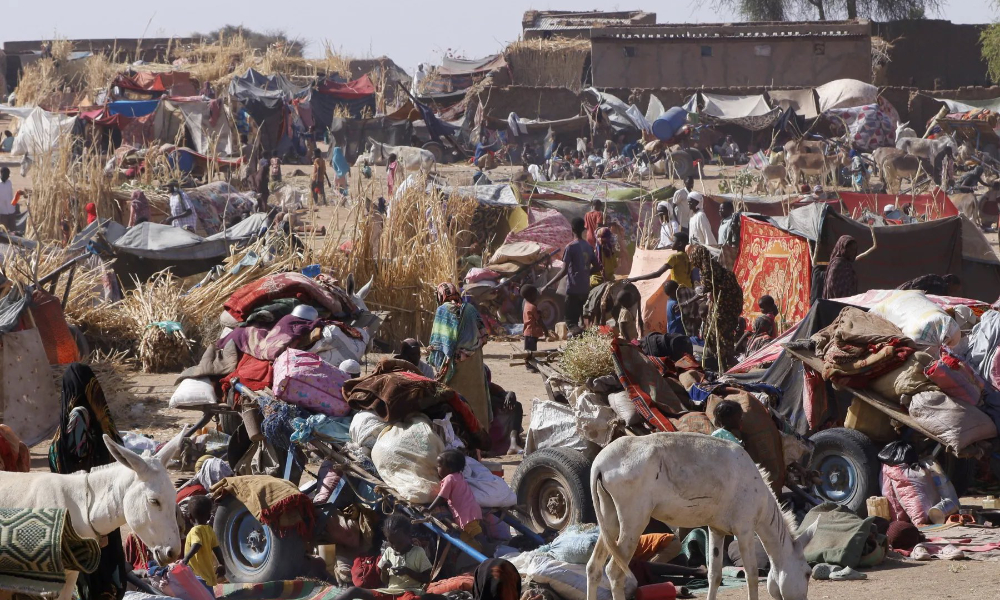
But who are we to assess and sanction when the suffering of the Rohingya is sufficient or when it is not? Suffering is suffering.
What we are seeing
Over the past three years, the MSF clinic in Penang, Malaysia, has seen the number of new arrivals nearly triple - from 212 in 2023 to 620 in 2025.
These figures are limited by MSF’s capacity to receive patients and the proximity of refugees to MSF’s clinic; as such, it is likely a grave underrepresentation.
Patients requiring psychiatric care continue to rise, with a 20 percent increase between June and November last year.
Meanwhile, in Bangladesh, humanitarian funding cuts, conditions in the camps, and shrinking food rations - now as low as US$7 or RM27.69 per person monthly - are adding pressure on already vulnerable families.
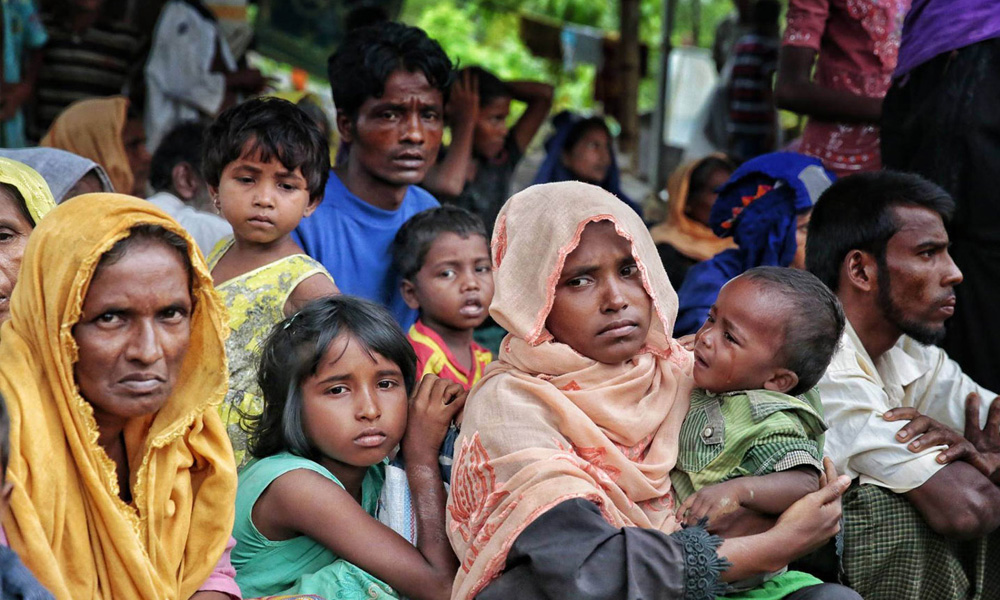
Together, these factors are pushing people towards increasingly desperate measures - and only those who survive can tell us about the journey.
Aisya is one of them.
A survivor’s plight
Aisya, a Rohingya mother who was a mental health patient at the MSF clinic, recently shared the heartbreaking account of how she lost her kids during a land and boat journey three years ago.
Aisya’s story is unfortunately one of the many horrendous experiences faced by Rohingya refugees - that is, if they survive at all.
For seven years, Aisya and her family scraped out a life in Bangladesh, collecting firewood after escaping Myanmar in fear of forced labour. Often, those taken from the villages in Myanmar never return.
In Bangladesh, it was hard to survive while living on the margins of society, and that’s when she decided to pay a smuggler RM12,000 per person for her family of five to make the journey to Malaysia - with no clue of the hardship awaiting her and her family - even at the cost of being in deep debt to this day.
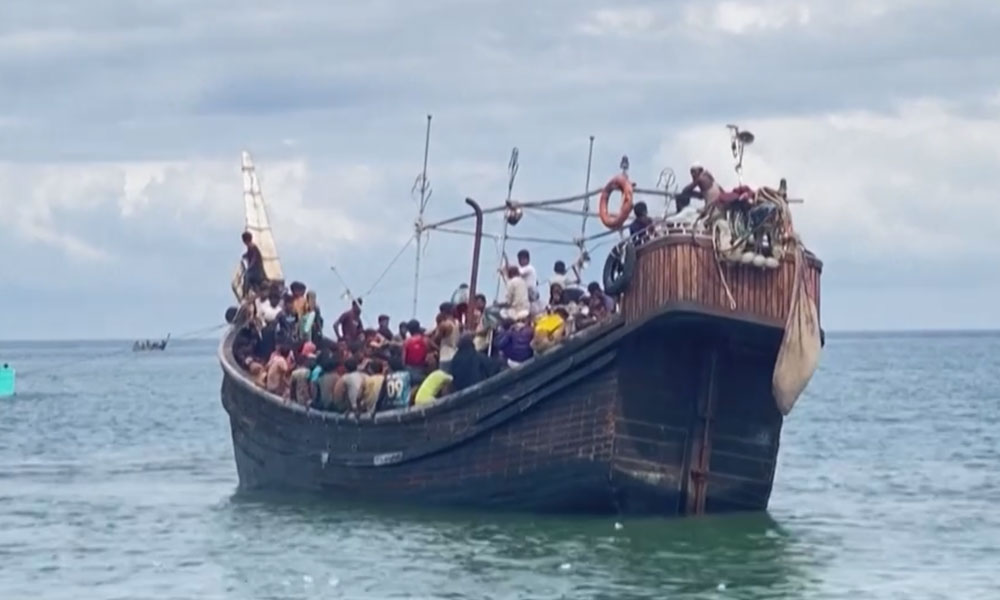
Unaware of the rough boat journey ahead, Aisya did not expect the abuse to come.
“Even if you moved a little bit, they would throw you into the sea. So, most of the time, all the passengers hid under the deck of the boat.
“People became very tired after a few days, and some got sick. A lady who was having a reaction from a dog bite was thrown into the sea as the smugglers could not manage her. A lot of young adults were also thrown into the sea due to arguments.
“After about eight days, we landed somewhere and walked for two to three days. During this journey, someone said that the military was coming and we had to disperse ourselves; that’s when I lost my daughter and son, who are 17 and 14 years old, respectively.
“I screamed and cried most of the time, I just could not control my feelings - I don’t know how many times they beat me for this. I kept asking everyone where my kids were. When I could not control my feelings, they beat and kicked me.
“I felt like my body was a dead body, not conscious.”
By some luck, Aisya found her daughter almost a year ago, and subsequently her son a couple of months ago.
When asked what she would like the audience reading this piece to know about the Rohingya plight, she said, “Our condition is horrible. People are taken away forcefully by the military and used as human shields.”

She explained that on top of this, daily life in Myanmar is also difficult - food is extremely expensive, sometimes thrice what it would normally be.
Without an income, it is a steep price for them, and that’s why they first decided to escape from Myanmar to Bangladesh.
Survival should not be a crime
Fleeing persecution is not a crime. Seeking safety is also not a crime.
Individuals like Aisya and the nine who were rescued from the recent boat survived some truly unimaginable situations.
They survived persecution, abuse, starvation, near-drownings, and are often years separated from their family members - and if they are lucky, they might be one of the small fraction of refugees that are resettled to a third country yearly.
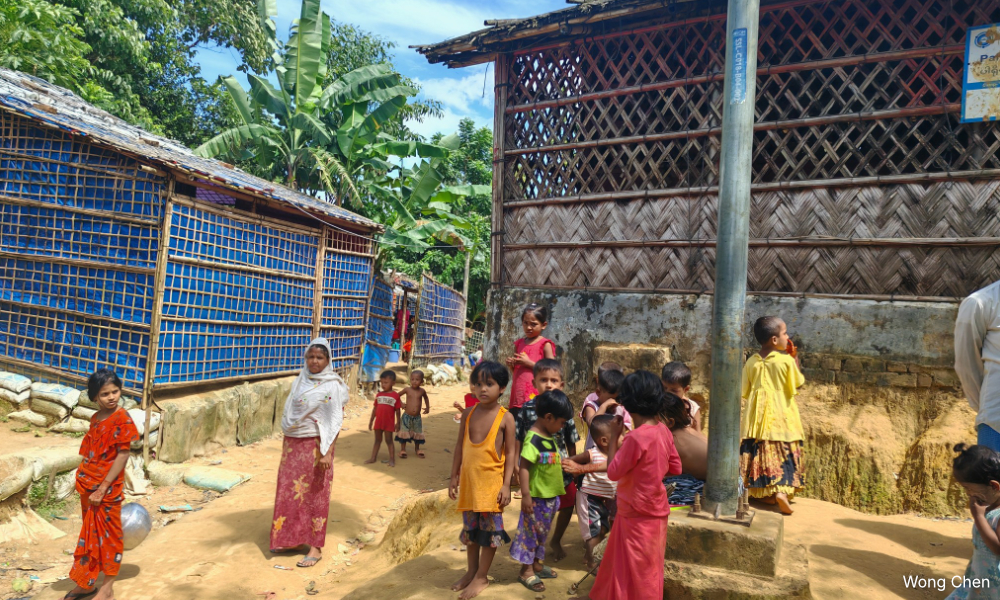
Otherwise, they live in limbo for decades on end, trying to survive, if a resettlement option ever comes, or they might be indefinitely detained.
These deaths are predictable and preventable - it is a consequence of governments looking the other way.
Coast guards and naval authorities pass the responsibility from one to another, each doing just enough to avoid direct blame - no one assumes any significant responsibility.
In the end, it is those caught in the middle that ultimately pay the price - often with their lives.
At the end of the day, the only thing that differentiates you and me from those on the boat is just sheer luck. - Mkini
JASNITHA NAIR is the field communications manager for MSF Malaysia.
The views expressed here are those of the author/contributor and do not necessarily represent the views of MMKtT.

No comments:
Post a Comment
Note: Only a member of this blog may post a comment.