


BN secured a landslide victory in Johor. Analyses point to the poor Pakatan Harapan campaign - both in substance and style - and the role of Perikatan Nasional supporters moving to BN.
These factors were important, but they only touch the surface in understanding the emphatic outcome.
This piece looks at factors leading to BN winning 48 seats, followed by Harapan (eight) and PN (zero), with attention to major parties and coalitions. Part 2 will have a more in-depth look at voting.
BN’s Johor success
Most analyses have not acknowledged Umno/BN’s contributions to the Johor outcome.
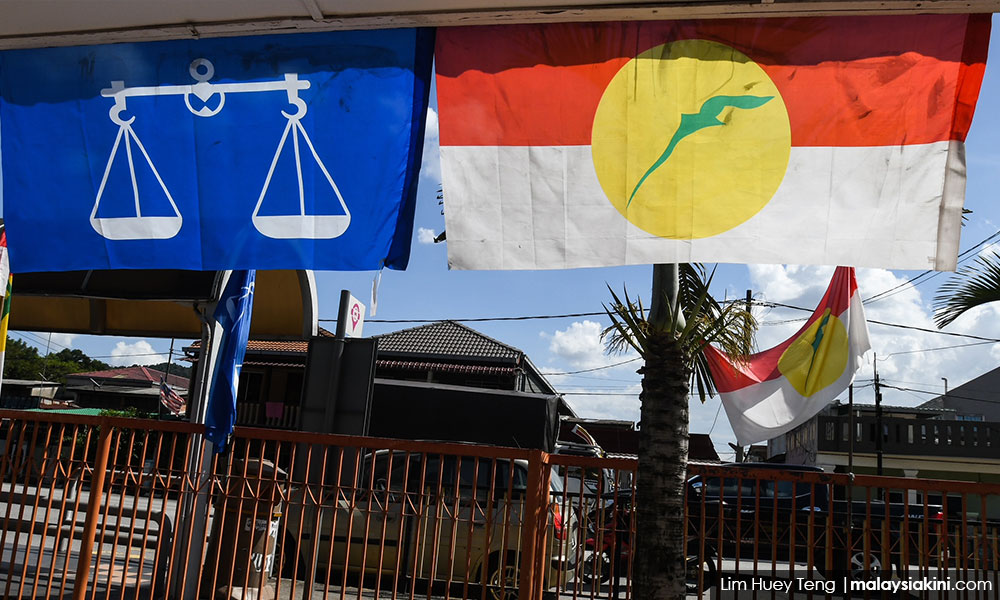
Three factors stand out:
1. Stronger campaign:
Their campaign was their best run since 2013, coordinated among the three different coalition partners, focused on the message around Onn Hafiz Ghazi’s leadership even when the attacks could have triggered strong reactions and better messaging on social media.
2. Umno party unity: Umno/BN stressed unity going into the campaign, and where there were differences, these were addressed, such as in Rengit, Layang-Layang, and Tiram.
3. Ongoing regeneration: Onn’s leadership showcased the party’s regeneration, a factor that was prominent in earlier successes for the party, such as the 2021 Malacca polls. The rise of a younger generation of leaders was an important part of their success.
DAP’s defeat
The numbers show that of all of the parties, DAP was the hardest hit - both electorally and on social media.
The party’s top leaders were seen as not reading the ground and, importantly, continued to lose credibility.

This is the same dynamic that happened in Sabah with the bungkus result.
Their losses go beyond the speeches and point to a serious erosion of trust, which they are responsible for.
1. Credibility problem: DAP has yet to deliver on any meaningful promise on political reform for its voter base.
While its pressure on the MACC leadership, citizenship amendments, and continued call for reform has not been recognised, the failure of the Anwar Ibrahim government, in which DAP is the largest party, to provide concrete deliverables to its political base has caused electoral harm.
These include the UEC, political reforms, and adequately addressing the hardships facing Chinese small businesses.
While DAP still retains the majority support of the Chinese community - with details outlined in Part 2 of my analysis - the walk-away (low turnout) of Chinese voters and palpable dissatisfaction remain evident.
2. Limits of scare tactics: Rather than DAP dealing with the issues of its performance, its campaign was a deflection and the “red herring” claim that former prime minister Najib Abdul Razak would be released from jail early, messaging that was inadequate to convince voters less trusting of the party.

Worse yet, as in 2013, the party stoked Johorean anger as outsiders and served as a catalyst for higher Malay turnout, reaching over 75 percent (details in Part 2).
Losses in Tangkak, Jementah, among others, were not the result of former PN voters switching sides; the fault lies with the party and its campaign.
The reasons go further. The party has narrowed its base, becoming an exclusive Chinese party in a campaign that focused on Chinese voters. The line-up in ceramahs was dominated by Chinese speakers - largely outsiders.
3. Almost-Chinese-only party: The results speak for themselves. DAP lost Indian support in seats such as Perling, and its victory in Skudai for an Indian candidate was primarily due to Chinese voter support.
The loss of Indian support cannot be seen in isolation from the massive erosion of support among the ethnic group for Harapan more broadly.
My research shows a massive swing in support and turnout from Harapan, with BN receiving an estimated 60 percent of Indian support, developed in Part 2.
The reasons are well known, from humiliating a young Indian woman over a legitimate question to the emotive destruction/characterisation of Indian temples. Bukit Batu’s loss was Harapan’s comeuppance for disrespecting this community.
DAP has a long history of supporting Indian issues, but any support it gained from doing so has effectively evaporated.
4. Carried candidates: Finally, for the DAP, it is its regeneration. DAP is fielding younger and new candidates; it is arguably the leading party nationally in doing this.
Yet, they are seen as insiders, lacking their own stature outside of the party brand.
They are also not given prominence, usually tied to inter-party compromises in Johor rather than ground popularity assessment.
The younger candidates are seen as carried loyalists rather than standing on their own merit. Even when they can do so, this does not get attention.

Despite the new candidates, the party appears not to be regenerating, with its leaders holding on rather than allowing new ideas and leaders to emerge.
All of the parties in Harapan suffered, for many reasons, but operationally, all were focused on themselves and lost ground individually, leading to collective losses.
PN’s self-defeating wipeout
If the DAP suffered the most losses, it is PN’s defeat that is the most devastating. There has not been enough attention to this issue.
The biggest loser in the Johor campaign is not Anwar. While negatively impacted, his party, PKR, won Puteri Wangsa and almost won Bukit Batu.
Its direct reform-oriented challenger, Bersama, lost all its deposits, and its anti-Anwar messaging only gained limited traction in Johor.

Meanwhile, Muda, whose traditional leader Syed Saddiq Syed Abdul Rahman had his campaigning on the ground curtailed on the eve of his court decision (which was ruled in his favour this Monday), also lost significant ground, even though it almost spoiled Amanah’s victory in Simpang Jeram.
The biggest loser, however, is former prime minister and Bersatu president Muhyiddin Yassin. The results in seats such as Bukit Kepong and Bukit Pasir speak for themselves, with a majority of 10,761 in the former and third place in the latter.
Bukit Kepong is in his parliamentary constituency of Pagoh, with former Bersatu menteri besar Dr Sahruddin Jamal rejected by voters. In fact, it is Bersatu that got bungkus in this election.
Some of this came from their own former ally, PAS, who pulled its support (arguably the most decisive impact of the swing of former PN traditional voters), but most of the blame rests with the party and its leader, lacking resources to campaign.
Muhyiddin’s hold onto power, refusing to regenerate leadership and accommodate other factions, led to his party’s rejection by voters.

His time to retire from politics has passed, and his own Johorean voters have shown him the door.
PAS’ losses are also telling. It came third in Maharani, with just over half of the votes BN received. It also thoroughly lost Endau and Tenang.
PAS’ ground has shrunk emphatically. Part of this is the hubris PAS has of its own support in Johor, where its electoral success came from being in government in 2022 and allied with Bersatu.
Part of this was dissatisfaction with the PAS leadership’s political games.
Telling voters to vote this way or that way is fundamentally disrespectful to the agency of voters. It may work elsewhere, but Johoreans were not having anything to do with the orders from on high. The numbers speak for themselves.
Neither Bersatu nor PAS had a campaign for Johor - zero, the same as their results. The 2026
outcome is almost on par with the number of seats they won in 2018, with PAS winning Bukit Pasir.
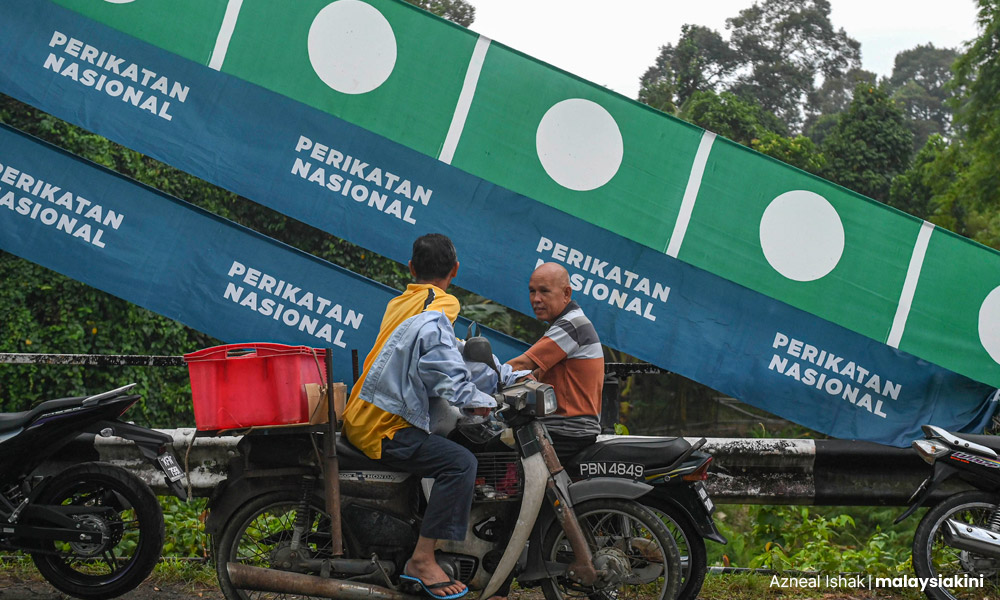
In this state election, they treated Johor as an arena for jockeying and testing power rather than delivering governance.
They showcased a lack of competence, even as they stoked ethnic polarisation by openly calling for racially ethnicised voting, a practice that most Johoreans rejected (as shown in Part 2).
Middle ground positioning
BN emerged victorious in part for its own efforts - especially its capture of the middle ground. It came in ready, an advantage that it does not have to the same degree in Negeri Sembilan.
It captured the middle ground across communities with greater strength. DAP and Harapan’s Johor losses are the product of an unwillingness to adapt to current conditions and to accept and address their weaknesses in current governance.
Resting on past grievances without addressing current ones will inevitably cause voter disengagement. The impact has been to erode its support significantly.
Negeri Sembilan - of the three Peninsular Malaysia state polls this year - is Harapan’s strongest base, their own government. It is also the highest risk for them.
Bersatu and PAS are in serious electoral trouble, with the latter hoping that BN will save them; thus, the open calls for an alliance - which have been rebuffed with BN running solo.
Negeri Sembilan will test whether they can hold on to the five seats, as they fight over who contests in their focus on holding power rather than meaningfully engaging voters.

As in Johor, Negeri Sembilan will be an election for party/coalition survival in what is already becoming a heated campaign.
Part 2 will delve into Johor voting patterns in more depth this week, as attention from this Saturday turns to Negeri Sembilan - its campaign, its hot seats, and more. - Mkini
BRIDGET WELSH is an honorary research associate of the University of Nottingham’s Asia Research Institute and a senior associate fellow at The Habibie Centre. Her writings can be found at bridgetwelsh.com.
The views expressed here are those of the author/contributor and do not necessarily represent the views of MMKtT.

No comments:
Post a Comment
Note: Only a member of this blog may post a comment.