


A senior political observer I chanced upon in a neighbourhood café asked the question Pakatan Harapan leaders have been very carefully not asking themselves since Saturday night.
“Can this unity government, propped up by BN and Harapan cooperating at the federal level, actually keep limping along after this?”
Reminiscing after the conversation, I thought it was bold of anyone to still call it a "unity" government, especially with Umno going solo again in Negeri Sembilan.
We all understand that the BN/Harapan agreement is only at a federal level, and yet, there is still this unsettling feeling because an arrangement that made sense out of post-2022 desperation starts to look a bit silly when one partner is this dominant, and the other is basically down to fumes.
Johor made sure everybody noticed that the federal working arrangement is a client-patron relationship and not a marriage of equals.

The numbers, for anyone still in denial, are not subtle. BN swept 48 of 56 seats on Saturday, improving on the 40 it won in 2022. Harapan was reduced to eight, down from 12. Opposition Perikatan Nasional didn't just lose; it evaporated.
And yet, in the hours after the count, Harapan's response has been almost impressive in its refusal to self-reflect. Leaders have found a way to blame everyone except themselves.
Some went straight for the voters - actual human beings who cast actual ballots - accusing them of shifting support from PN to BN, as if voters exist to remain loyal to Harapan out of sheer sentimentality rather than, say, being governed well.
Others reached for the most tragicomic silver lining available: that DAP's support had somehow "increased", even while the party and its coalition were being handed one of their worst results in memory.

Truly a masterclass in losing badly and calling it growth. If your victory lap requires this much spin, my friend, it wasn't a victory to begin with.
Harapan campaign
What makes it funnier - and I use that word loosely - is that Harapan ran a campaign built almost entirely on fear rather than record. The strategy was to invoke PAS at every turn, warning non-Malay voters that voting for BN was somehow a backdoor vote for PAS.
And then, because subtlety was clearly not on the agenda, Harapan went further and suggested a vote for BN was a vote to spring former prime minister Najib Abdul Razak from detention.
The irony, of course, is that none of this fearmongering was even necessary, because the actual grievances were sitting right there in plain view for anyone to read. Harapan came to power promising reform: a clean break from the old transactional, race-and-religion politics.
What voters got instead was a slow, quiet retreat from nearly every one of those promises, narrated by Prime Minister Anwar Ibrahim himself: talking down to an Indian student, delivering a victory speech right after a Hindu temple was demolished, then showing up beaming at the ground-breaking ceremony for a mosque on that same plot.
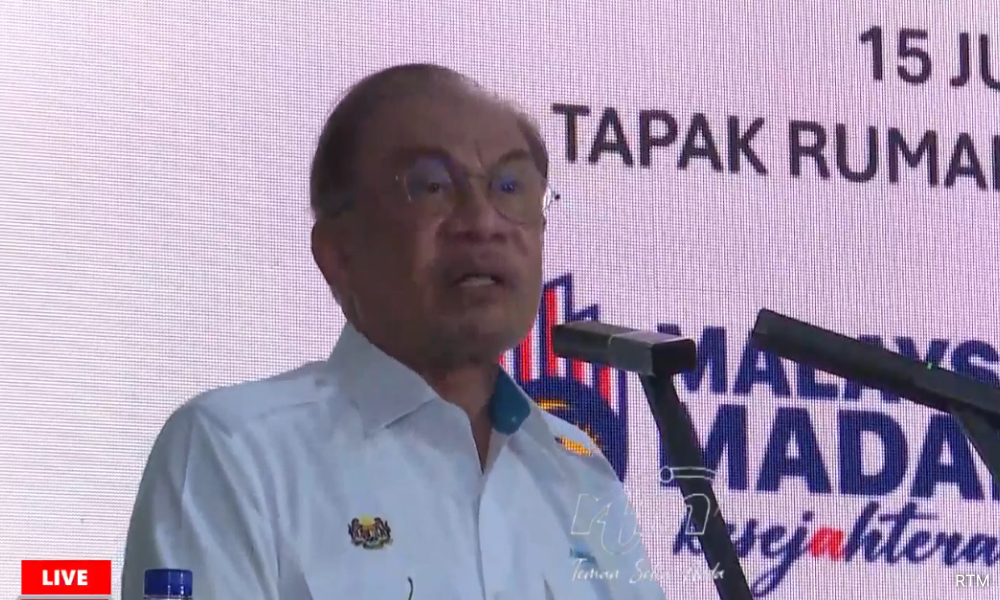
Then we also have the pig farm saga in Selangor, which, frankly speaking, was handled rather poorly. Individually, these issues may be survivable. Stacked together over almost four years, it stops looking like bad luck and starts looking like a pattern. "Malaysia Madani" was a nice slogan while it lasted.
Ideological awakening
So, when Harapan's own people try to wave Johor away as some blip, a protest vote, or PN voters accidentally wandering into BN's arms, they're dodging the only conclusion the numbers support. This is a referendum on Anwar's leadership, whether the party wants to admit it in a press release or not.
Coalitions don't lose a third of their seats in a state they poured resources into because of forces mysteriously beyond their control. They lose because the people who once gave them the benefit of the doubt are simply fed up.
Former three-time DAP lawmaker Charles Santiago said it plainly enough: “Harapan could be staring down another defeat in Negeri Sembilan and then Malacca. This could raise questions about Anwar’s legitimacy as the prime minister and maybe even push him to call for an early general election.”
None of this is to pretend BN's win was some grand ideological awakening either. Plenty of that swing is protest, and PN's total collapse is more like tactical voting than any newfound love for BN.
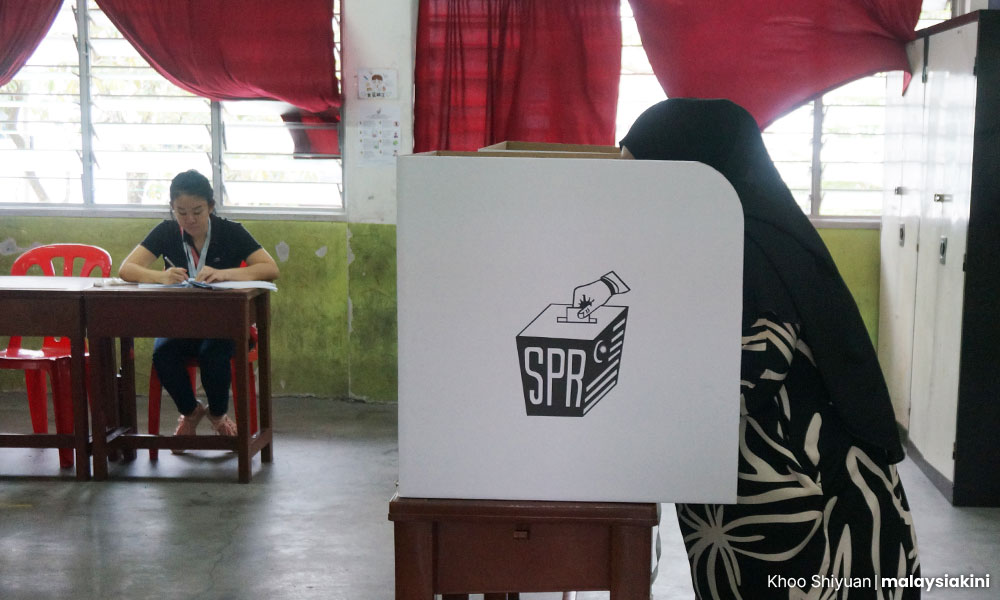
But that nuance doesn't rescue Harapan either. If anything, it makes things worse. A coalition that can only survive by leaning on the other side's total implosion, while quietly bleeding its own base over broken promises and self-inflicted wounds on race and religion, doesn't get to also insist the federal arrangement propping it up is business as usual.
But the finger-pointing at voters, the search for silver linings in DAP's numbers, the insistence that this was anything but a verdict on Harapan's own failure don’t change what the ballots said, and none of it answers the structural question now hovering over Putrajaya.
Johor sent a message about Harapan. It also sent one about the unity government itself: that it was always a marriage of convenience between a shrinking partner and a resurgent one, and conveniences, by definition, expire. - Mkini
MAHI RAMAKRISHNAN is a former journalist who continues to question power, challenge narratives and expose spin.
The views expressed here are those of the author/contributor and do not necessarily represent the views of MMKtT.

No comments:
Post a Comment
Note: Only a member of this blog may post a comment.