


These are the dry numbers in the RCI on Tabung Haji.
RM3.4 billion profit. RM1.4 billion loss.
How many warning lights have to come on before somebody is held responsible for stopping the car? In other words, what does it take for a government to take heed?
It’s the same Tabung Haji, but the difference is RM4.8 billion.
To be fair, former auditor-general Madinah Mohamad has said her team found no evidence of theft or misappropriation, but that doesn’t answer the question that should now haunt Tabung Haji: If nobody stole the money, who was responsible for losing it?
Issues abound
The RCI found that Tabung Haji should have reported a RM1.4 billion loss in 2017, rather than the RM3.4 billion profit it reported.
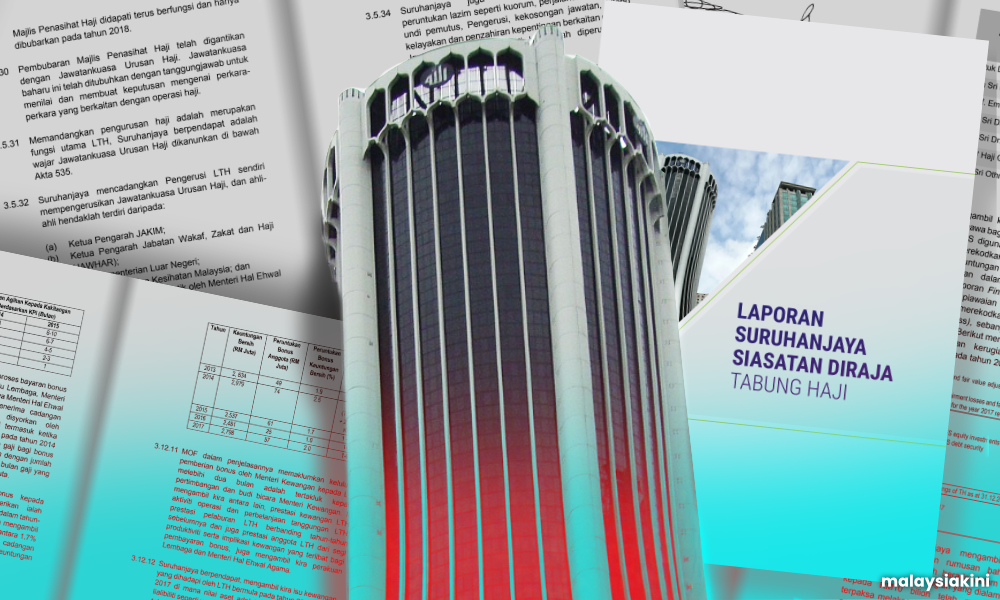
It also found that political considerations influenced decisions on hibah, haj payments, and financial assistance.
Losses and impairments were not properly recognised, while hibah was paid despite the institution’s deteriorating financial position.
This wasn’t a one-year accident. The financial crisis stretched back to 2014, and Bank Negara reportedly issued five warnings between 2014 and 2016.
So who received those warnings? More importantly, why wasn’t the problem stopped?
Was Tabung Haji being run as a financially disciplined institution, or was it being asked to serve political and social objectives that its finances could not sustain?
How could an institution this important be allowed to decay across political administrations?
Billions in losses
The RCI identified 14 problematic investments which ultimately produced almost RM13 billion in losses.
It recommended forensic audits into how those investments were made and said those involved in the decisions should be held responsible for the losses.
Tabung Haji paid about RM367.7 million in bonuses between 2010 and 2017. The RCI found the payments excessively high and identified unauthorised bonuses at its subsidiary as well.
This is where the story becomes more than financial.
Tabung Haji exists to help Malaysian Muslims save to fulfil a fundamental religious obligation - to perform the haj, one of the five pillars of Islam.
So what does it say about an institution entrusted with that sacred purpose when its financial position is deteriorating while substantial bonuses are being paid?
For many depositors, this isn’t simply mismanagement. It is a betrayal of trust.
Uncomfortable questions
But no theft does not mean no wrongdoing, and it does not mean good governance either.
An institution can lose billions through reckless investments, poor decisions, inadequate controls, political interference, and failure to act on warnings.
The RCI found evidence of precisely these kinds of failures and another uncomfortable question.
The auditor-general had already raised concerns in 2018 about Tabung Haji’s impairment practices, including RM227.81 million in impairments that had not been recorded.
So, why did it take a subsequent PwC review and the RCI to expose the much larger underlying problem?
Now the MACC is investigating possible corruption, abuse of power, falsification, and money laundering.
Let the evidence determine whether criminal offences occurred, but even if nobody is ultimately convicted of stealing a single ringgit, the accountability question remains.
The RCI examined a period spanning successive governments, so this cannot simply become another political blame game.
The uncomfortable question is whether Malaysia’s political system repeatedly failed to protect Tabung Haji.
Bank Negara warned. The financial position deteriorated. Investment losses accumulated. Hibah continued. Bonuses were paid. The accounts were audited. And eventually the government had to intervene.
So who was responsible?
So who was watching the institution? Who was responsible for acting when the warning lights were flashing?
Ultimately, ordinary people don’t get to make their losses disappear by calling them “accounting differences”.
The RCI has now exposed almost RM13 billion in losses associated with 14 problematic investments, and Malaysians deserve to know who was responsible.
Who knew? Who was warned? Who authorised the investments? Who approved the hibah? Who approved the bonuses? Who signed off on the accounts? Why weren’t the losses recognised earlier?
Why weren’t Bank Negara’s warnings acted upon? Why did it take years for the public to see the RCI report? Where is the accountability?
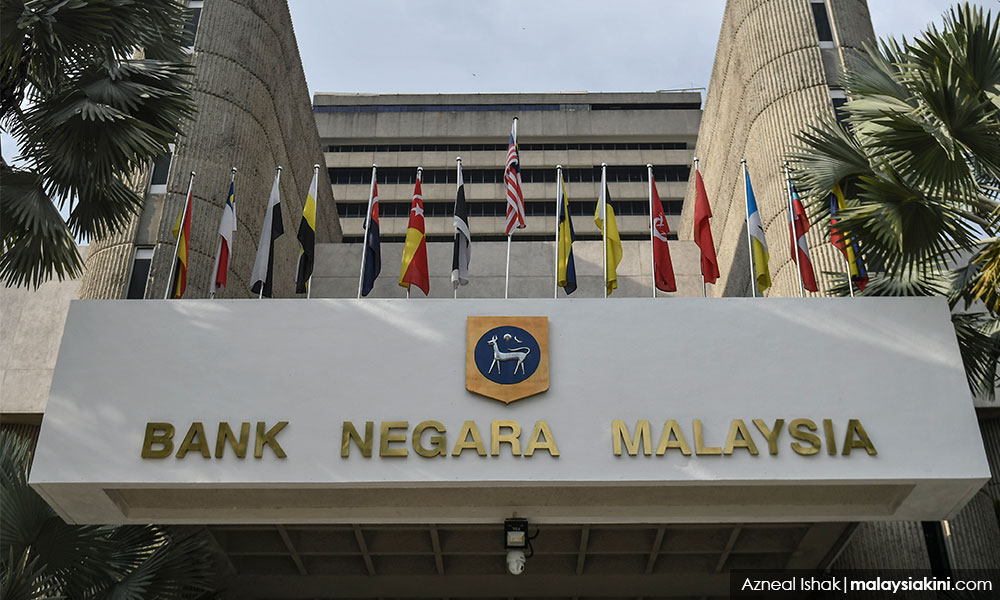
The government must provide answers. If criminal wrongdoing is established, will those responsible face the law? If it isn’t criminal, that cannot mean everyone simply walks away from responsibility.
Tabung Haji isn’t an ordinary investment company. It was entrusted with something more valuable than money: people’s faith, savings, and hope of fulfilling one of Islam’s five pillars.
For years, Malaysians put aside their hard-earned savings believing Tabung Haji would safeguard them and help them fulfil a fundamental religious obligation.
That trust deserved better, and those entrusted with it owe Malaysians an explanation.
Imagine putting passengers into a car after dinner, knowing the driver is unfit to drive. The warning signs are there. People know about them. Yet nobody stops the journey.
When the car crashes, we don't just ask what went wrong. We ask: Who knew? Who was warned? Who allowed the driver to continue? And who was responsible for the passengers' safety?
That is the question Tabung Haji now raises. If nobody stole the money, who was responsible for losing it?
MARIAM MOKHTAR is a defender of the truth, the admiral-general of the Green Bean Army, and the president of the Perak Liberation Organisation (PLO). Find her on her website and on X.
The views expressed here are those of the author/contributor and do not necessarily represent the views of MMKtT.

No comments:
Post a Comment
Note: Only a member of this blog may post a comment.