


I’m going to write about something that is directly affecting me, and that is the rise in petrol and diesel prices.
I’m going to take a wild guess and say that it is also probably affecting almost everyone in the country. I may be wrong, but I think the odds are in my favour.
One of the vehicles I have is a 4x4 pickup truck. When I was in primary school, one of my favourite movies of all time was “Back to the Future”. In one of the scenes, Marty McFly, played by Michael J Fox, told his girlfriend Jennifer that he dreams of owning a pickup truck. And so I also wanted a pickup truck.
The truck has served me well. My family and I have gone on many road trips in that truck. It has also made my production work much easier because it allows us to transport a lot of things and, well, it’s just comfortable and efficient for work trips outstation.
The truck runs on diesel, and on average, a full tank would cost me around RM210. That can last me for around 850km. Now this is based on the price of diesel before the conflict between the United States, Israel and Iran. It is also based on a subsidised price that the Malaysian government has set.
The last time I filled the tank full for the truck, which was more than a week ago, prices had already gone up, and it had cost me RM307. The last time I checked today, the price for diesel is RM5.52 per litre. That would bring the cost of a full tank for the truck to RM440. Crazy!
Saving money
My wife and I have another car at home, and luckily for us, it is an electric vehicle (EV). We bought it two years ago with the intention of saving money on petrol (oh, and the environment too, sure!), and today, we’ve decided that we will make that car the main car and try to avoid driving the truck as much as possible.
We can actually save quite a significant amount by driving the EV. A full charge for the car at home using the charger that we installed costs around RM30, and this can power the car for an average mileage of 420km. This is much cheaper than driving the diesel-powered truck, or even most petrol-powered cars.
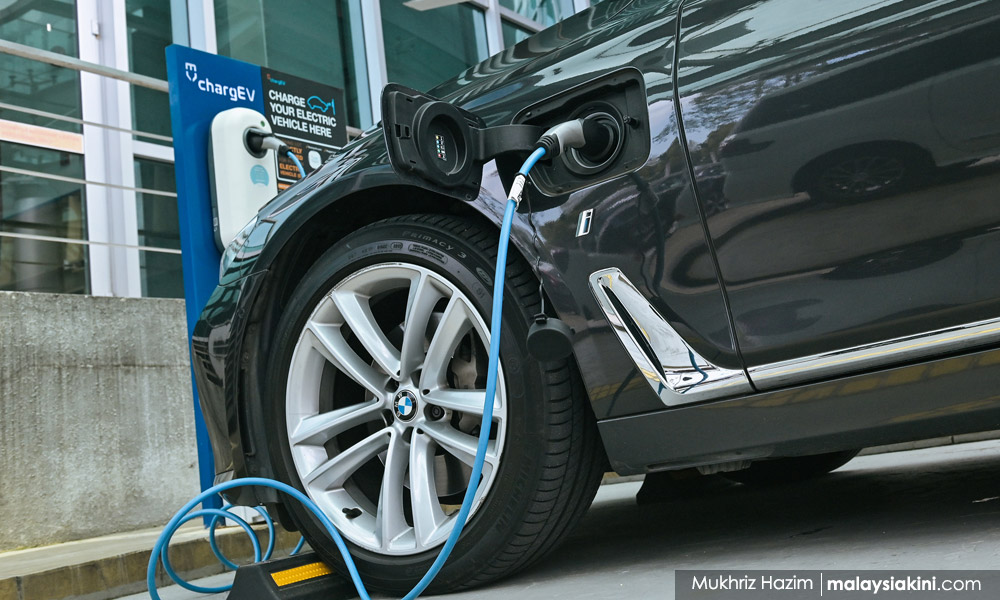
Although the number of EVs on the road in Malaysia today is slowly increasing, the majority of cars are still Internal Combustion Engine (ICE) vehicles. There are many reasons for this, and one of the most obvious is the cost. EVs aren’t cheap to buy, with most models, even the cheaper ones, costing more than RM100,000.
Then, you also have to consider installing a charger at home, and that can set you back several thousand ringgit as well. You can just charge outside where public chargers are available, but this would cost a little bit more than charging at home, and even then, the number of public chargers is still limited.
However, the cost is getting lower. Proton and Perodua are now offering EV models at quite affordable prices below RM100,000. But even at that price, the average Malaysian still can’t just make an immediate decision to purchase an EV today just because the price of petrol is increasing. It still requires some financial planning.
Managing oil crisis
Just this week, Prime Minister Anwar Ibrahim announced several measures that the government will take to manage the global oil crisis. A lot of it involves reducing subsidies, but one which I felt is commendable is the communication with the Iranian government to allow Malaysian vessels to pass through the Strait of Hormuz.
Although I do agree with these measures because they make sense, they are still quite short-term measures that are treating the symptoms for now.
Let it be known that, being a journalist who has covered war and conflict around the world, I hate violence and all this nonsense just shouldn’t have a place in this world.
I can rant on and on about the legitimacy, validity and reasons for the conflict that has caused all of these problems, but I won’t today because the rest of the world is already doing that (rightfully so too). I might on another day, but just not today.
Shift to sustainable energy
I would like to look at the perspective of how Malaysia can now begin to see how we can make things more sustainable in the sense of converting to more sustainable energy.
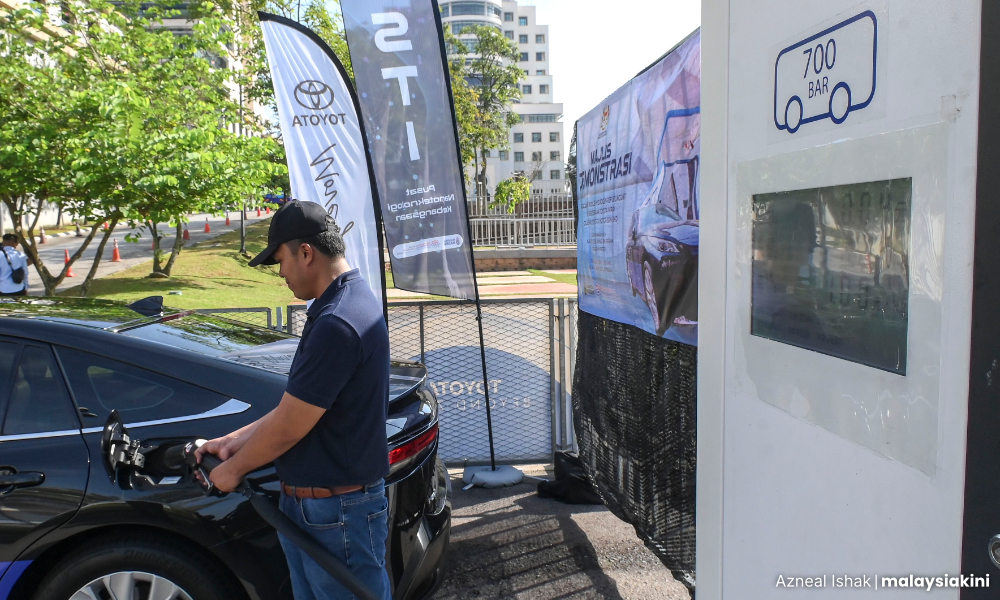
This could just be the situation that will help push the country to more EV vehicles, not just for consumers but also in the different transport industries.
Not only that, there can be an even bigger push to implement solar energy as well. The government can surely put into place more aggressive policies to help this happen now. The same cost that is going into subsidising expensive petrol and diesel can be put into subsidising sustainable energy instead.
I’m sure it is going to be difficult. The world is still so reliant on oil and gas, and what's more, for an oil-producing country like Malaysia. But I’m sure it can be done if the country’s top brains come together and start thinking about it properly. Malaysia is full of intellectual talent, right?
I’m sure we can do it. And even if we can't, I'm sure the rest of the world can. Just look at how it was during the Covid-19 pandemic and when we needed a vaccine fast.
When everyone comes together and tries to come up with solutions during desperate times of survival, things can happen quickly. - Mkini
ZAN AZLEE is a writer, documentary filmmaker, journalist and academic. Visit fatbidin.com to view his work.
The views expressed here are those of the author/contributor and do not necessarily represent the views of MMKtT.

No comments:
Post a Comment
Note: Only a member of this blog may post a comment.