


Putrajaya’s move to establish yet another Parliamentary Special Select Committee (PSSC) to look into the government’s proposed bill on separating the roles of the attorney-general (AG) and the public prosecutor has come under scrutiny from lawmakers and civil society organisations (CSOs).
Various quarters, including backbenchers, had previously urged the government to refer the constitutional amendment bill to the PSSC on human rights, elections, and institutional reform, which is chaired by PKR’s Selayang MP William Leong.
Minister in the Prime Minister’s Department (Law and Institutional Reform) Azalina Othman Said will chair the new PSSC, set to be the 11th under Parliament, with Leong relegated to being a committee member alongside other government and opposition MPs.
In a Facebook post last night, PKR’s Subang MP Wong Chen also pointed out that none of the PKR MPs who had previously highlighted the need for amendments to the bill has been afforded a chance to sit on the committee.
The group of PKR lawmakers, who are perceived as being aligned with former economy minister and Pandan MP Rafizi Ramli, include Wong, Lee Chean Chung (Petaling Jaya), S Kesavan (Sungai Siput), Onn Abu Bakar (Batu Pahat), Rodziah Ismail (Ampang), Nik Nazmi Nik Ahmad (Setiawangsa), Zahir Hassan (Wangsa Maju), Hassan Karim (Pasir Gudang), and Bakhtiar Wan Chik (Balik Pulau).
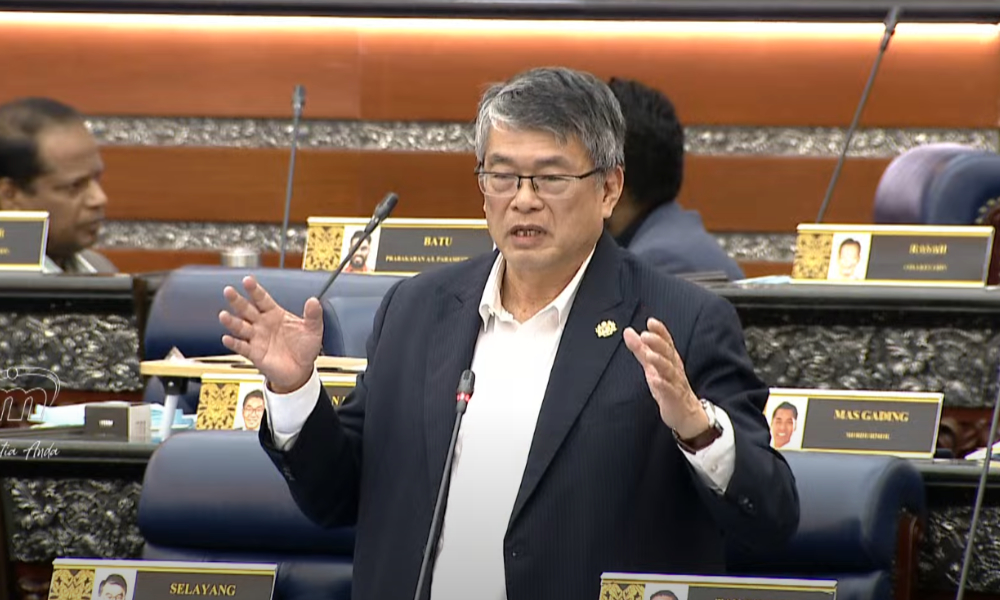
Besides Azalina and Leong, the PSSC formed to study the bill comprises DAP lawmakers Syahredzan Johan (Bangi) and Ramkarpal Singh (Bukit Gelugor), Amanah MP and Deputy Defence Minister Adly Zahari (Alor Gajah), as well as Umno’s Noraini Ahmad (Parit Sulong).
Gabungan Rakyat Sabah’s Tawau MP Lo Su Fui, who is also the deputy federal territories minister, Gabungan Parti Sarawak’s Lubok Antu MP Roy Angau Gingkoi, and Muda’s Muar MP Syed Saddiq Syed Abdul Rahman will also sit on the committee.
Representatives from the other side of the aisle are opposition chief Hamzah Zainudin (Larut), Bersatu chief whip Ronald Kiandee (Beluran), and Perikatan Nasional chief whip Takiyuddin Hassan (Kota Bharu).
In tabling a motion for the bill to be referred to the PSSC yesterday, Azalina noted that the committee may invite other parties, such as MPs, legal and constitutional experts, as well as NGOs, to attend its proceedings “from time to time.”
Taking to Facebook, Lee stressed that parliamentary reform is not merely about outcomes, but also about process and institutional integrity.
“Whether this move (regarding the new PSSC) strengthens scrutiny or signals an encroachment on parliamentary independence is a question that deserves careful reflection,” he added.
Examining bill’s various aspects
Azalina also told Parliament yesterday that the committee will examine various aspects of the bill, including matters concerning the public prosecutor’s accountability mechanism, and propose amendments deemed necessary.
While the minister said a report containing the committee’s recommendations will be prepared within three months, the PSSC may, if necessary, extend the said period.
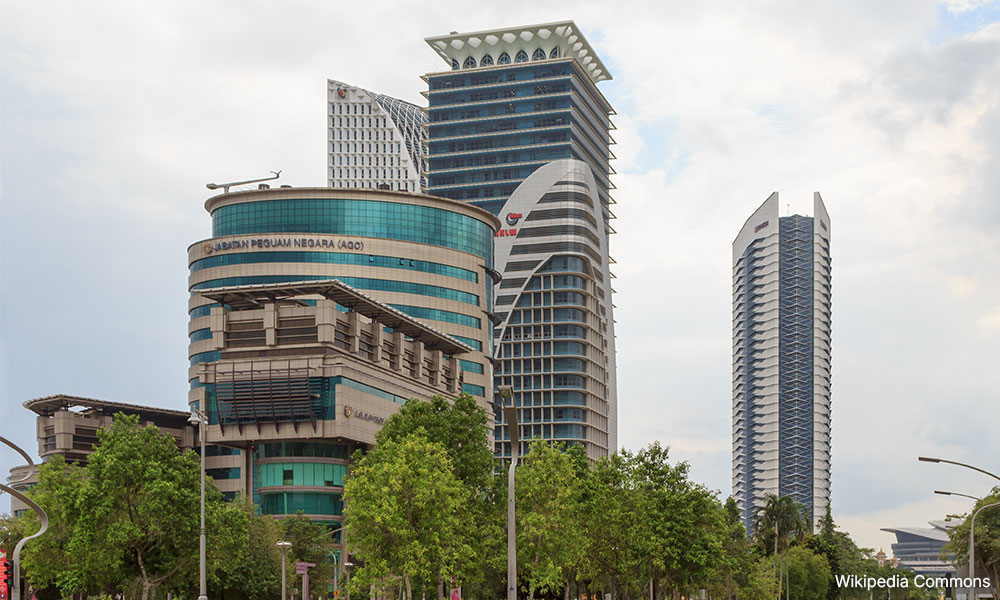
In a statement today, CSOs pointed out that, besides an accountability mechanism, other issues and concerns that have been raised include the public prosecutor’s process of appointment and removal, tenure and limits of service, age, retirement, as well as the risk of the AG and public prosecutor’s influence upon the judicial service.
These issues, they said, must be refined and agreed upon to ensure the constitutional amendment can proceed smoothly with the support of all stakeholders.
They further argued that the separation of the positions and offices of the public prosecutor should require the drafting of an Enabling Act to comprehensively outline the role of the public prosecutor and related services.
They asserted that such a move would also provide for regulations and procedures concerning the office of the public prosecutor, the core functions and preconditions for the exercise of prosecutorial powers, the obligation to issue guidelines, a prosecution code of conduct and code of ethics, as well as other related matters.
“To reinforce the legitimacy of these amendments, the future amended draft bill should also be open for discussion with civil society within a reasonable time frame, to ensure comprehensive examination can be conducted, and any improvements can be made based on consensus,” they urged.
The statement was backed by, among others, Bersih, the Center to Combat Corruption and Cronyism (C4 Center), and the Institute for Democracy and Economic Affairs (Ideas). - Mkini

No comments:
Post a Comment
Note: Only a member of this blog may post a comment.