


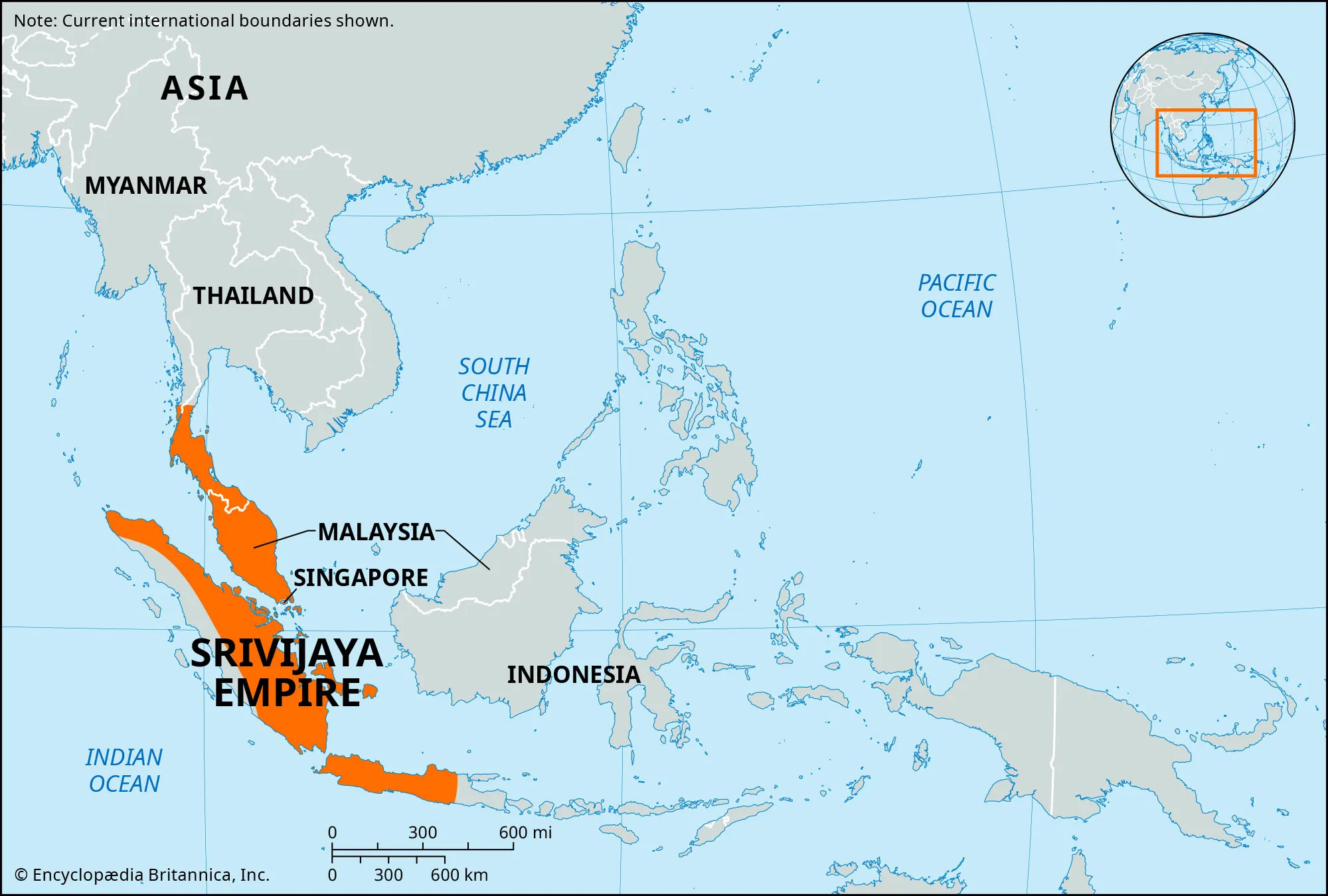
THERE’S been a bit of a buzz lately concerning a discussion that has spilled out of academic journals into public conversation.
For the uninitiated, someone has recently put forward the idea that Srivijaya was an Islamic empire. And look, this kind of debate is exactly what universities are for. Scholars are supposed to poke and prod at our understanding of the past. It’s how we learn.
But moments like this are also a good reminder that playing with history isn’t just an academic exercise—it comes with real weight.
For as long as anyone can remember, the story of Srivijaya—that powerful kingdom thriving in Sumatra and the Malay Peninsula from the 7th to the 13th century—has been that of a mighty Buddhist maritime power.
We know this from the detailed travelogues of monks like China’s Yijing, who saw it as a world-class center for Buddhist learning.
We have ancient inscriptions in Sanskrit and Old Malay, filled with Buddhist ideas. And the things we’ve dug up from the ground all paint the same picture.
Now, it’s also true that the world was a busy, connected place back then. We know that Muslim traders from Arabia and Persia were sailing into Southeast Asian ports as early as the 9th century.
These were the super-highways of their day, linking the Malay world with India, China, and the Middle East. Ideas and cultures traveled with the cargo.
So, the real question isn’t “Were there Muslims in the region?” They probably were. The real, much harder question is “Was Srivijaya itself an Islamic state?” And on that, the overwhelming weight of historical evidence—or lack of it—says no.
This is the kind of question universities were built to handle. Academic freedom means you get to ask it. You get to challenge the old stories.
But that freedom is a two-way street. It comes with a responsibility. If you’re going to make a big claim that flies in the face of what we know, you have to bring the goods. You need rock-solid evidence, the kind that can stand up to the tough, critical scrutiny of other experts in the field.
We should be confident enough as a nation to look at our past in all its richness. The Malay world wasn’t born in a vacuum. It was shaped by Hindu-Buddhist influences for centuries before Islam became its heart, and later, by the colonial era. Each of these layers is a part of who we are.
Saying Srivijaya was Buddhist doesn’t take anything away from the fact that Malaysia is Islamic today. It doesn’t weaken our foundation. If anything, it makes our story even more fascinating.
It shows that this region has always been a crossroads, a place where different civilisations met, mingled, and left their mark. Understanding that complexity isn’t a sign of weakness; it’s a sign of maturity.
So how should we handle these debates? Not with anger or by drawing lines in the sand, that’s for sure. We need open, respectful spaces where historians, archaeologists, and language experts can sit down, lay out their evidence, and really engage with each other.
The public’s trust in institutions like universities is built on that kind of transparency and intellectual honesty.
We don’t have to be afraid of the nuances in our own history. A confident society can look at its full story—celebrating its deep Islamic heritage while also appreciating the cultural footprints that came before.
In the end, history should be something that illuminates, not inflames. It should broaden our understanding, not narrow it.
And our universities, as the guardians of knowledge, have a duty to make sure that every debate, especially the controversial ones, is guided by evidence and sound method.
Handled the right way, even a claim that turns out to be wrong can be good for scholarship. It forces us to go back, re-examine our sources, and sharpen our arguments. It makes the truth stronger.
After all, our shared heritage deserves that kind of respect.
KT Maran is a Focus Malaysia viewer.
The views expressed are solely of the author and do not necessarily reflect those of MMKtT.
- Focus Malaysia.

No comments:
Post a Comment
Note: Only a member of this blog may post a comment.