


On May 13 and 17, the Terengganu Syariah Court sentenced two young couples to caning for offences relating to preparation for sexual intercourse outside marriage and khalwat, respectively.
Reports indicate that one of the couples accepted the caning sentence because they were unable to pay the fines imposed by the court. Both couples appeared before the court without legal representation.
In the other case, the couple, who were facing a second khalwat charge, have since married. The caning sentence is scheduled to be carried out on June 7 at the Marang Prison in Terengganu.
These cases come amid a series of developments that raise broader concerns about the increasing use and normalisation of caning within the syariah legal system in Terengganu.
In November 2025, the state government gazetted nine mosques throughout the state as official venues for the execution of caning sentences and announced plans to expand the practice to other public spaces, including recreational parks, public squares, and markets.
The Terengganu government has also increasingly pursued the use of caning in both public and institutional settings. Most notably, in 2024, a man was publicly caned for a repeat khalwat offence.

In response, Suhakam stated that caning “undermines human rights, dignity, and the rule of law” and reiterated its call for Malaysia to ratify the United Nations Convention Against Torture and Other Cruel, Inhuman, or Degrading Treatment or Punishment (Uncat), which has been ratified by many Muslim-majority countries.
Following amendments to the Terengganu Syariah Criminal Offences Enactment, at least 22 state offences now carry maximum punishments of a RM5,000 fine, three years’ imprisonment, and six strokes of the cane.
Most of these offences relate to consensual sexual conduct regardless of gender identity, pregnancy out of wedlock, pimping and sex work, matters related to faith and belief, and the consumption of alcohol.
Further, many of these laws have been nullified in the Nik Elin case as ultra vires, i.e. enacted beyond the competence of the state legislature.
These recent developments surrounding morality-related enforcement and the expanding use of provisions under the Syariah Criminal Offences Act and various State Syariah Criminal Offences Enactments (SCOA) raise important questions about the direction and priorities of syariah criminal enforcement in Malaysia.
Syariah law forms part of Malaysia’s legal framework and continues to play an important role in the lives of many Muslims in this country.

Discussions surrounding syariah criminal laws and enforcement should therefore remain grounded in principles of justice, compassion, proportionality, public welfare, and constitutional accountability.
Access to justice and structural concerns
Over the years, the scope and application of morality-related offences under various state syariah criminal enactments have continued to expand, increasingly transforming matters of private morality into criminal and public enforcement issues.
At the same time, longstanding structural issues affecting Muslim women, families, and vulnerable communities remain unresolved.
Access to justice, delays within the syariah court system, inconsistencies across states, difficulties in enforcing maintenance and court orders, and the broader need for family law reform continue to receive insufficient attention.
Questions must also be asked about whether the continued expansion of punitive approaches under SCOA has improved social wellbeing, strengthened families, reduced harm, or expanded meaningful access to justice.
Punishment, class, and vulnerability
Recent years have also seen increasing calls for harsher punishments and expanded enforcement powers under syariah criminal laws, including public caning and wider criminalisation of morality-related offences.
These developments raise serious concerns regarding proportionality, dignity, rehabilitation, and the broader purpose of punishment within the justice system.

In practice, punitive enforcement systems often disproportionately affect those with fewer resources and limited access to legal representation.
Many individuals charged under morality-related offences lack adequate legal advice, are unfamiliar with court procedures, or feel pressured to plead guilty without fully understanding the wider implications of their pleas and sentencing options.
The impact is also deeply classed. Those unable to pay fines frequently face imprisonment, while individuals from lower-income and vulnerable backgrounds often bear the harshest consequences of enforcement practices.
Women, particularly those with limited financial means or support systems, may experience compounded vulnerabilities within these processes.
The increasing focus on punishment, surveillance, and public morality enforcement also raises broader concerns regarding fear-based enforcement, exposure, humiliation, and public spectacle.
A justice system cannot be discussed in isolation from the social harm caused by stigma, shame, and public condemnation.
Islamic principles and the prevention of harm
Islamic legal traditions have long distinguished between private moral failings and public harm. Principles such as justice, dignity, compassion, repentance, and the prevention of harm must remain central in any discussion involving law and enforcement.
The Islamic legal principle of “no harm and no reciprocating harm” (la darar wa la dirar) requires that laws and enforcement mechanisms be assessed not only by the punishment imposed, but by the wider harm they create within society.
The issue is not whether Islam values morality, accountability, or ethical conduct. Rather, it is whether current approaches to enforcement, punishment, and public exposure are consistent with the broader Islamic principles of justice, dignity, compassion, and the prevention of harm.
Public humiliation and media responsibility
The increasing public attention surrounding recent morality-related enforcement cases also reflects a growing culture of exposure, humiliation, and moral spectacle.
The extensive circulation of identities, personal details, images, and commentary across media and social media platforms highlights how quickly deeply personal matters can become a national spectacle.
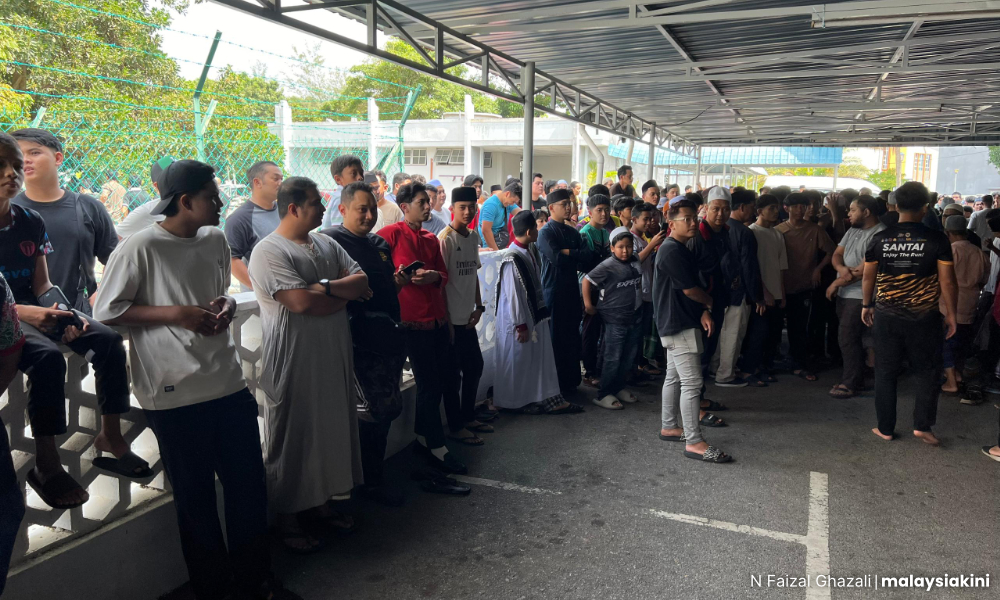
The speed at which such cases are amplified through sensational headlines, viral content, and outrage-driven commentary reflects an increasingly punitive environment in which humiliation itself becomes part of the punishment. Public interest reporting should not evolve into public humiliation.
Regardless of differing moral views, no individual should become the subject of nationwide humiliation, online vigilantism, or permanent digital shaming.
Reporting involving morality-related cases must be approached with caution, proportionality, and humanity, particularly where the long-term dignity and well-being of those involved may be permanently affected.
Legal reform and constitutional accountability
Recent developments also highlight the urgent need for broader and more meaningful legal engagement on the future direction of syariah criminal laws in Malaysia.
The shrinking space for CSOs, lawyers, academics, and religious scholars to critically engage questions of constitutional limits, human dignity, procedural fairness, and lived realities weakens public trust and narrows healthy discourse on legal reform.
Malaysia’s syariah legal system does not operate outside the framework of the Federal Constitution. As reaffirmed repeatedly by the courts, all laws enacted in Malaysia must remain consistent with constitutional guarantees, including fundamental liberties, equality before the law, and human dignity.
This includes the need to ensure that syariah criminal laws and enforcement mechanisms remain consistent with constitutional protections under Articles 5 to 13 of the Federal Constitution, as well as Malaysia’s broader commitments to justice, equality, and human dignity.
Constitutional morality cannot be reduced to majoritarian morality.
Any legal system, including syariah law in Malaysia, must ultimately be assessed by whether it advances justice, protects dignity, reduces harm, and serves the broader well-being of society.
SIS Forum (Malaysia) reiterates that discussions on syariah criminal laws, morality, and enforcement must ultimately be guided not by punitive populism or public spectacle, but by justice, proportionality, dignity, and the higher ethical objectives of Islam itself. - Mkini
SIS FORUM is an NGO working towards advancing the rights of Muslim women in Malaysia within the framework of Islam, universal human rights principles, constitutional guarantees, as well as the lived realities and experiences of women.
The views expressed here are those of the author/contributor and do not necessarily represent the views of MMKtT.

No comments:
Post a Comment
Note: Only a member of this blog may post a comment.