


A nation may be weakened by corruption, poor governance, and economic mismanagement. But it can also be weakened by falsehoods repeated so often that they begin to sound like the truth.
Malaysia today is burdened by several such falsehoods. They appear in political speeches, social media comments, public forums, and casual conversations.
They divide citizens into “owners” and “guests”, “defenders” and “adversaries”, “believers” and “disbelievers”.
These ethno-nationalist narratives may serve politicians who thrive on communal fear, but they certainly do not serve Malaysia.
They do not strengthen institutions, reduce corruption, lower the cost of living, improve education or prepare youths for a competitive world.
Instead, they keep Malaysians trapped in perpetual suspicion and insecurity.

Four myths in particular have damaged our efforts towards nation-building: that Malaysia belongs exclusively to the Malays; that non-Malays are “pendatang”; that Malaysia is an Islamic state; and that a so-called “social contract” has legitimised permanent Malay supremacy (ketuanan Melayu).
These claims deserve careful scrutiny because a nation that builds its future on distorted history and political fiction cannot become truly united, just, or progressive.
What the nation’s founders actually desired
The leaders who negotiated our Merdeka were not trying to create an ethnically exclusive state. Their challenge was to build a stable nation from a highly diverse society.
The Alliance Party (Umno, MCA, and MIC) leaders representing Malays, Chinese, and Indians worked together to formulate constitutional proposals that would secure independence while preserving harmony among the country’s various communities.
A fundamental provision in the 1956 Alliance Memorandum submitted to the Reid Commission recognised the special position of the Malays while providing citizenship for non-Malays and safeguarding the legitimate interests of all communities.
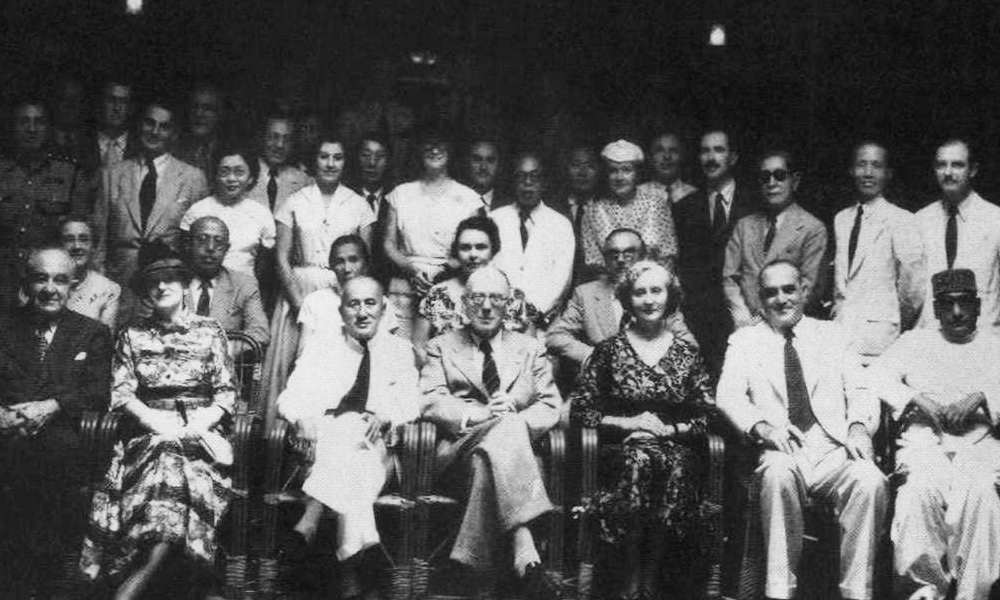
The constitutional settlement that emerged was a carefully negotiated framework designed to promote stability, coexistence, and nation-building in a diverse society.
That founding spirit deserves to be rediscovered.
Malaysia belongs to all its citizens
The claim that Malaysia belongs only to the Malays is one of the most divisive assertions in our public life. It ignores both constitutional reality and the spirit in which the nation was founded.
Malaysia was built through the labour, sacrifice, enterprise, and public service of Malays, Chinese, Indians, Orang Asli, the indigenous peoples of Sabah and Sarawak, and many other communities.
For the record, the Alliance Party, in its memorandum submitted to the Reid Commission on Sept 27, 1956, stated that “in an independent Malaya, all nationals should be accorded equal rights, privileges, and opportunities and there must not be discrimination on the grounds of race and creed …”
Similarly, in their memorandum dated Sept 12, 1956, the Malay rulers affirmed that they “look forward to a time not too remote when it will become possible to eliminate communalism as a force in the political and economic life of the country” (Reid Commission Report, 1957, page 71).
All Malaysian citizens enjoy constitutional rights and responsibilities under the Federal Constitution.
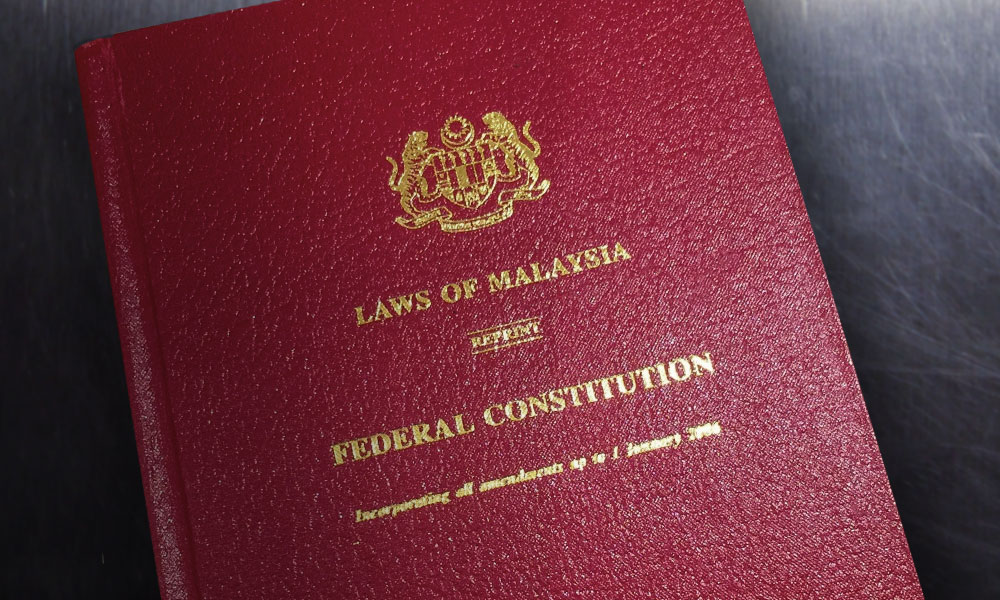
As rightly stated by Nazri Aziz, former Malaysian ambassador to the United States, Malaysia “is not just for Malays and Muslims”. He further remarked: “I do not agree that this country is a Malay country” (Malay Mail, March 6, 2025).
While the Malays hold a constitutionally recognised special position arising from historical circumstances, this provision was never intended to imply exclusive ownership of the nation.
Malaysian society as a whole has been shaped by centuries of migration, interaction, and cultural exchange involving people from across the Malay Archipelago and beyond.
Cruelty of the ‘pendatang’ label
Few words are more damaging to national unity than “pendatang” when used against fellow citizens.
The term is often weaponised to imply that certain citizens do not truly belong and should remain perpetually grateful for their place in society. Such thinking undermines the very concept of citizenship.
According to the 1947 Census of Population, approximately 26 percent of Malays in Peninsular Malaysia were immigrants from what is today Indonesia.
By contrast, 63.5 percent of the Chinese and 51.6 percent of the Indians in Peninsular Malaysia were locally born.
Yet descendants of Indonesian migrants who became part of the wider Malay community are seldom described as “pendatang” today.
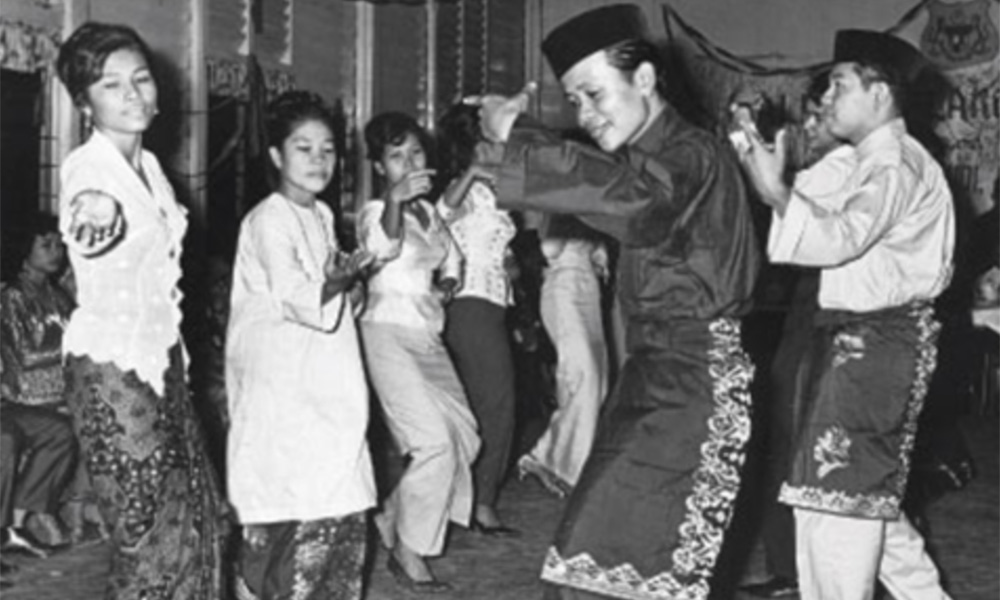
This highlights the inconsistency of applying the label selectively to citizens whose families have lived in Malaysia for generations.
More importantly, once citizenship is granted under the Constitution, all citizens become equal members of the national family. No citizen should be made to feel like a guest in his or her own country.
Malaysia was not conceived as a theocratic state
Another frequently repeated claim is that Malaysia was founded as an Islamic state.
This issue requires careful discussion because Islam occupies a special constitutional position. Article 3 of the Federal Constitution declares Islam to be the religion of the federation. The Malay rulers also have important constitutional responsibilities relating to Islam.
However, these provisions do not automatically transform Malaysia into a theocratic state. The 1957 Reid Commission Report made it clear that recognising Islam as the religion of the federation would not make the country a theocratic state.
The Constitution establishes a parliamentary democracy, a constitutional monarchy, an independent judiciary, and a system of civil law.
Equally important, it guarantees that other religions may be practised in peace and harmony.

Indeed, as Joseph M Fernando observed in “The Making of the Malayan Constitution”, the Alliance leaders during the May 1957 London Conference assured the Colonial Office that they “had no intention of creating a Muslim theocracy and that Malaya would be a secular state”.
The ‘social contract’ myth
Perhaps no term has generated more confusion in Malaysian political discourse than the so-called “social contract”.
Strictly speaking, in political philosophy, the term refers to an agreement between the state and its citizens, rather than a bargain among leaders of different political parties or ethnic communities.
Many Malaysians assume that a formal constitutional document bearing that name exists.
In reality, no such document exists. The term “social contract” does not appear in the Federal Constitution, nor was it used by the Reid Constitutional Commission during the constitutional drafting process.
What emerged before independence was an inter-communal constitutional bargain among leaders representing Malaya’s major communities, rather than a formal “social contract”.
The phrase itself entered Malaysian political discourse much later. It is generally traced to a speech delivered by the former Umno politician Abdullah Ahmad in Singapore on Aug 30, 1986, in which he referred to a “social contract” to justify Malay political dominance.

Over time, the term acquired a life of its own and was increasingly invoked to justify claims of Malay political supremacy and exclusive ownership of the nation.
Yet, neither the Federal Constitution nor the Merdeka constitutional settlement provides any mandate for perpetual communal dominance by any ethnic group.
From race-based policies to needs-based justice
Affirmative action was introduced to address genuine socioeconomic disparities. It emerged from the legitimate recognition that significant segments of the Malay population required government assistance to improve their socioeconomic position.
However, some of the nation’s founding leaders did not envisage such measures continuing indefinitely without review.
Former deputy prime minister Dr Ismail Abdul Rahman cautioned that if special privileges were perpetuated forever, they would eventually become “a slur on the ability of the Malays”.
Significantly, the Alliance leaders themselves ultimately agreed that the provisions relating to the special position of the Malays should be reviewed from “time to time”.
This reflected an understanding that affirmative measures were intended to assist Malays in overcoming socioeconomic disadvantages and achieving parity with other communities, rather than to create permanent dependency or perpetual communal preferences.

Today, poverty and disadvantage exist across all communities. A gradual transition towards needs-based affirmative action deserves serious consideration.
Such an approach would continue assisting disadvantaged Malays while ensuring that no vulnerable citizen is excluded solely because of ethnicity.
Justice is strongest when it is perceived as fair.
Real threats facing Malaysia
Malaysia’s greatest challenges do not come from ordinary citizens of different races or religions.
The real threats are corruption, abuse of power, declining institutional integrity, religious extremism, ethnic chauvinism, poor governance, and the politics of division.
The politics of fear frequently diverts public attention from governance failures and the reforms needed to address them.
When citizens are encouraged to fear one another, they pay less attention to corruption, incompetence, and abuse of power.

Most Malaysians are not obsessed with ethnic supremacy. They are concerned about the rising cost of living, quality education, affordable housing, good healthcare, public safety, and economic opportunities for their children.
These are the issues that should dominate our national conversation.
What must be done
The government must take a principled and consistent stand against communal and religious incitement, regardless of the identity or status of those responsible.
The law must be applied fairly and without fear or favour. Individuals who deliberately spread ethnically divisive, inflammatory, or false information on social media should face appropriate legal consequences.
Selective enforcement only undermines public confidence.
Political leaders must stop exploiting ethnicity and religion for short-term electoral gain. Instead, they should articulate a compelling national vision centred on unity, integrity, economic progress, and good governance.
Schools should strengthen constitutional literacy and teach Malaysian history in a balanced and inclusive manner.

Religious leaders, civil society organisations, and the media should likewise promote understanding, challenge misinformation, and encourage greater interaction among communities.
Most importantly, citizens themselves must reject attempts to divide them.
Choosing the Malaysia we want
Malaysia cannot become a great nation while remaining captive to myths that divide its people.
The founders envisaged a country in which different communities could work together while preserving their identities and loyalty to a common homeland. That vision remains unfinished.
The challenge before us is not to determine who owns Malaysia. Citizenship, the Constitution, and the Merdeka inter-communal bargain resolved that question long ago.
The real challenge now is whether we possess the wisdom, integrity, and courage to build a Malaysia in which every citizen feels a genuine sense of belonging, opportunity, and hope. - Mkini
RANJIT SINGH MALHI is an independent historian who has written 19 books on Malaysian, Asian, and world history. He is highly committed to writing an inclusive and truthful history of Malaysia based upon authoritative sources.
The views expressed here are those of the author/contributor and do not necessarily represent the views of MMKtT.

No comments:
Post a Comment
Note: Only a member of this blog may post a comment.