


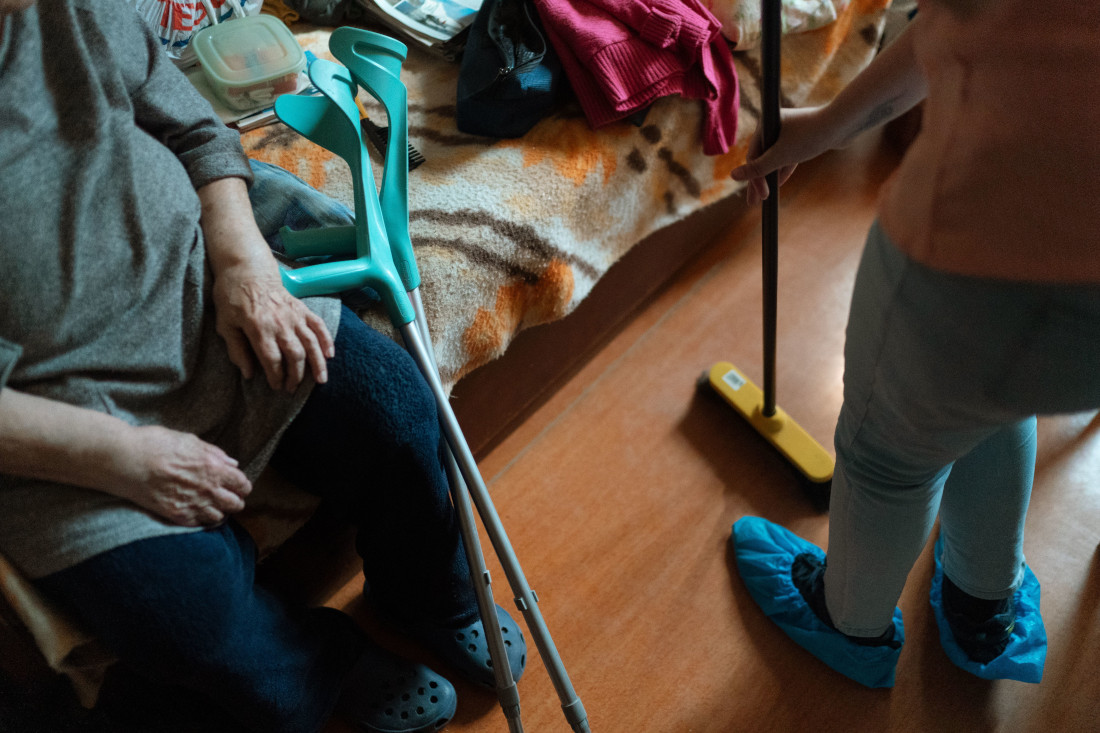
AT 6.30 every morning, a mother prepares breakfast for her children before getting ready for work. Her husband checks on his elderly mother, who has become increasingly dependent on them after a recent illness.
By the time they leave home, several hours of work have already been done. None of it appears on a pay slip. Yet without it, someone in the household might not be able to go to work.
This is the reality of caregiving for many Malaysian families. It happens quietly at home and is often treated as a family responsibility rather than economic activity.
But perhaps we need to look at it differently.
According to the Department of Statistics Malaysia (DOSM), Malaysians spend an average of five hours and 12 minutes a day on unpaid domestic and care work. Women shoulder a particularly large share, spending an average of six hours and seven minutes daily.
Caregiving can mean leaving work early, taking unpaid leave or eventually leaving employment altogether. A decision made around the family dining table can therefore shape income, career progression and long-term financial security.
The wider picture is equally striking. In June 2026, 7.11 million people were outside Malaysia’s labour force, with housework and family responsibilities accounting for 43.3% of the reasons cited. Women are especially affected.
DOSM’s 2025 Labour Force Survey found they made up 69.5% of those outside the labour force, equivalent to about 4.89 million women.
Perhaps, then, we should stop asking only why more women are not working and start asking what would make it possible for people to work while caring for those who depend on them.
Malaysia’s changing demographics make that question increasingly urgent. In 2026, people aged 65 and above accounted for 8.4% of the population, while the proportion of children aged 14 and below continued to fall. Families are becoming smaller, people are living longer and working-age adults are carrying greater responsibilities.
For the so-called sandwich generation, supporting ageing parents while raising children can become a difficult balancing act.
And someone must absorb the cost.
That cost is not limited to medicine, transport or care equipment. It also includes income never earned, EPF contributions never made and promotions postponed.
The government has begun to respond. It is developing the Malaysia Care Strategic Framework and Action Plan 2026–2030, alongside efforts to strengthen care standards, professionalise the care workforce and train 50,000 skilled elderly caregivers by 2030.
These are important steps. But as Malaysia builds a formal care economy, we must not overlook the family members who provide care without recognition or pay. Many may never even describe themselves as caregivers. They simply say, “He is my father.”
That is precisely why their contribution is so easily overlooked.
Malaysia’s care debate must therefore go beyond building facilities and training professional caregivers.
It should also protect the economic security of family caregivers through accessible respite care, appropriate care leave, flexible working arrangements, stronger social protection and clearer pathways back into employment.
For years, Malaysian families have quietly subsidised the economy through unpaid care, enabling children to grow, older people to remain supported and working-age adults to stay employed.
As Malaysia builds a more structured care economy, the next step is to ensure the people providing that care are not left behind.
Because when caregivers sacrifice income, career progression and retirement security to care for someone else, the cost of care does not disappear.
It simply shifts to the people carrying it.
The author, Dr Sharmila Thinagar is from the Department of Southeast Asian Studies, Faculty of Arts and Social Science, Universiti Malaya.
The views expressed are solely of the author and do not necessarily reflect those of MMKtT.
- Focus Malaysia.

No comments:
Post a Comment
Note: Only a member of this blog may post a comment.