


Although disappointed over the Federal Court’s decision to reinstate the words “offensive” and “annoying” in Section 233A of the Communication and Multimedia Act 1998 (CMA), activist Heidy Quah said the verdict still marked a significant shift in freedom of speech in the country.
“A democratic society cannot grow if its people are afraid to speak. Progress requires conversations that are difficult and uncomfortable. Conversations that expose broken systems, question those in power, protect whistleblowers, and uphold accountability.
“The Federal Court has now made it clear that Section 233A(1) must be read narrowly and applied with a very high threshold. The words ‘offensive’ and ‘annoying’ are no longer loose, catch-all terms.
“Before any charge can even be contemplated, there must be clear proof of harm, demonstrable intent, and that intent must be vexatious, malicious, injurious, and repeated. A single post, on its own, is no longer sufficient to trigger prosecution under this section.
“Most importantly, the court also ruled that political speech cannot be caught under Section 233(1)(a),” Quah (above) said in a statement today.
Earlier today, the Federal Court reinstated a provision in the CMA that criminalises content that “annoys” or is “offensive”, the two words the Court of Appeal struck down last year.
A five-member panel led by Chief Justice Wan Ahmad Farid Wan Salleh unanimously ruled that the words did not violate freedom of speech under Article 10(1) of the Federal Constitution.
At the same time, the panel affirmed the Court of Appeal’s decision in finding the prosecution's charge against Quah under the provision in September 2021 over her Facebook post unjustified.
When contacted, Attorney-General Dusuki Mokhtar said he would need to discuss with his team on the way forward.
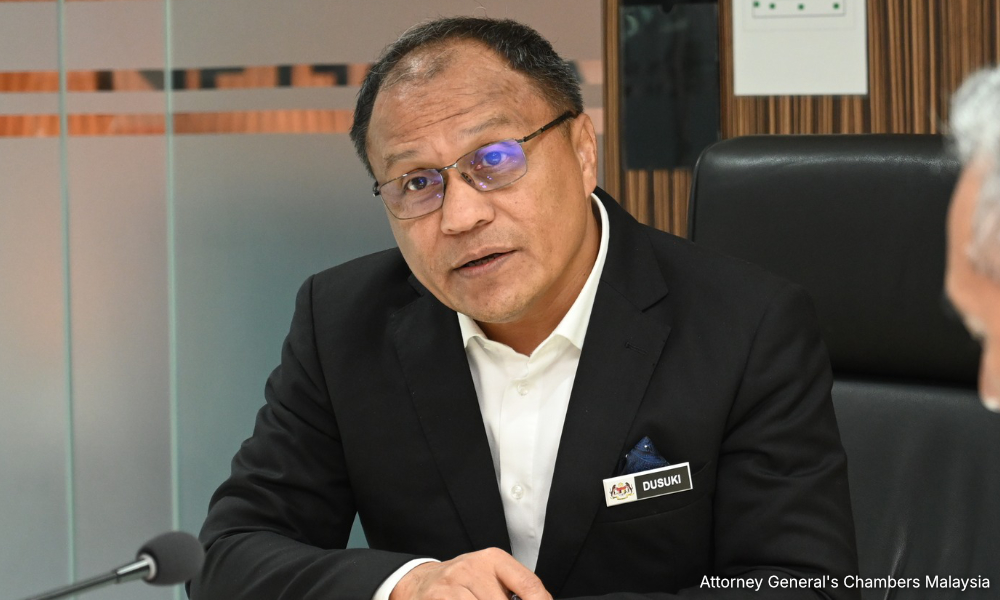
“(The verdict) reinstates the position of the law as it was then (and) it is up to the prosecutor to charge or not to charge any (alleged) wrongdoer based on the available evidence and facts of each case.
“(However) it is too early to comment at this juncture. I got to discuss with the team first to assess the decision and our way forward,” he told Malaysiakini.
‘Democracy not meant to be comfortable’
Elaborating, Quah said her legal challenge against the provision was never just about striking out the words “offensive” and “annoying” but to safeguard freedom of speech.
She also said the challenge was intended to ensure that Section 233(1)(a) of the Act cannot be used as a blunt instrument to punish critics or intimidate those who speak truth to power.
“Democracy is not meant to be comfortable. It is meant to be alive (by) questioning, challenging, and resilient enough to withstand criticism.
“So, while today’s decision is not the exact outcome we hoped for, it has moved the needle.
“We have achieved what we initially set out to do (which is) to improve the law and the political situation in Malaysia.
“Today’s ruling has narrowed the law drastically. It has raised the bar. And it has made it harder for speech to be criminalised simply because it is inconvenient to those in power.”
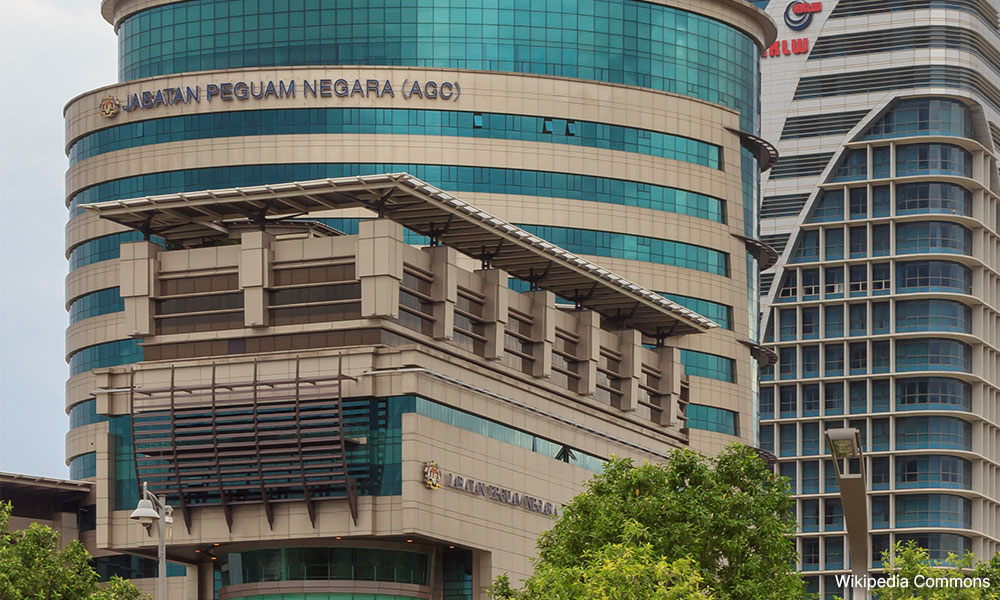
Quah then expressed hope that the Attorney-General’s Chambers (AGC) would adhere to the thresholds met under Section 233 before charging individuals under the provision.
Positive judgment
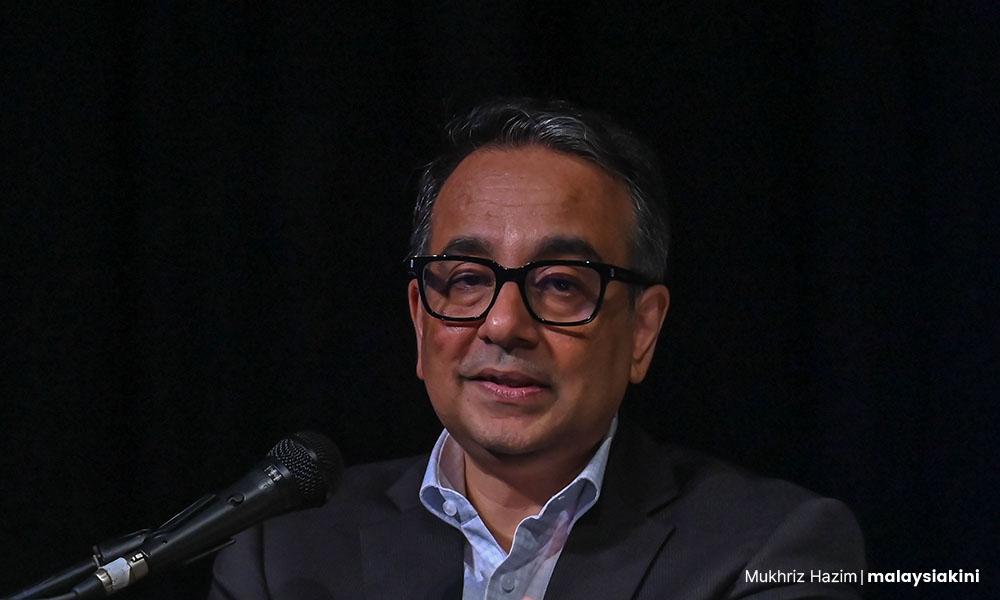
Commenting on the matter, Quah’s lawyer Malik Imtiaz Sarwar deemed today’s verdict as “a very positive judgment”, adding that there will always be a need for regulations.
“I think this is a very important decision, the first of the Federal Court’s on speech (made) in cyberspace (which) offers useful guidance to all the stakeholders, including the government and AGC.
“One of our concerns was that (Section 233) was used in a way (that was) stifling free speech in the true sense. The Federal Court today has clarified that it's not the purpose of that section, and that’s good.
“What is important is that the court has given some very clear guidelines on how the prosecution or the regulators are to look at these laws, and not use them to suppress what could normally be acceptable.
“It’s really a high threshold to say that (the) only things that are injurious that should be targeted and that’s now a way that the court has read the section and similar sections, which is a welcome development,” he told reporters after today’s proceeding.
Meanwhile, senior federal counsel Shamsul Bolhassan said the decision on whether to pursue existing charges under Section 233 of CMA now rests with the prosecution.
“The position of the law is reinstated. For ongoing cases, you will have to ask the prosecutors,” he told reporters briefly.
Quah had approached the court in September 2021 to challenge the validity of the two words under Section 233 of the CMA.
The civil action was initiated after Quah was charged in July 2021 under the section over a Facebook post highlighting the mistreatment of refugees at immigration detention centres. - Mkini

No comments:
Post a Comment
Note: Only a member of this blog may post a comment.