


The Federal Court has reinstated a provision in the Communications and Multimedia Act that criminalises content that “annoys” or is “offensive”, the two words the Court of Appeal struck down last year.
A five-member panel led by Chief Justice Wan Ahmad Farid Wan Salleh unanimously ruled that the words did not violate freedom of speech under Article 10(1) of the Federal Constitution.
At the same time, the panel affirmed the Court of Appeal’s decision in finding the prosecution's charge against activist Heidy Quah under the provision in September 2021 over her Facebook post unjustified.
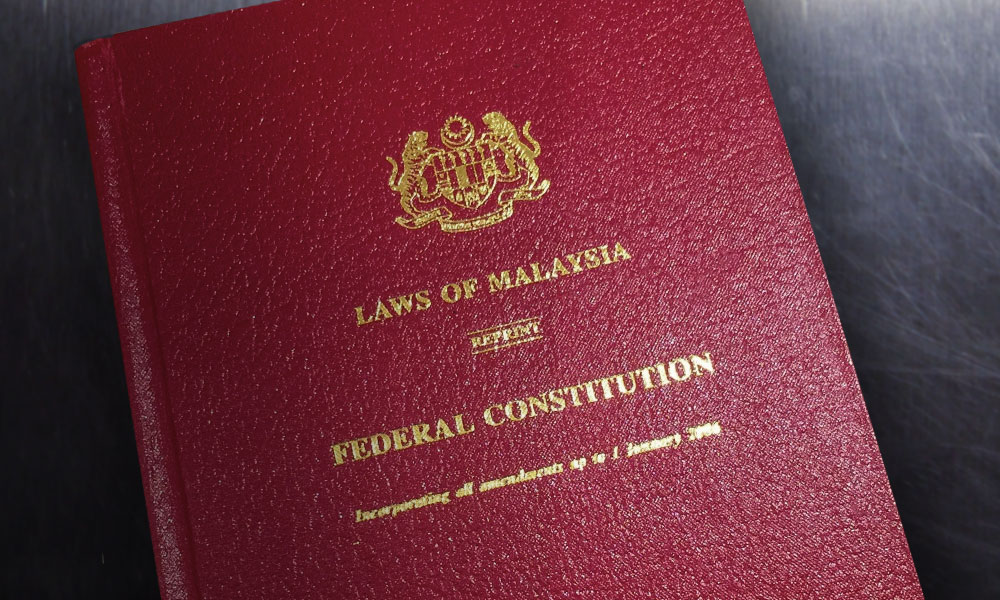
“We conclude that the words ‘offensive’ with the intent to ‘annoy’ in Section 233(1)(a) of the CMA are not unconstitutional.
“Those two words within the section do not infringe Article 10(1)(a) of the Federal Constitution because their primary purpose is to safeguard users of network facilities or services from content that falls outside of the definition of freedom of speech and expression.”
“The Federal Constitution protects genuine expression, not communication which is intended to cause injury or harm, particularly in the context of our plural nation.
“(Therefore) we allow (the government’s) appeal in part, (in which) we reverse that part of the judgement of Court of Appeal that struck out the words ‘offensive’ and ‘annoy’ from Section 233(1)(a) of the CMA for being inconsistent with Article 10(10)(a) of the Constitution.”
Judge Nallini Pathmanathan read out the judgment in today’s proceeding.
Presiding with Wan Ahmad Farid and Nallini were Federal Court judges Che Ruzima Ghazali, Nazlan Ghazali and Collin Lawrence Sequerah.
Free speech under Article 10 not absolute
The panel found that the right to freedom of speech and expression, as provided under Article 10(1)(a) of the Constitution, is not absolute, but it is inherently qualified to exclude communications which are harmful in character.
This would mean communications with the intent to cause harm or injury to another individual or groups of persons do not fall within the purview of free speech and expression.
“The obvious examples of speech that do not amount to free speech, in this jurisdiction, include hate speech and speech which offends religious sensitivities.
“It should, however, be made clear that discontent or anger arising from the expression of political views and more controversial issues do not constitute harm as envisaged in Article 10(1)(a).
“Such communications comprise free speech, as that is the essence of freedom of speech and expression (as) it promotes dialogue to enhance the existing system of government and democracy,” said Nallini.
The purpose of the provision, said the panel, is to regulate the improper use of network facilities and services, with a view to providing a safe online environment.
The provision serves to protect individuals and communities from suffering harm as a result of such improper use.
“In other words, Section 233(1)(a) of the Act targets communications that fall outside the purview of the freedom of speech and expression (as its function) is to ensure the right to freedom of speech and expression as set out under Article 10 is protected.”
Total strikeout unwarranted
Nallini adds that the prosecution’s error in prosecuting Quah under Section 233 in 2021 does not warrant a total strikeout of the words from the provision.

“This may well leave segments of online users open to the danger of communications made with the specific intent to cause annoyance, harm or distress, which cannot be regulated.
“The incorrect prosecution against Quah under Section 233(1)(a) is a distinct and separate issue from the constitutionality of the words ‘offensive’ and ‘annoy’ within that section.
“The problem of unwarranted prosecutions in the context of Section 233(1)(a) can be addressed by ‘reading down’ the section to narrow the types of cases falling within its purview, as well as to set the requisite thresholds to warrant the bringing of a prosecution.
“This means that it is only when ‘offensive’ communication is undertaken with an express intent to annoy another user or a body of users, (forms) sufficient basis to prosecute for a transgression of Section 233(1)(a).”
For example, Nallini said, an online communication which demeans, humiliates or puts down a particular racial segment of society and which is sent with the intent to annoy one or more members of that racial grouping, falls squarely within the term “offensive” with “intent to annoy”.
This is because such communication may well escalate into a public furore, thereby adversely affecting public order.
Furthermore, she adds, communications aimed at attacking the constitutional role of the constitutional monarchy with the intent to annoy, abuse, threaten or harass would also fall within Section 233’s purview.
“Individuals are not spared. When a communication which is offensive is made with the intent to annoy an individual repeatedly over a course of time, escalating to a call for that individual to harm or injure herself, then Section 233(1)(a) becomes entirely relevant and necessary.”
No basis to charge Quah
The panel, in affirming the Court of Appeal’s findings regarding charges against Quah, said the activist’s Facebook post falls within the definition of the right of freedom of speech and expression under Article 10(1)(a) of the Constitution.
“The content of her Facebook post did not, and could not, fall within the purview of Section 233(1)(a) (as) the post comprised matters of fact and opinion, which fall within the purview of the right to freedom of speech and expression in article 10(1)(a) of the Constitution.
“It could not possibly amount to a communication that was ‘offensive with intent to annoy’, as the content was not ‘offensive’ and the mens rea element of ‘intent to annoy’ was absent.
“Therefore, insofar as Quah is concerned, there was no basis to initiate the prosecution.”
The activist had sued to challenge the validity of the two words in Section 233 in September 2021.
The High Court dismissed the suit in September 2023, prompting her appeal.
The civil action was initiated after Quah was charged in July 2021 under the section over a Facebook post highlighting the mistreatment of refugees at immigration detention centres.
In April 2022, the Sessions Court granted the human rights activist a discharge not amounting to an acquittal due to the charge under Section 233(1)(a) being defective.
The Multimedia and Communications Act was amended in 2024 and came into effect on Feb 11 last year.
The amendment includes new provisions that would allow enforcement agencies to compel data keepers to preserve and disclose communications data, as well as refining Section 233 to make it more targeted. - Mkini

No comments:
Post a Comment
Note: Only a member of this blog may post a comment.