


Amid heightened tensions relating to discourse over “illegal temples”, MIC highlighted that mosques too have historically emerged from repurposed communal spaces, without sparking controversy.
Lamenting how current debates on the issue appear to have “forgotten” that Malaysians are no strangers to “quiet, everyday tolerance”, MIC president SA Vigneswaran (above) stressed that such understanding should apply across the board.
“Take something as ordinary as a playground in a housing area - many were built years ago when neighbourhoods were full of young families (and) children played there daily.
“As time passed and demographics shifted, some of these spaces were later converted into a surau to meet changing community needs.
“These transitions rarely sparked outrage. No one claimed history was erased. No one framed it as an invasion or illegality,” Vigneswaran said in a statement today.
He further attributed the previous lack of uproar over such situations to an “unspoken understanding” that shared spaces will adapt as communities evolve, with society acknowledging the past and accommodating the present with respect.
“That is tolerance in practice. It is not performative (and) it does not trend online, but it is deeply Malaysian.
“That same maturity must apply across all faiths and communities. Tolerance cannot be selective. Respect cannot be conditional,” he emphasised.
Vigneswaran’s statement comes after a coalition of NGOs announced plans to rally in Kuala Lumpur tomorrow to pressure authorities to act against “illegal” houses of worship, with Muslim preacher Zamri Vinoth acting as the Anti-Illegal Houses of Worship Movement coordinator.
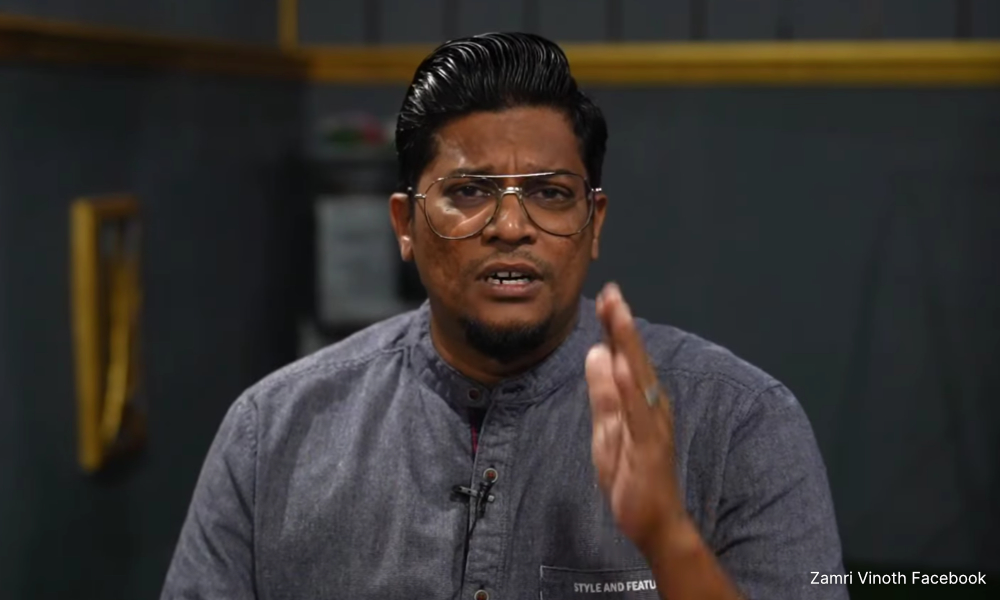
DAP lawmaker RSN Rayer yesterday said he has lodged a police report against Zamri over the latter’s application to hold the protest.
The Jelutong MP also urged Inspector-General of Police Khalid Ismail not to green-light the gathering, which he said could trigger racial and religious tensions and invite unhealthy polemics.
Civil society organisation Pusat Komas had similarly condemned the rally, accusing Zamri of effectively taking Malaysia many steps backwards in history by inciting tension against minority communities through disinformation and hateful rhetoric.
‘Reckless labelling’
Meanwhile, Vigneswaran noted that while freedom of speech and religious preaching are fundamental in any democratic society, such rights were never intended to be “weaponised”.
“In a country as diverse as Malaysia, these freedoms cannot be stretched into a licence to provoke, stigmatise, or undermine social harmony.
“Against this reality, sweeping claims that Malaysia is riddled with illegal temples are not just inaccurate - they are reckless.
“They flatten history, ignore context, and inject racial undertones into what are often administrative or planning matters,” he said.
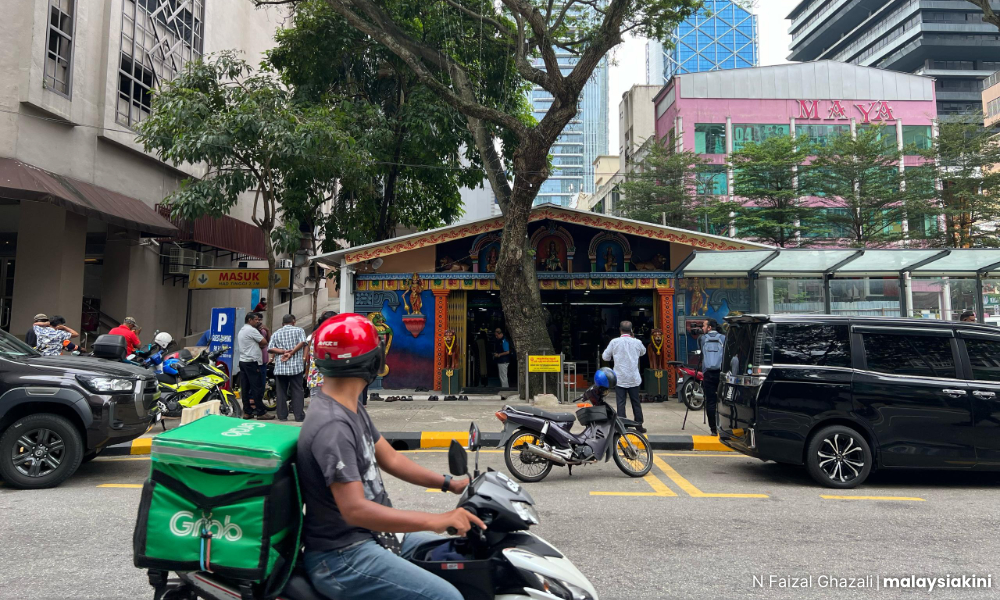
The MIC leader highlighted that most disputes involving old temples are not ideological battles, as they instead pose administrative questions about land status, zoning, redevelopment, and compliance.
Such grounds, he said, are matters with established solutions, such as relocation through consultation, compensation, land swaps, or an agreement on alternative sites.
“When handled properly, (such issues) do not need to become public flashpoints. What turns them toxic is careless rhetoric and the casual criminalisation of history.
“Development does not require humiliation. Governance does not require elimination.
“No one is arguing that planning laws should be ignored. They exist for good reason. Order, safety, and proper development matter. But, enforcing the law does not require pretending that the past never happened,” Vigneswaran added.
Old structures
He also pointed out that most temples involved in recent controversies are not recent constructions, nor were they built in secret or erected to defy planning laws, as their establishment often dates back to a period when the relevant laws did not exist.
“Communities built these temples in good faith, responding to spiritual and communal needs in a time governed more by trust and coexistence than by paperwork.
“These temples did not appear overnight. They stood quietly for decades. Families grew up around them. Festivals were celebrated year after year.
“Roads were built, towns expanded, and authorities came and went, all with these structures standing in plain sight.
“Their presence was known, accepted, and largely uncontroversial,” he added.
Reiterating his disagreement with the term “illegal temple”, Vigneswaran said it is important to acknowledge how circumstances around such houses of worship changed, rather than accusing communities of wrongdoing after the fact.
“(The term) suggests that the temple was unlawful from its very beginning - that it never had any moral, social, or historical legitimacy. In many cases, that is simply untrue.
“What often happens instead is that land is later reclassified, acquired, or repurposed. When that occurs, the temple may get ‘illegalised’ and prohibited due to a subsequent planning or land-use decision. That distinction matters,” he affirmed.
Urging PM’s intervention
Last year, MIC deputy president M Saravanan had called on Prime Minister Anwar Ibrahim to issue a directive preventing government agencies and departments from using the term "illegal temples”.
The Tapah MP’s appeal follows a response from the Taiping Hospital management to a complaint regarding a place of worship located on its premises.
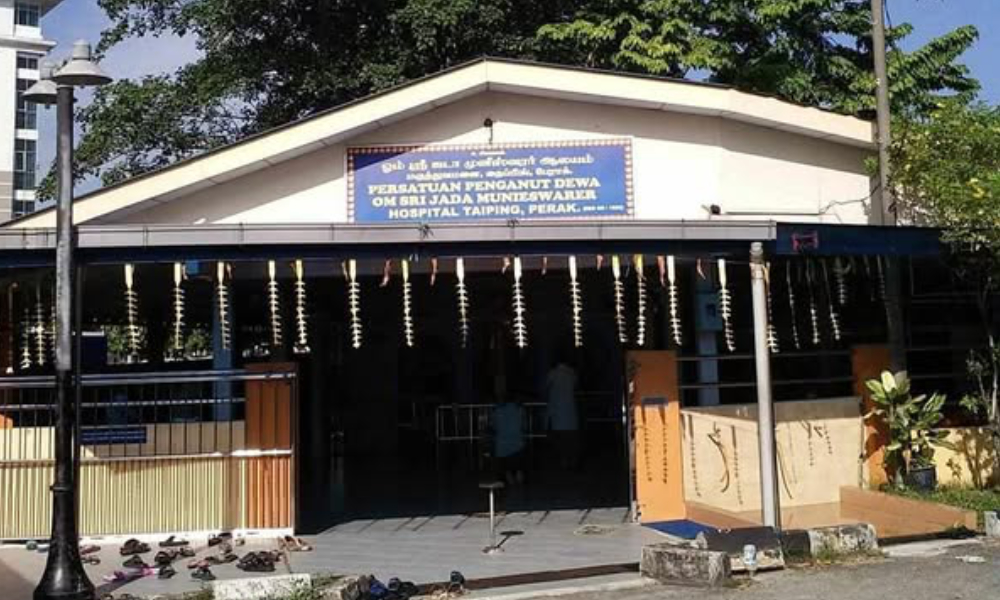
Strongly objecting to the language used in the title of the management's response to the complaint, Saravanan highlighted that many of these temples have existed for decades, long before the enactment of the National Land Code in 1965.
He also emphasised that branding such places of worship as “haram” is insensitive and disregards their historical and cultural significance. - Mkini

No comments:
Post a Comment
Note: Only a member of this blog may post a comment.