


I am a strong supporter of public assembly and believe that everyone has a right to assemble peacefully.
In recent years, I have modified that position after discussions with fellow activists overseas. They felt that fascists or those who advocate hate politics should be denied this right because their end goal is to create chaos and disharmony.
I am also reminded by my Muslim friends that every time we debate religious issues, they quote this verse from Surah Al-Kafirun (chapter 109), verse 6: “For you is your religion, and for me is my religion.”
I raise this because the motive of a gathering to oppose “illegal temples” may sound legitimate, but its undertones are often laced with racism and hate politics.
Questioning the legality of temples can create a bitter social climate, as seen in the rising tensions on social media.
I would personally like to organise a protest against Indian Prime Minister Narendra Modi, but in a polarised nation, every action is viewed through a racial lens and tailored to assert one group’s supremacy over another. Rational thought has little place in such discourse.
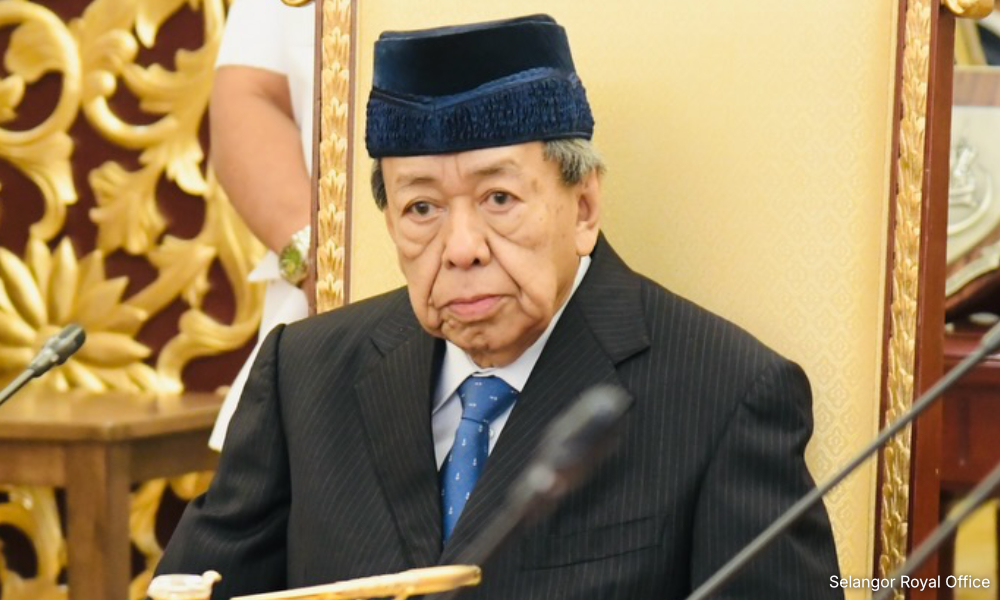
On Dec 11, 2025, Selangor ruler Sultan Sharafuddin Idris Shah urged Malaysians to stop using divisive labels like “Type M” or “Type C” and “kafir” on social media.
Nevertheless, these terms continue to fill our online spaces. Any form of rational discussion is muddled in narrow, racially-charged arguments.
Temples: Permitted or prohibited?
A recent uproar arose when a temple had to make way for a mosque in Masjid India. The temple was said to be 100 years old, yet in the eyes of the law, it was without a title.
You might call it “not registered” or “illegal”, depending on how crude you wish to be. The matter was eventually resolved under heavy police presence when the temple agreed to move to an alternate site provided by the local authority.
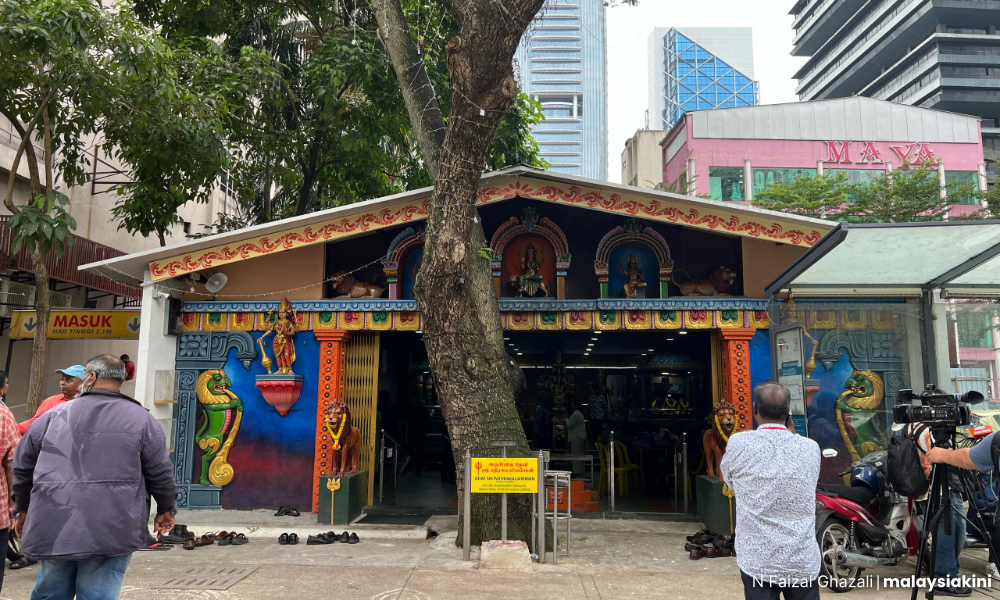
Yet, the issue continues to linger; various groups have taken entrenched positions. Hindus generally support the temple, while Muslims largely oppose its presence there.
These stances are neither surprising nor unexpected. Politicians, including the prime minister himself, have argued along ethnic lines, as have Indian politicians.
Religious organisations have also been consistent in representing their own communities. Social media discourse has grown so toxic that police have taken action against several individuals for inflaming tensions.
In this article, I aim to provide some clarity on the concepts of “permitted/legal” and “prohibited/illegal” temples, hoping to open hearts and minds across faiths to view this complex issue in a clearer and more factual light. May this offer insight to both Hindu and Muslim followers.
My personal position is that temples should not be built arbitrarily and must be regulated. At the same time, labelling all temples as trespassers or illegal is incorrect and unfounded.
Categories of Hindu temples
In my view, Hindu temples fall into three categories.
First up, temples with land titles: These are built on privately owned land or land approved by the land administrator’s office. Such temples face no legal issues, but are in the minority.
The second ones are the long-established temples. These are large, decades-old temples, some over a century old, that serve important religious functions and hold deep sentimental value.
They have historically received political support. Most are registered with the Registrar of Societies (ROS) or the Malaysia Hindu Sangam (MHS).
MHS is often seen as a legitimate authority representing Hindu interests and is invited by the government to interfaith dialogues.
However, it lacks the statutory authority of bodies like the Islamic Development Department (Jakim) or the Christian Federation of Malaysia (CFM). Only Penang has a Hindu Endowments Board (HEB) managing temple affairs.
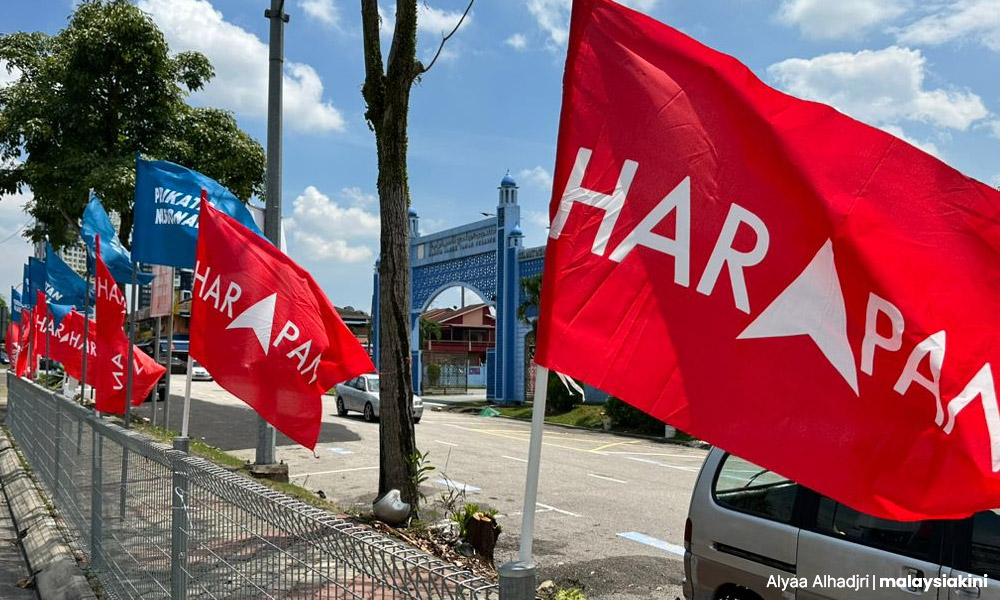
Pakatan Harapan once promised to establish Hindu endowment boards in Kedah, Perak, Selangor, Pahang, Negeri Sembilan, Malacca, and Johor - a pledge still unfulfilled.
Thirdly are the estate temples. Historically speaking, plantation companies supported these temples, which provided spiritual escape for workers oppressed under the British employers, and then later local employers.
Estate owners often supported two institutions: toddy shops and temples - both offering relief to low-wage, harshly treated labourers.
These temples were built on private plantation land, where land titles are not held by the temple committees.
Since the 1980s, with industrialisation, many estates have been converted into industrial zones or upscale housing. When developed, temples were sometimes evicted, relocated, or, in some rare cases, granted land by the former estate or state.
The Seafield Estate temple is a prime example. Many Indians remember its violent intrusion by hired men, while many Malays recall the tragic death of firefighter Adib Kassim.

Although no one was charged in connection with Adib’s death, the incident remains racially divisive.
When estate land is sold to developers, negotiations determine whether temples stay or move. The Seafield temple ultimately remained. Such disputes often arise when plantations cease operations and land use changes.
Section 214A – The Estate Land Board
So, are plantation workers and the amenities they enjoy - housing, temples, schools - protected by law when estates are developed?
Many are unaware that under Section 214A of the National Land Code (Act 828), any company or landowner seeking to develop former estate land must obtain approval from the Estate Land Board (ELB), usually chaired by the menteri besar or the state executive councillor in charge of land issues.
In our experience, the MB or exco should ensure housing, schools, and temple issues are resolved before land-use conversion is approved.
Without ELB or the state government’s support, agricultural land cannot be reclassified for development. Here, we see how wealthy landowners can lobby or allegedly bribe state governments to secure ELB approval without resolving temple relocation. Years later, these temples became flashpoints of dispute.
Temples in hospitals, other sites
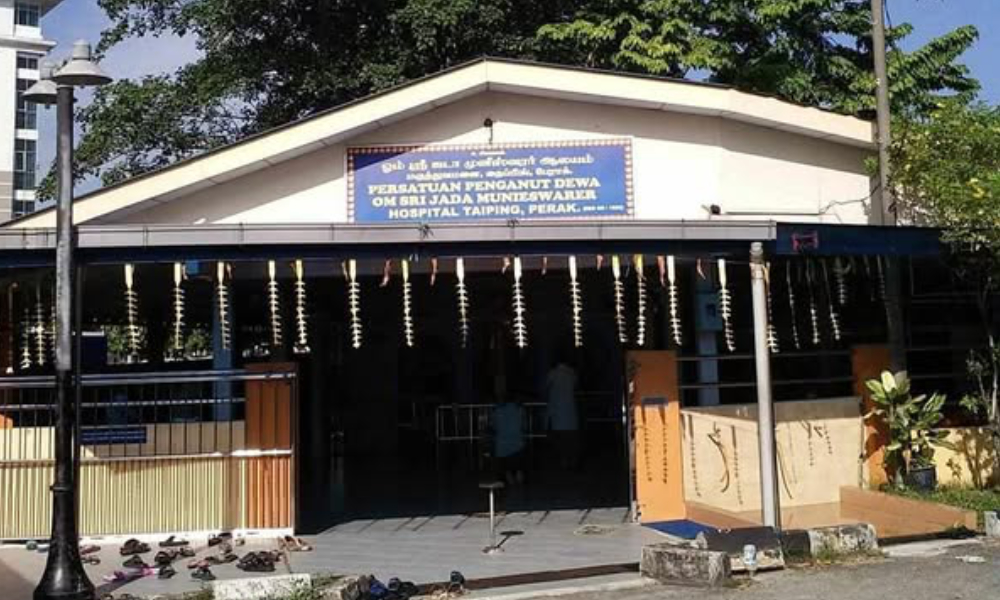
Another issue involves temples near hospitals, railways, or roadsides. Many were built decades ago by Indian labourers who constructed roads, railways, and other infrastructure.
Historical records confirm that the first labourers to build railways and roads were from India, who were later granted citizenship by mutual agreement among major parties of the time.
These early workers built temples at worksites for safety and spiritual assurance, believing they warded off supernatural threats. Malay, Chinese, and Indonesian folklore also abounds with tales of spirits.
The difference is context. Then, these temples were in remote areas, on low-value land, unnoticed. Now, due to urbanisation, they appear to be in city centres, on roadsides, or in towns.
Though the temples predate Merdeka, why didn’t they acquire land? This is the question always levelled at Hindu temples.
And this is the answer. Worshippers are typically B40 labourers and estate workers, not high-income earners. Moreover, obtaining land approval is difficult, and many temples now sit on private or state land under the Torrens System (a system where the land register is everything, granting the registered proprietor an indefeasible title that overrides all prior and subsequent unregistered claims).
Some have been relocated by local authorities, but buying titled land at their original site is rarely feasible.
Similarly, some hospitals host long-standing temples serving patients and staff. For decades, these were accepted as part of the hospital landscape, with certain rules like no drumming or loudspeakers - generally followed without issue.
Malay doctors, nurses, and others rarely complained, reflecting a level of tolerance and understanding communities had then compared to today’s social-media-influenced sensitivities.
When people complain about these temples existing on hospital land, others would turn around and ask about the surau.
Both the surau and temple do not deteriorate the well-being of people, but recent insinuations are worrying.
Temples without strong tradition, following
Of course, there are also temples built arbitrarily without strong tradition or large followings, the ones I disagree with. Many Hindus themselves oppose these.
A small minority are built by gangs as fronts for illicit activities. If a temple lacks congregants or is controlled by a small group, it lacks the legitimacy of long-established temples.
Another subcategory is family temples, originally private, that gradually expand and hold public festivals.
Local authorities should ensure these remain on private property without disturbing neighbours. Private family temples should not become public institutions.
Selangor’s temple policy under Pakatan
A fairly good policy was enacted when Pakatan Rakyat (PKR, DAP, PAS) governed Selangor in 2008. They conducted a comprehensive survey of all temples, categorising them by age (for example, over 100 years), location, and land status.
Temples over a century old were to be preserved onsite; those existing before 2008 were to be relocated to suitable sites or non-Muslim places of worship.
And temples built illegally after 2008 faced immediate demolition. This balanced approach regulated temples effectively - notably, PAS was part of the government that formulated this policy under then-menteri besar Abdul Khalid Ibrahim.
In essence, this is a class issue, not a racial one. When the temple issue erupted, a perception emerged that Muslims build mosques on wakaf land, while Hindus build temples on others’ land.
In defending urban pioneer settlements - mostly Malay-Muslim communities like Kampung Aman, Kampung Chubadak, Kampung Rimba Jaya, Berembang, and others — PSM has seen surau and mosques built on untitled land, supported by politicians and residents.
These low-income communities migrated from villages to cities in the 1970s, heeding the call of the second premier, Abdul Razak Hussein.
After decades, wealthy developers bought the land they occupied. Suddenly, these communities were served eviction notices, their surau now labelled “illegal”, and they were branded trespassers.
In such cases, PSM stands firmly with urban pioneers, defending their places of worship. Developers often demolish surau first to demoralise the community.
The image of children chaining themselves to the surau in Kampung Berembang remains vivid - a house of worship demolished ruthlessly for the sake of the rich, or “the super-rich”, as the prime minister terms them.
PSM is deeply aware that having money to buy land does not make one righteous, and those who have lived there for generations are not trespassers. The Torrens System recognises land owners, not who came first.
Legal position on untitled land
The late chief justice of Malaya Harun Hashim, in several urban pioneer cases, denied outright demolition rights, considering who settled first, whether the land office offered residents ownership opportunities, and the equity of their contributions to the land.
In Kampung Bumi Hijau, Kampung Pasar Baru, Kampung Pandan, Kampung Chubadak, and Kampung Kerinci, developers failed to evict original settlers via Order 89 of the Rules of Court 2012 because courts recognised settlers’ rights.
Moreover, Article 13 of the Federal Constitution states: “No person shall be deprived of property save in accordance with law, and no law shall provide for the compulsory acquisition or use of property without adequate compensation.”
In Sentul Murni Sdn Bhd v. Ahmad Amirudin Kamarudin (Kampung Chubadak), the Court of Appeal ruled that settlers were not squatters.
The court acknowledged that Sentul Murni knew prior interests existed on the land before the ownership transfer, and the settlement was long known to the state government and the Kuala Lumpur City Hall (DBKL).
In other cases, the chief justice questioned the land office: why grant land to developers while residents still lived there, and were they informed?
These are the same arguments used by lawyers for the Dewi Sri Pathrakaliamman Temple at Masjid India, built on land owned by Jakel. The temple’s legal defence mirrors that used to protect traditional urban pioneer settlements labelled “illegal”.
In a nutshell, in the temple issue, many are consumed by racial sentiment, overlooking facts. Blind calls on social media to demolish all temples, including long-established ones, are irrational and unwise.
Simultaneously, regulation is needed to prevent arbitrary temple construction. History, tradition, and law must be discussed together. - Mkini
S ARUTCHELVAN is PSM’s deputy chairperson.
The views expressed here are those of the author/contributor and do not necessarily represent the views of MMKtT.

No comments:
Post a Comment
Note: Only a member of this blog may post a comment.