


ONE of the most promising dimensions of the partnership lies in the digital economy. India has emerged as a global leader in digital public infrastructure, software services, fintech, and AI-driven solutions.
Malaysia, meanwhile, has articulated ambitions to become a regional digital hub but faces constraints in talent depth, ecosystem scale, and speed of innovation.
A strategic partnership with India can bridge these gaps. Indian technology firms and startups bring experience in scaling digital solutions across large, diverse populations under cost and infrastructure constraints.
These capabilities are directly relevant to Malaysia’s efforts to digitalise government services, SMEs, healthcare, and education. Modi’s visit can legitimise and accelerate structured digital cooperation -moving beyond pilot projects towards ecosystem-level integration.
Malaysia’s advantage lies in its openness, connectivity, and regional access. By positioning itself as India’s digital and innovation gateway to ASEAN, Malaysia can attract Indian firms seeking regional expansion while embedding Indian digital expertise into its own economy.
This symbiosis enhances Malaysia’s competitiveness without requiring it to replicate India’s scale.
AI and talent: The decisive factor
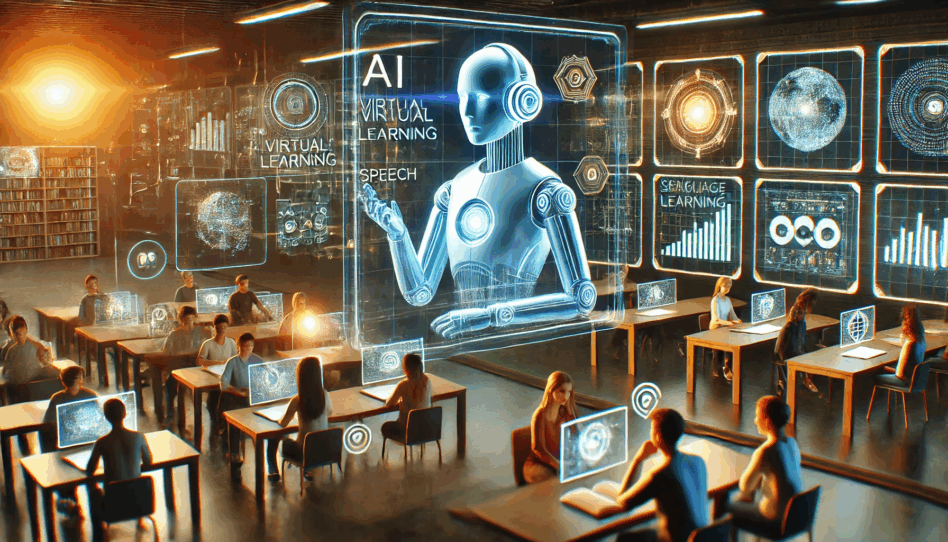
The most transformative opportunity arising from Modi’s visit lies in AI and digital talent. India produces one of the world’s largest pools of AI-trained engineers, data scientists, and software professionals.
This human capital advantage is increasingly strategic, as AI becomes central to productivity, governance, and national competitiveness.
Malaysia’s digital ambitions are constrained less by policy than by talent shortages. While infrastructure and incentives exist, the depth of advanced AI expertise remains limited.
Strategic collaboration with India through talent mobility, joint training programmes, co-developed AI labs, and industry-academia partnerships can accelerate Malaysia’s digital ecosystem development by years rather than decades.
Rather than relying solely on short-term outsourcing, Malaysia can leverage Indian expertise to build domestic capability.
Indian-trained experts can support the development of AI applications in fintech, smart manufacturing, cybersecurity, logistics, public administration, and health technology, while simultaneously training Malaysian professionals. This model promotes knowledge transfer rather than dependency.
Modi’s visit provides the political mandate to normalise such collaboration, including streamlined professional visas, mutual recognition of qualifications, and joint innovation funds. Over time, this can position Malaysia as a regional AI application hub, even if it is not a primary AI research superpower.
Strategic autonomy through digital capability

Digital capability is no longer economically neutral; it is strategically consequential. Dependence on a narrow set of foreign technology providers exposes states to geopolitical risk, regulatory pressure, and data vulnerabilities.
In this context, India offers Malaysia a valuable alternative partner—one that is technologically capable but not hegemonic.
India’s approach to digital governance emphasises sovereignty, open standards, and interoperability. This aligns with Malaysia’s interest in maintaining control over data, regulatory frameworks, and digital infrastructure.
By integrating Indian expertise into its digital ecosystem, Malaysia can diversify technology partnerships and reduce over-reliance on any single external power.
Beyond symbolism to strategic execution
For this partnership to succeed, Modi’s visit must translate into institutional follow-through. Business councils, digital task forces, AI cooperation frameworks, and investment facilitation offices must be empowered with clear mandates and measurable outcomes. Strategic partnerships fail not because of lack of intent, but because of insufficient execution.
Modi’s visit offers Malaysia a strategic opening to rethink how it engages India not as a distant market or cultural partner, but as a central pillar of its business and digital future.
Through reciprocal investment, structured business integration, and deep collaboration in AI and digital talent, Malaysia can accelerate its economic transformation while enhancing strategic autonomy.
In an era where growth and technology define national resilience, a calibrated partnership with India gives Malaysia something increasingly rare: scale without domination, expertise without dependency, and opportunity without strategic compromise.
R Paneir Selvam is Principal Consultant at Arunachala Research & Consultancy Sdn Bhd (ARRESCON), a think tank specialising in strategic and geopolitical analysis.
The views expressed are solely of the author and do not necessarily reflect those of MMKtT.
- Focus Malaysia.

No comments:
Post a Comment
Note: Only a member of this blog may post a comment.