


DRIVEN by desperation or just an incurable kleptomaniac? That seems to be the fine distinction in a shoplifting case in Cheras recently.
A father of two was sentenced to one month in jail and fined RM300 by the Kuala Lumpur Magistrates’ Court yesterday (April 21) after pleading guilty to stealing various daily necessities, including two tins of sardines.
As reported in the Malay Mail (citing Utusan Malaysia), Magistrate Faezahnoor Hassan handed down the sentence after Mohd Rashid Mohd Noh, 44, admitted to the charge when it was read to him.
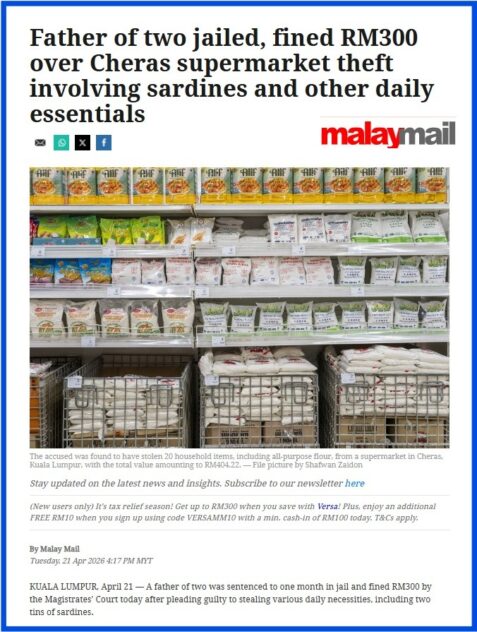
The e-hailing driver faces an additional seven days’ jail if he fails to pay the fine.
According to the charge, Rashid stole 20 items – including two tins of sardines, all-purpose flour, dishwashing liquid, bath soap and an air freshener – worth RM404.22 from an Aeon supermarket in Taman Maluri, Cheras at 8.10pm on April 18.
The offence was charged under Section 380 of the Penal Code which carries a maximum jail term of up to 10 years and a possible fine. For repeat offences, offenders may face imprisonment as well as a fine or whipping.
During proceedings, deputy public prosecutor Nor Farhana Mohd Poad urged the court to impose a sentence that would serve as a lesson to the accused.
The news which was also shared on the Malay Mail’s Facebook portal elicited many responses with some commenters calling for leniency as it appears that he was driven by desperation.
One commenter seemed to be suggesting that compassion be exercised in this case as the defendant was stealing to feed his kids.
However, it was pointed out the difficulty in measuring compassion and that laws exist to keep society functioning in an orderly manner. It was hoped that the magistrate would know how best to handle this when sentencing.
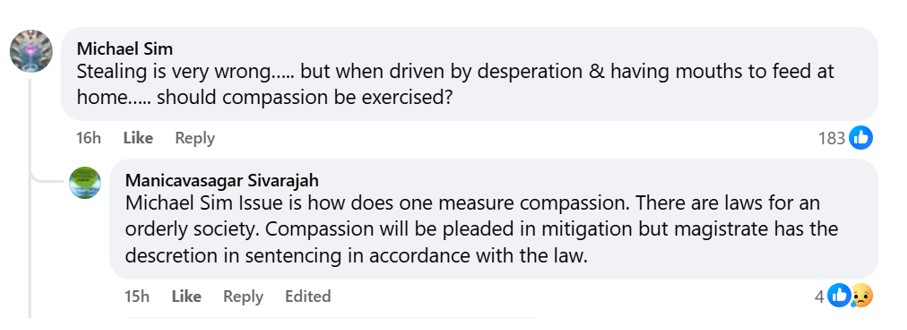
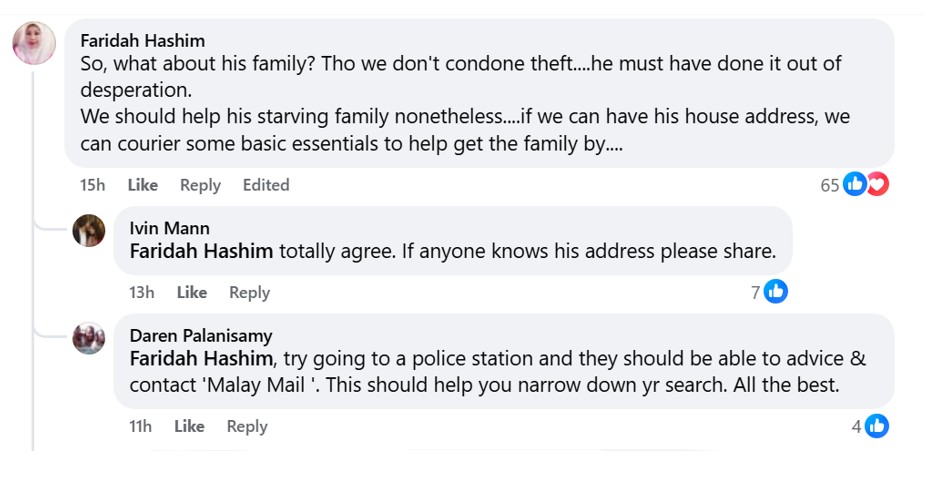
Some form of assistance for the accused was also mooted here as it does appear that this is a crime driven by economic circumstance. Perhaps the Social Welfare Department could offer some aid to this obviously desperate father.

The sense of injustice was reflected in a comment that highlighted graft-related cases involving tens or hundreds of million of ringgit are let free after “returning” the money or paying a meagre fine.
Moreover, there were also those who stole billions yet their cases are classified as “NFA (No Further Action)” by the authorities.

Some commenters further alluded to cases involving VVIPs that got swept under the carpet, suggesting that the law treats citizens differently in Malaysia based on status.

Some Good Samaritans offered to provide assistance to the jailed offender by way of donating essential supplies for the family.
However, it was pointed out by a sceptical observer that NOT all the items shoplifted were “daily essentials”. These include items such as hair dye, air freshener and shampoo which indicate that perhaps “feeding the kids” was NOT the primary motivation in the theft.

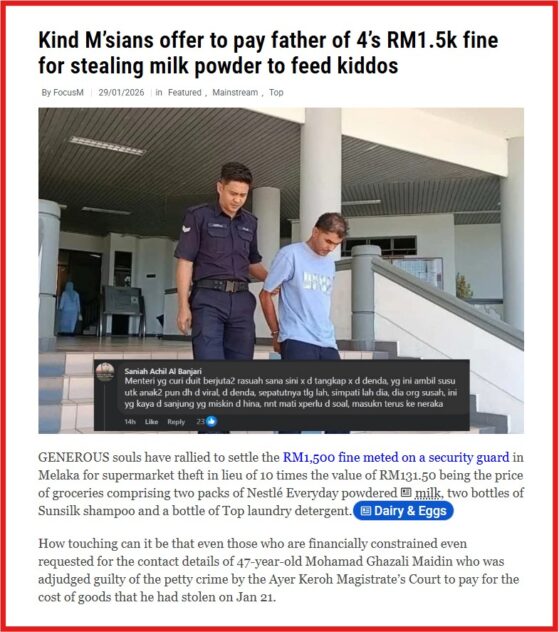
There is thus a fine balancing act. How does one apply the law to prevent chaos and mayhem while taking into account economic realities that forces a person to steal?
The powers-that-be must also be mindful of the public perception that the big fish accused of serious crimes involving eye-watering sums of money seem to get away with their wrongdoings.
Meanwhile, a lowly Grab driver struggling to feed his family is thrown in jail for shoplifting basic essentials such as tins of sardines and detergent.
Rightly or wrongly, the comments reflect what many Malaysians are feeling at the moment – there is one set of law for the rich and powerful, another for the struggling citizen.

- focus malaysia

No comments:
Post a Comment
Note: Only a member of this blog may post a comment.