

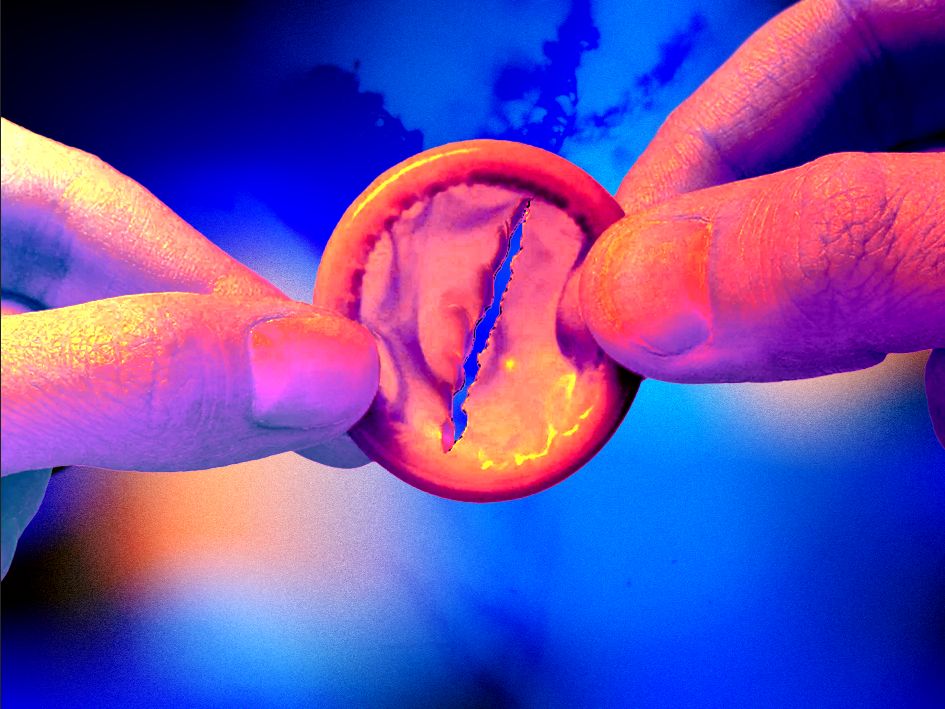
THE FIRST casualty of war is truth. The second, apparently, is affordable protection. In a plot twist nobody asked for, the ongoing conflict involving Iran has now managed to reach the most unexpected corner of daily life: the condom aisle.
Yes, amid oil tankers, naval blockades and geopolitical brinkmanship, the humble latex hero has quietly become collateral damage.
According to reports, Malaysia’s Karex, the world’s largest condom manufacturer, is preparing to raise prices by 20% to 30%.
That means somewhere, right now, a couple is staring at a price tag and seriously reconsidering their life choices.
The reason? It turns out condoms are not just about latex and good intentions. They rely heavily on petrochemicals, synthetic rubber, lubricants, packaging, all of which are tied to oil and gas supply chains.
And when tensions flare in the Middle East, especially around key routes like the Strait of Hormuz, everything from fuel to romantic planning gets more expensive.
And ramping up the funny meter is none other than our Minister of Housing and Local Government of Malaysia Nga Kor Ming with his latest post on X.
According to him, condom prices are going up but in Malaysia, supplies are sufficient, prices are stable, and cash assistance provided under the Madani government amounts to tens of billions.
With posts such as these, expect some roasting to happen online and soon.
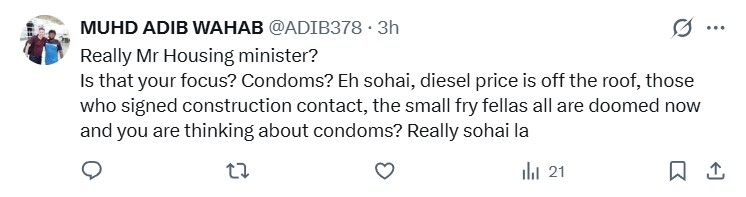
Drawing first blood was netizen @ADIB378 who said, “Really Mr Housing minister? Is that your focus? Condoms?”
“If only your parents used this thing, the people’s money would be saved from being wasted on that useless kiosk,” added @yohanbsp, pointing towards the MyKiosk, an initiative by Nga to provide standardised, low-rent, and comfortable kiosks for small-scale entrepreneurs.

“Learn to control your ejaculation,” said @BANkamiBlog.

On a serious note, Karex manufactures more than five bil condoms each year, supplying major global brands such as Durex and Trojan, while also serving public healthcare systems like the UK’s NHS and United Nations-backed aid programmes.
The company is among a growing number of manufacturers, including medical glove producers, preparing for supply chain disruptions as the conflict involving Iran puts pressure on energy markets and petrochemical supplies, complicating access to key raw materials.
Chief executive officer Goh Miah Kiat said current inventories are sufficient for the coming months, but the company is ramping up production to keep pace with rising demand.
This comes as global condom stockpiles have declined sharply, partly due to significant reductions in foreign aid spending, especially by the US Agency for International Development last year.
He added that demand has surged by roughly 30% so far this year, with ongoing shipping delays further tightening supply.
Still, in a world where wars move markets and markets move everything else, perhaps we should not be too surprised that even the most private of purchases has become a public talking point.
And if prices do keep rising, Malaysians may soon find themselves budgeting for protection the same way they budget for petrol.
At that point, one can only hope that Nga Kor Ming has a follow-up announcement ready, not on kiosks, not on housing, but maybe a “Rahmah Condom Initiative.”
Because if there is one thing more dangerous than rising geopolitical tensions, it is leaving matters of family planning entirely to inflation. — Focus Malaysia

No comments:
Post a Comment
Note: Only a member of this blog may post a comment.