


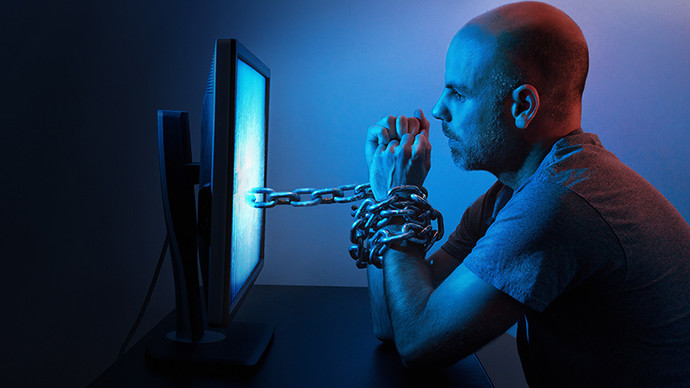
NOW that our phones are always within reach, our notifications never stop, and our screens follow us everywhere, I have a question for the culture.
When did being constantly connected become something we accepted as normal? As a student, I find myself surrounded by social media every day.
The first thing I do when I wake up is check my phone. Before I sleep, I scroll through TikTok, Instagram, X, or whatever platform is trending at the moment.
Sometimes I tell myself I will only spend five minutes online, but somehow an hour passes without me noticing. It makes me wonder whether I am using social media, or whether social media is using me.
Social media was created to connect people. It allows us to communicate instantly, share experiences, and stay informed about what is happening around the world.
Yet despite being more connected than ever, many people seem to feel lonely, distracted, and overwhelmed. Why is that?
In this era, social media has become a major part of everyday life, especially among young people. Students use it for entertainment, communication, education, and even part-time business opportunities.
It has become almost impossible to separate our online lives from our real lives. If everyone else is online, can we really afford to disconnect?
We’re constantly told that social media gives us freedom. We can express ourselves, share our opinions, and connect with communities that share our interests.
But if we feel anxious when we are away from our phones, is that really freedom? Every day, social media platforms compete for our attention.
Notifications, recommendations, and endless scrolling are designed to keep us engaged for as long as possible.
If I watch one video, another appears immediately. If I like a certain type of content, my feed becomes filled with similar posts.
The experience feels personal, but it is carefully designed to keep me scrolling. Sometimes I wonder how much of my time I have given away without realising it.
The issue becomes even more concerning when social media begins to affect mental health. Many young people compare themselves to influencers, celebrities, and carefully-edited versions of other people’s lives.
We see achievements, vacations, expensive lifestyles, and perfect appearances every day. But how often do we see reality?
Social media seems to encourage comparison. It can make people feel as though they are falling behind, even when they are doing perfectly fine. A student may compare their grades to someone else’s success story.
A young adult may compare their financial situation to influencers who seem to have everything figured out. What happens when comparison becomes a daily habit?
Studies have shown that excessive social media use can contribute to stress, anxiety, and low self-esteem. While social media itself is not necessarily harmful, the way we use it can affect our well-being.
Spending hours online can sometimes leave us feeling exhausted rather than connected.
What fascinates me the most is how social media has changed our relationship with attention. Years ago, waiting in line meant looking around or talking to someone nearby.
Today, many of us immediately reach for our phones. Moments of boredom have almost disappeared because social media is always available to fill the silence. Is boredom really something we should avoid?
Some of our best ideas, reflections, and conversations happen when we are not constantly distracted. Yet social media encourages us to move quickly from one piece of content to another without stopping to think.
I think this is one of the biggest challenges facing young generation today. We are constantly consuming information, entertainment, and opinions.
There is always another video to watch, another trend to follow, and another notification demanding our attention. As a result, it can become difficult to focus on studies, relationships, and personal goals.
So another question for the culture. Why do we feel uncomfortable when we are offline? Why do we measure our experiences through likes, views, and followers?
Why do we spend so much time watching other people’s lives instead of living our own? And why do we call it connection when it sometimes leaves us feeling disconnected?
Despite these concerns, I do not believe social media is entirely negative. It has helped people build communities, learn new skills, promote businesses, and raise awareness about important issues.
It can be a powerful tool when used responsibly. The problem is not social media itself. The problem is when social media begins to control us instead of serving us.
As a daily user, I believe the solution starts with awareness. We need to recognize how much time we spend online and how it affects our mental health, productivity, and relationships.
We need to learn when to put our phones down and be present in the real world. So perhaps the real question is not whether social media is good or bad. The question is: What kind of relationship do we want to have with it?
Do we want social media to be a tool that improves our lives? Or do we want it to become something that quietly consumes our time, attention, and peace of mind?
Because every scroll, every click, every notification, and every hour spent online contributes to the answer. Maybe the future of social media does not depend solely on technology companies or platform creators.
Maybe it depends on us. Maybe it depends on whether we choose to be mindful instead of distracted, present instead of absent, and connected to reality instead of constantly chasing the next thing on our screens.
In a country as connected and digitally active as Malaysia, that choice matters more than ever.
Adlin Syafi Khairul Anura is an undergraduate student of Universiti Malaya, taking an elective university course entitled “Introduction to Journalism and Storytelling in Digital Age”
The views expressed are solely of the author and do not necessarily reflect those of MMKtT
- Focus Malaysia.

No comments:
Post a Comment
Note: Only a member of this blog may post a comment.