


Malaysia will have two years after the ratification of the Malaysia-US agreement on reciprocal trade (ART) to address legislative gaps over forced labour and excess industrial capacity, said Investment, Trade, and Industry Minister Johari Abdul Ghani.
He said the Human Resources Ministry has been made aware of the required changes and will proceed to make the necessary moves upon finalisation of the ART.
"It is not something that has to be done immediately.
"Once we ratify the agreement, we will have two years to rectify the laws that we do not have," the New Straits Times quoted him as saying after the National Chamber of Commerce and Industry of Malaysia's annual general meeting in Kuala Lumpur today.
Yesterday, the US trade representative’s office (USTR) announced that new levies will be imposed on 60 trading partners “for what it described as failures to impose and effectively enforce a prohibition on the importation of goods produced with forced labour”.
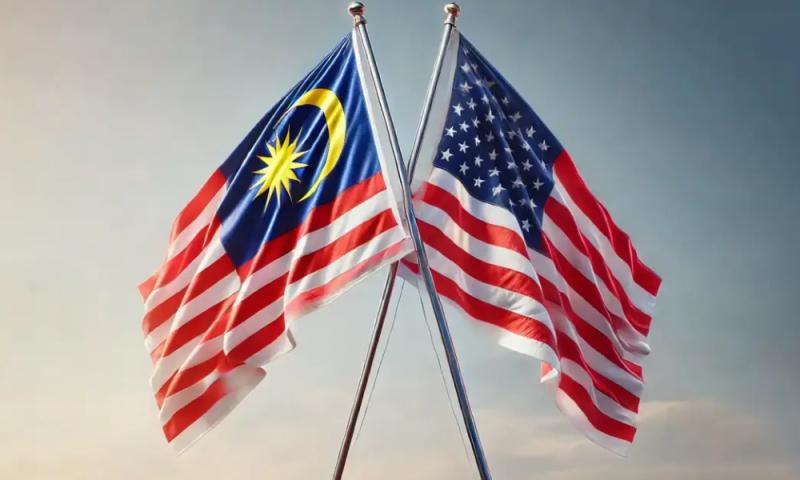
Malaysia was among 17 countries subjected to an additional 10 percent tariff, while several other trading partners faced additional levies up to 12.5 percent.
According to the USTR, the 10 percent rate applies to economies with commitments to prohibit forced labour in place or restrict the importation of goods linked to forced labour.
Former Klang MP Charles Santiago had previously warned that Malaysia risked exposing itself to these new tariffs if the Madani administration did not act on complaints of forced labour in the country.
Insufficient laws
Commenting further, Johari explained that Malaysia's existing legal provisions preventing forced labour in the country were insufficient.
"We already have laws to protect workers in Malaysia. The issue is that we do not yet have laws to prevent products made using forced labour in third countries from entering Malaysia as inputs, being processed here, and then exported as Malaysian products," he said.
However, he noted that Putrajaya has yet to be informed as to the tariff rate it will face over the separate excess capacity probe that is ongoing under Section 301 of the US Trade Act of 1974.
"The 10 percent relates to forced labour. We still do not know what rate, if any, will be imposed under the excess capacity investigation.
"Once that is determined, it will be combined to form Malaysia's overall rate," Johari added.
In response to the latest tariff announcement, a Reuters analysis suggested the move was part of the Trump administration's strategy to circumvent a US Supreme Court ruling that struck down an earlier round of tariffs imposed last year.
In response to the ruling in February, Trump imposed a blanket 10 percent global tariff for 150 days. That measure expired yesterday, with the new tariffs taking effect immediately afterwards. - Mkini

No comments:
Post a Comment
Note: Only a member of this blog may post a comment.