


From the moment the public became aware of the Network School affair, the questions seemed to multiply faster than the answers.
The controversy started as an immigration story, after allegations emerged on social media that Israeli nationals were participating in the Network School tech commune in Forest City. For two weeks, Malaysians were told to focus on this.
Social media exploded, politicians demanded action, government agencies launched investigations, and national sovereignty dominated the headlines.
What is striking is that by the time the dust settled, the issue that first captured public attention was no longer the issue that ultimately led to the tech commune’s closure.
The controversy initially centred on allegations that Israeli nationals were participating in the programme using passports from other countries.
Early immigration investigations stated that no evidence had been found to substantiate those broader claims.
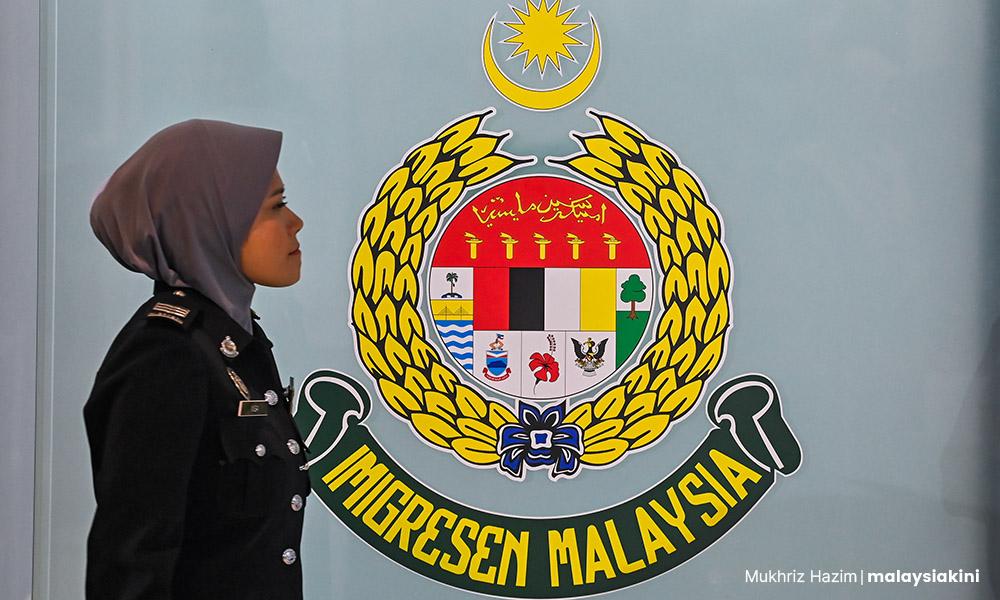
However, the government later confirmed that one individual holding dual US-Israeli citizenship had entered Malaysia using a US passport and was subsequently asked to leave.
From Israel to licences
Yet despite that development, the decisive action against Network School ultimately came through a different route.
The Iskandar Puteri City Council revoked the company’s business licence, citing breaches of licensing conditions, unauthorised use of premises and regulatory non-compliance.
The episode therefore evolved from an immigration controversy into a licensing case. This evolution has raised important questions.
Why did a company reportedly investing more than RM100 million end up operating in breach of licensing conditions?
It raises the question of whether the relevant approvals, licences, and operating requirements were sufficiently assessed before an investment of such scale was allowed to proceed.
Were these issues recent developments, or had they existed for some time?
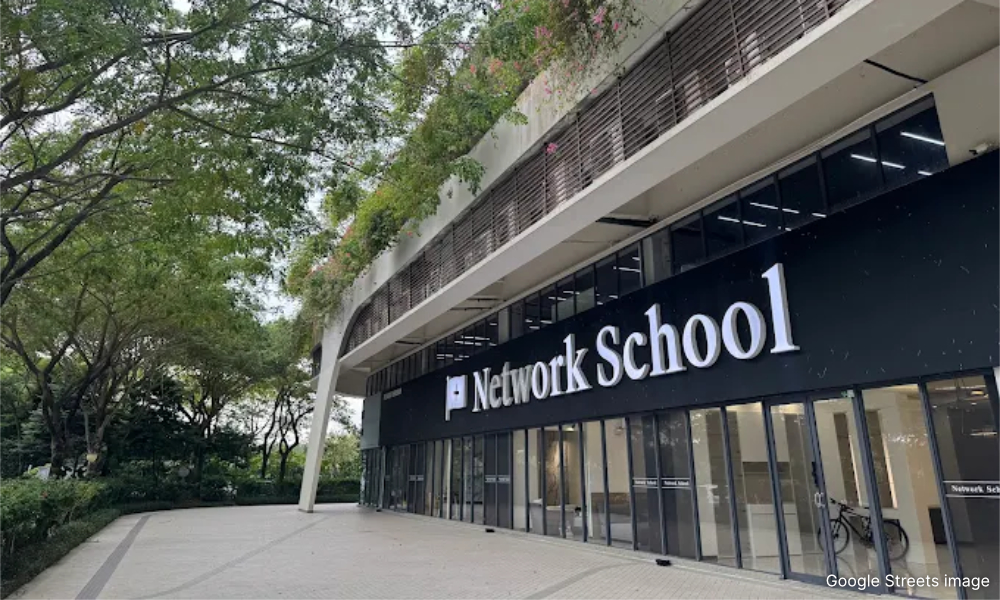
By looking at the chronology itself, we can raise even more legitimate questions. The public controversy centred on allegations involving Israeli nationals, but the enforcement action centred on licensing compliance. These are entirely different matters.
It is possible that the licensing issues would eventually have been discovered regardless. It is equally probable that the intense public scrutiny merely accelerated investigations that uncovered unrelated regulatory shortcomings.
Either way, the sequence is worth understanding because it reveals how institutions respond when political controversy and regulatory enforcement collide.
Were existing approval processes sufficiently clear for a venture that didn’t fit neatly into traditional categories?
An equally important question is whether those who first circulated the allegations will themselves be investigated if the claims are shown to have been false.
Kazakhstan swoops in
More’s the pity because the investor, Network School founder Balaji Srinivasan, argued that the organisation had invested more than RM100 million, supported Malaysian businesses, created jobs, and helped revitalise Forest City.
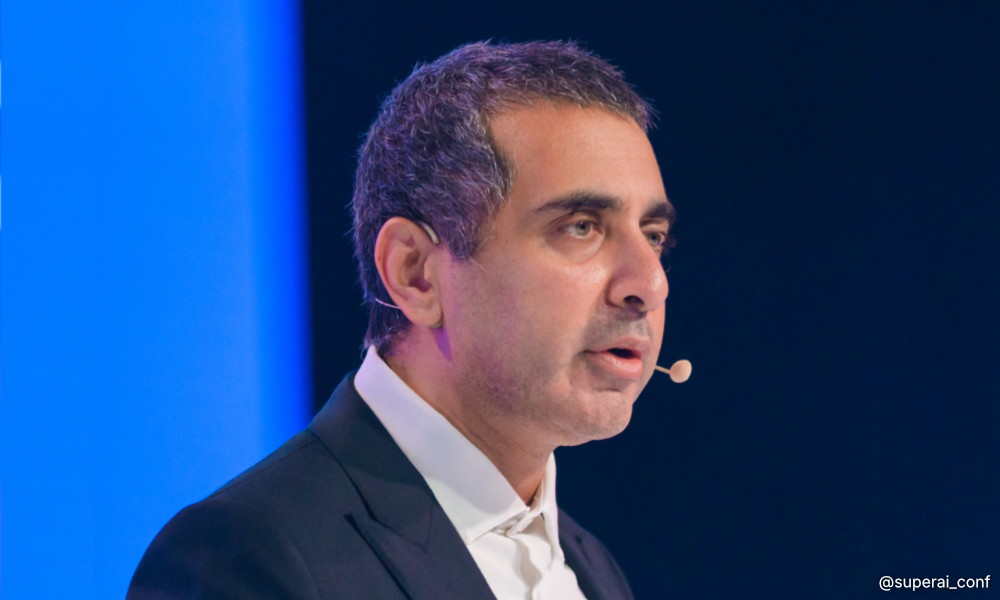
He maintained that the controversy was triggered by false allegations spread through anonymous social media accounts.
His concerns cannot simply be dismissed. Within days of announcing that Malaysia was no longer a viable location for expansion, Network School revealed that it had signed a memorandum of understanding with Kazakhstan to establish a new campus there.
Whether that move was inevitable or accelerated by recent events is open to debate, but our loss is Kazakhstan’s gain.
Forest City’s chequered past
In the aftermath of the Johor election, Menteri Besar Onn Hafiz Ghazi inherited more than an office and a stunning election victory; he had to manage Johor’s many opportunities and the accompanying unresolved challenges.
One of the things Onn inherited is Forest City, a city which is still evolving and, crucially, in search of an identity.
First it was to be a luxury futuristic residential paradise with 700,000 people working and living in green skyscrapers, surrounded by golf courses, in a car-free metropolis, sandwiched between the first-world Singapore and the Malaysian peninsula.
The project showcased the future and held enormous potential.
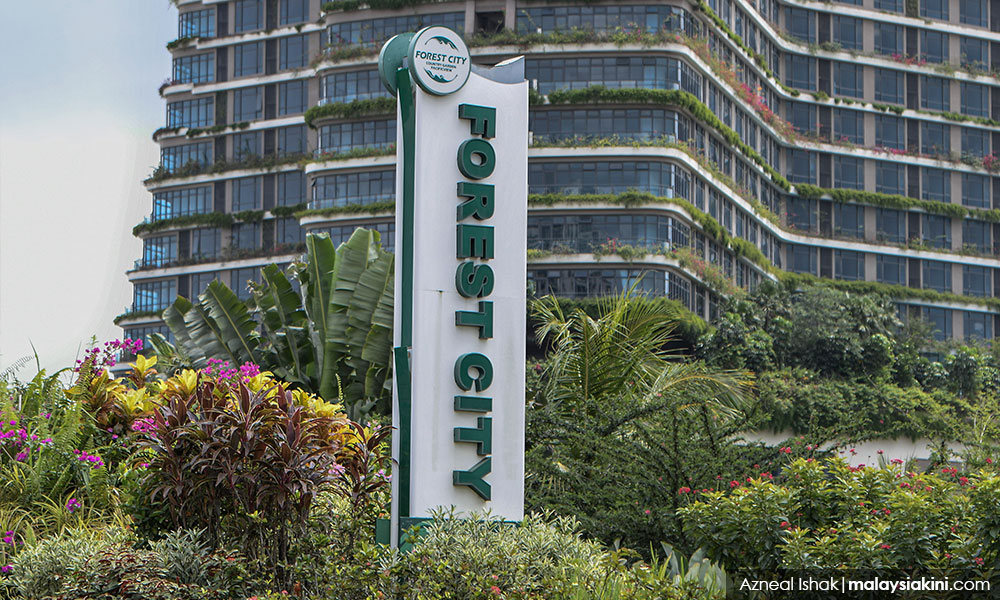
The dream came crashing down with many setbacks, which included accumulated controversy, environmental criticism, displacement of the original Orang Asli settlers, geopolitical sensitivities, high public expectations, and low sales, earning it the incongruous label of “ghost city”.
Forest City and its empty towers then symbolised excess.
It then sought to reinvent itself as a hub for global technology entrepreneurs. It would attract technology, artificial intelligence, and digital businesses.
However, it failed the main test to see if it could achieve its vision. This failure came in the form of the Network School affair.
The Network School episode wasn’t something that Onn created; it had landed on his desk.
However, the manner in which he responded to the issue has provided a glimpse into his administration far more than any campaign speeches ever could.

In the end, the first major international technology project to capture global attention did not become a showcase for Forest City’s reinvention.
Instead, Network School became a test of Johor’s regulatory institutions, and another chapter in the long, complicated story of a city still searching for its place in the world.
Confidence is key
Malaysia has every right to enforce its laws, but enforcement alone is not enough; investors also need certainty. The Network School affair will eventually be forgotten, but the impression it leaves may not.
The poor handling of this controversy left many victims. Regardless of whether one agrees with every decision taken, the consequences are beyond the fate of one company.
It affects perceptions of Malaysia as a destination for innovative businesses. It influences how both Malaysians and foreign investors assess the predictability of our regulatory environment.
The greatest investment any nation can attract is confidence. Everything else follows.
The optics associated with Network School are uncomfortable, and Malaysia lost an investment that Kazakhstan was quick to embrace. - Mkini
MARIAM MOKHTAR is a defender of the truth, the admiral-general of the Green Bean Army, and the president of the Perak Liberation Organisation (PLO). Find her on her website and on X.
The views expressed here are those of the author/contributor and do not necessarily represent the views of MMKtT.

No comments:
Post a Comment
Note: Only a member of this blog may post a comment.