


Penang Hindu Endowments Board deputy chairperson Senator Dr A Lingeshwaran has defended Jelutong MP RSN Rayer’s right to speak up over the demolition of the Veeramakaliamman Temple in Bukit Lagi, Kangar.
Lingeshwaran said Rayer (above, left), as a national leader, was entitled to raise concerns over an issue involving a place of worship and inter-ethnic and inter-religious harmony.
“When he calls for racial sentiments not to be inflamed, that does not mean he is inflaming racial sentiments.
“Instead, he is exercising his right and responsibility as a leader to call on all parties to ensure that the issue does not become more tense,” the DAP leader said in a statement today.
Lingeshwaran’s remarks came after Perlis mufti Asri Zainul Abidin criticised Rayer over the latter’s objections to the demolition on Aug 20.
Rayer had condemned the Perlis government's action, calling it deeply regrettable, warning that the public must not allow Perikatan Nasional to take power at the federal level, describing the coalition as "insensitive and inconsiderate towards a plural society, other ethnic groups and religions".
He further urged BN to reconsider its political cooperation with PN for the sake of peace and harmony.
"Even if there had been any non-compliance on the part of the temple, the state government should have adopted a more prudent approach to resolve the issue... demolition is not the solution," Rayer said in a statement on Thursday.
Not about politics
Following this, Asri yesterday defended the demolition as a matter of law and land ownership, arguing that places of worship cannot be built through land encroachment.
“We are in a country governed by laws, not in a jungle where land has no owner.
“This MP should be teaching the people to abide by the law, not to construct buildings as they please without regard for regulations or ownership,” he said, referring to Rayer.
The mufti pointed out that even private homes cannot be built on public land or private property belonging to others, let alone a place of worship.
“Is there any religion in this world that teaches people to ‘grab’ someone else’s land to build a place of worship? If there isn’t, then don’t do it!” Asri stressed.
He also accused Rayer of worsening unease among the Malay-Muslim community.
Asri maintained that the demolition had nothing to do with politics, describing it instead as an enforcement issue.
“What happened in Perlis, in my view, has nothing to do with political parties, and I am not a supporter of any political party.
“What happened was the enforcement of regulations and the rule of law.
“YB, do not inflame racial sentiments or religious tensions. The consequences for this country could be dire,” he warned.
The precise basis for the demolition so far remains unclear.
The Perlis government has yet to clarify the land’s ownership status, the specific legal provisions relied on, the notices issued to the temple committee, or the agency that ordered and carried out the demolition.
Know the difference
Responding to Asri’s criticism, Lingeshwaran said seeking an explanation from the Perlis government should not be equated with stoking racial tensions.
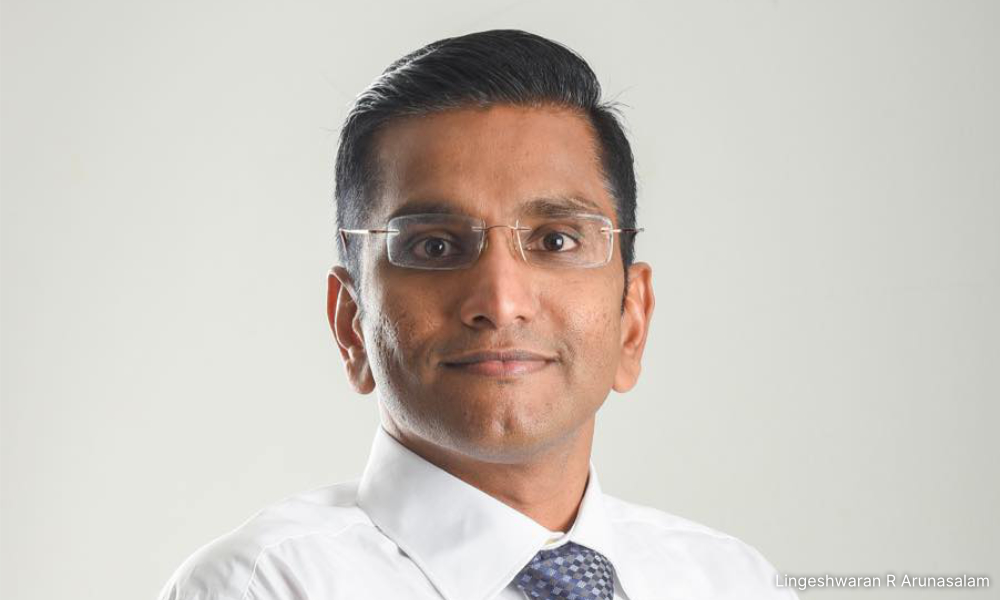
“Defending the rights and interests of the community is not incitement.
“We must distinguish between demanding government accountability and stoking racial sentiments,” he said.
Lingeshwaran also questioned why Perlis Menteri Besar Abu Bakar Hamzah has not publicly explained the state government’s role in the demolition.
While he respected Asri’s right to comment on religious, moral and social harmony matters, he said it was the menteri besar’s responsibility to address concerns related to his administration.
“Why is the mufti the one responding to this issue when the menteri besar himself has yet to explain the state government’s actions?
“Was this a decision of the state government? If so, why has the menteri besar not come forward to answer for it himself?” he asked.

Lingeshwaran maintained that if the demolition stemmed from land status, legal non-compliance or administrative matters, state authorities, not religious figures, must clarify the basis for the action.
“The mufti may offer views concerning religious harmony. But the mufti is not the head of the state government and is not responsible for the state government’s administrative decisions,” he said.
He added that enforcement involving places of worship must be transparent, fair, reasonable and prudent.
“The Hindu community is not asking for special treatment. We are only asking for justice, transparency, due process and respect for places of worship in a multiracial and multireligious country,” he said. - Mkini

No comments:
Post a Comment
Note: Only a member of this blog may post a comment.