



I HAVE followed PKR since its inception on April 4, 1999.
When Nurul Izzah Anwar lost her family’s deemed fortress Permatang Pauh in the 15th General Election (GE15), I suspected that the party’s leadership would eventually find another route to re-build her political position.
Unfortunately, that route came at the expense of PKR’s own deputy president Datuk Seri Rafizi Ramli and ultimately the party itself.
Permatang Pauh was never an ordinary parliamentary seat.
PKR president and Pakatan Harapan (PH) chairman Datuk Seri Anwar Ibrahim (DSAI) first won it in 1982 under Barisan Nasiona (BN)l.
Following his dismissal and the birth of Reformasi, his spouse Datuk Seri Wan Azizah Wan Ismail defended the seat under PKR from 1999. DSAI returned through the 2008 by-election, Wan Azizah re-claimed it in 2015 and Nurul Izzah succeeded her in 2018.
For more than two decades, Permatang Pauh was PKR’s political fortress and the symbolic home of the Reformasi movement. Yet in GE15, Nurul Izzah lost it to PAS candidate Muhammad Fawwaz Mohamad Jan by a majority of 5,272 votes.
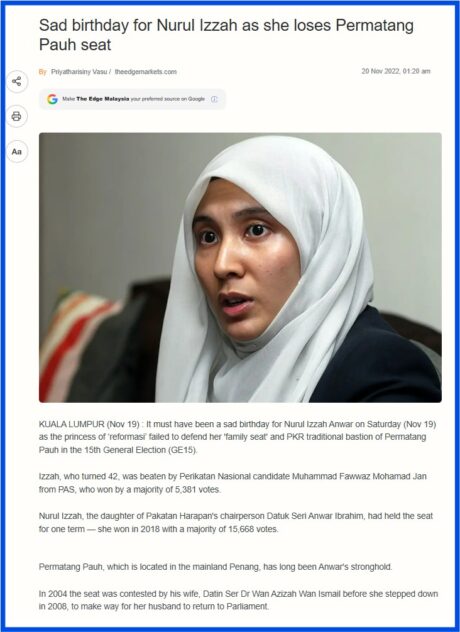
That defeat should have triggered honest reflection: why did voters in PKR’s most symbolic stronghold reject its incumbent?
Nurul Izzah should first have re-built public confidence, strengthened the party machinery and proven her electoral appeal among ordinary voters. Instead, she returned through an internal contest against PKR’s sitting deputy president.
Losing reformist talents
DSAI’s eldest daughter claimed she contested because of repeated requests from the grassroots and concerns about a possible leadership vacuum. But Rafizi ultimately defended his position. Once he confirmed his candidacy, what leadership vacuum remained?
She defeated Rafizi by 9,803 votes to 3,866 in May 2025. It was a valid party election result but winning does not automatically make the decision to contest strategically wise.
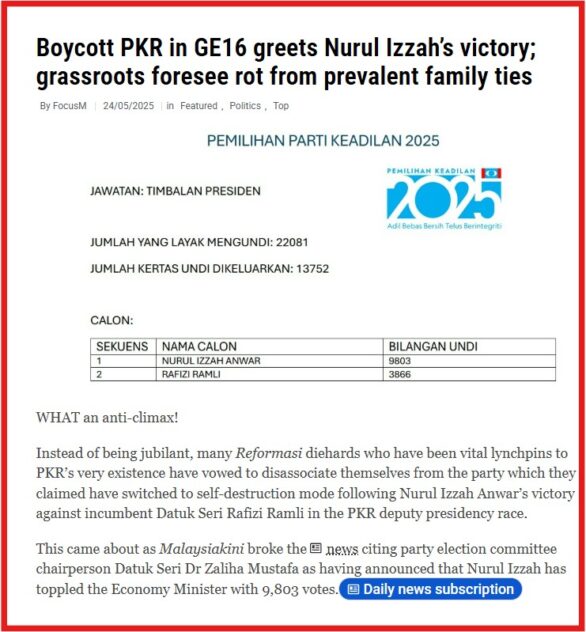
DSAI has already entered his third and final permitted term as PKR president. If succession, stability and party unity had genuinely come first, Nurul Izzah could have waited.
Rafizi could have continued as deputy president until DSAI completed his term. Nurul Izzah could then have contested the deputy presidency as part of an orderly leadership transition. PKR could have retained both leaders.
Instead, the party chose confrontation over continuity.
The consequences are now undeniable. After losing the party election, Rafizi resigned as economy minister while Nik Nazmi Nik Ahmad also left the Cabinet after failing to retain his vice-presidency.
Both eventually resigned from PKR by voluntarily vacated their parliamentary seats and took over BERSAMA, thereby creating a new political competitor for PKR.
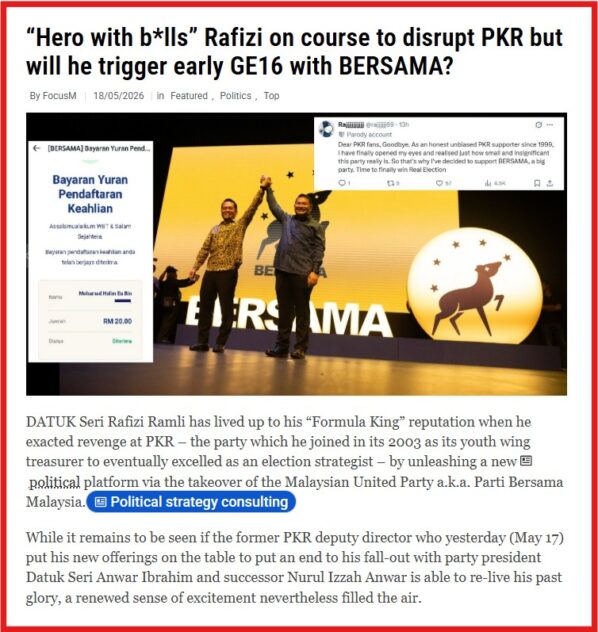
Reuters subsequently reported that BERSAMA received more than 18,000 membership applications with about one-third reportedly coming from former PKR members.
PKR therefore lost far more than two personalities – it lost two experienced, capable and reform-minded leaders as well as other loyal members and grassroots figures who believed that the party was no longer consistently practising the reform and democracy it preached.
This unnecessary internal contest damaged trust, intensified factional divisions, weakened PKR’s reformist identity and drove valuable political talent out of the party.
Bitter irony next
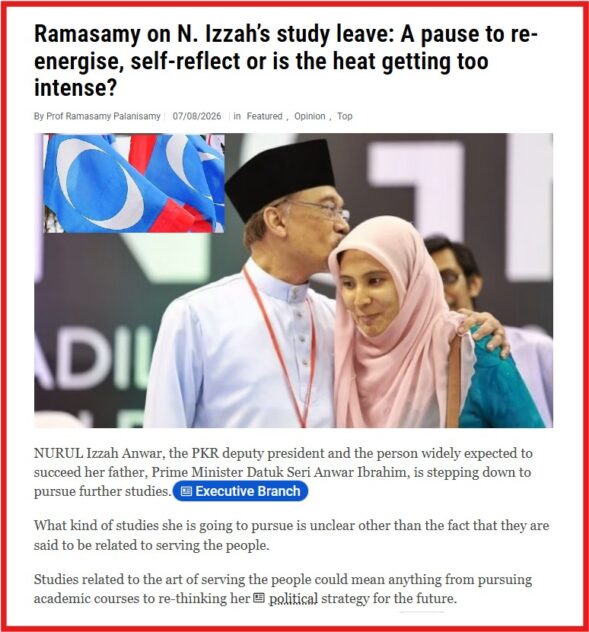
Barely 15 months after winning the deputy presidency, Nurul Izzah requested to step down. PKR’s central leadership did not accept her resignation and instead granted her temporary leave with former secretary-general Datuk Seri Saifuddin Nasution Ismail assuming her responsibilities.
She contested for the second-highest position, displaced the incumbent and helped set in motion a damaging internal confrontation.
Yet after winning, she was largely missing from the national political scene and now wants to step away from the responsibility she fought to obtain.
So what exactly did PKR gain?
It lost Rafizi. It lost Nik Nazmi. It lost two capable wakil rakyat, experienced leaders and some genuine grassroots loyalists. It created a new political competitor, weakened confidence among reform-minded supporters and deepened internal divisions.
Now, the person elected to provide leadership wants to withdraw while someone who did not win the position must perform her duties.
This is not succession planning. It is political mismanagement.
The “grassroots demanded it” explanation must also be scrutinised. Which grassroots-the ordinary voters who rejected PKR in its historic fortress or the party delegates who later elevated Nurul Izzah to its second-highest position?
Losing Permatang Pauh should have led to re-building from the ground. It should not have become the starting point for re-positioning through the top of the party.
DSAI cannot simply hide behind party democracy. As president, he has a responsibility to anticipate the consequences of an unnecessary contest between his daughter and his deputy.
Even if he did not openly endorse either candidate, failing to prevent this avoidable collision was a serious error of political judgment.
DSAI must also examine the quality of advice he receives from those surrounding him. Blind loyalists, courtiers and political operators who tell a leader only what he wants to hear may protect their own positions but they can eventually destroy the leader’s legacy and the party’s future.
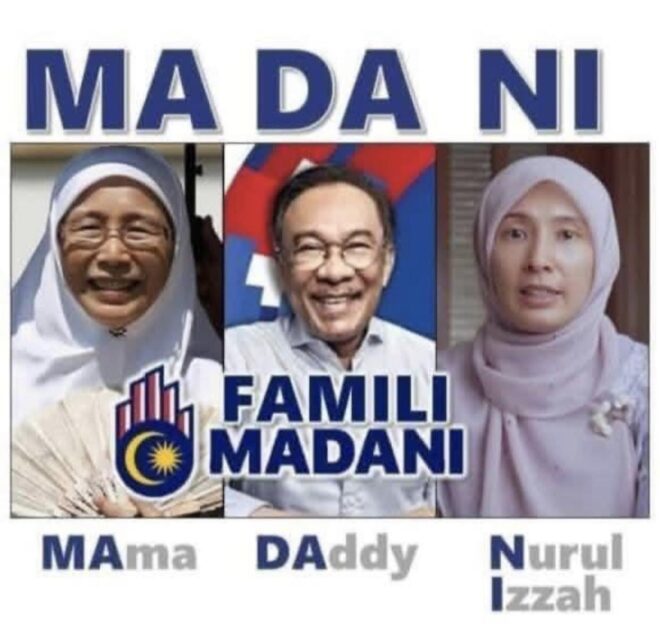
PKR was founded as a reform movement. It must never be reduced to family succession, inner-circle control or the marginalisation of independent and capable voices.
I continue to support DSAI’s reform agenda and the Madani government but support does not mean remaining silent when the party commits a serious political blunder.
As someone who has followed PKR from its earliest days, I say this bluntly – PKR did not lose Rafizi, Nik Nazmi and other capable loyalists because of UMNO, PAS or Bersatu.
It lost them because of its own arrogance, poor judgment and destructive internal politics.
The greatest threat facing PKR today may no longer be its political enemies. It is PKR’s growing ability to destroy its own talent and then behave as though nothing serious has happened.
Governance advocate and political commentator, Datuk Dr Sivasampoh Kannikuddy is also a group CEO/executive with a background spanning finance, banking and strategic management, including leadership roles with MyOwn Inc.
The views expressed are solely of the author and do not necessarily reflect those of MMKtT.
- Focus Malaysia

No comments:
Post a Comment
Note: Only a member of this blog may post a comment.