


MP SPEAKS | Every generation inherits institutions built by those who came before it. The same applies to every new government that comes into power after elections.
Therefore, every responsible generation and government has a duty to leave these institutions stronger than they found them.
That is the true purpose of institutional reform - not change for its own sake, but ensuring that the foundations of our democracy remain resilient, trusted, and capable of serving generations yet to come.
Constitutional reform is often viewed through the prism of politics. It is seen as serving one government, one political party, or one moment in time.
In reality, the most important constitutional reforms are never about today’s political fortunes. They are about strengthening institutions that must continue to serve the nation long after today’s leaders leave office.
AG-PP separation a defining moment
As a seasoned lawmaker, I hold these ideals dear.
I believe that this is how mature democracies evolve. Constitutions are not static documents preserved by tradition. They are living frameworks that must respond to the changing expectations of the society they serve.
As public expectations evolve, institutions must also evolve. Not because they have failed, but because democratic maturity demands continual improvement.
Malaysia has now reached one of those defining moments.
When Parliament debates proposed constitutional amendments to separate the offices of the attorney-general and the public prosecutor, much attention will understandably focus on legal provisions and constitutional structures.
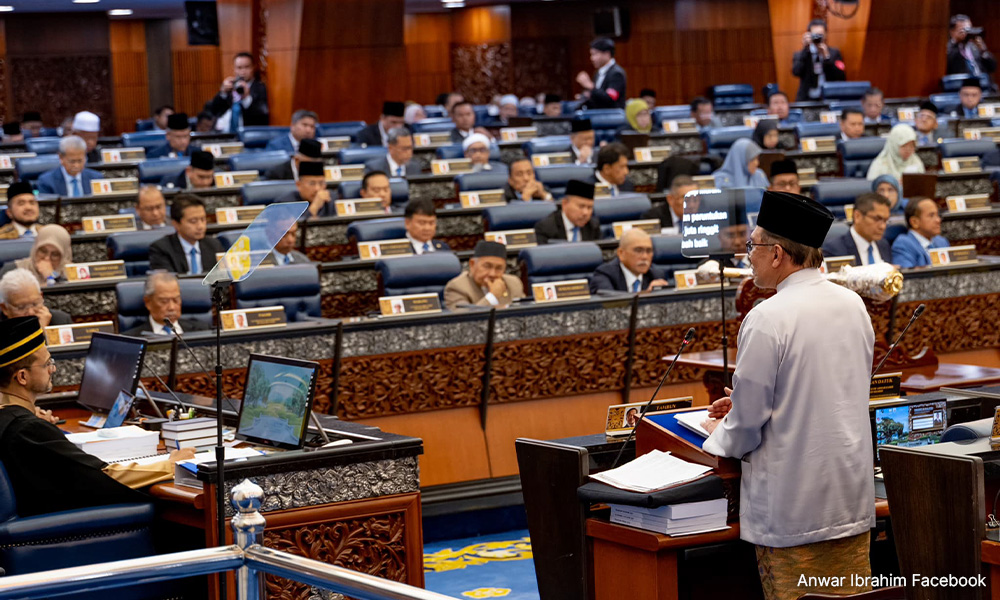
These discussions are important. However, the larger question is much simpler.
Will this reform strengthen our confidence in the administration of justice? Ultimately, this is the question that Parliament is being asked to answer.
At its heart, the proposal aims to strengthen public trust. It asks whether two constitutional responsibilities that have been exercised by one office for almost seven decades would now better serve Malaysia if they were entrusted to two distinct institutions, each with a clear constitutional mandate.
Improvement, not criticism
This proposal should not be mistaken for a criticism of the existing constitutional arrangements.
Malaysia’s AGs and PPs have served the nation with professionalism, dedication, and integrity throughout periods of nation-building, economic transformation, and political change.
Our institutions have contributed significantly to the stability of constitutional democracy.
However, good institutional reform is not driven solely by institutional failure. The strongest democracies improve their constitutional architecture before public confidence is weakened, not the other way around.
Today, Malaysians expect more from public institutions than they did previously. Rightly so. They expect transparency, accountability, and independence.
More importantly, they expect “justice not only to be done, but to be seen to be done”.
This phrase is not a cliché; it surmises a strong public sentiment as we acknowledge that public confidence depends not only on the decisions institutions make, but also on the integrity and independence of the processes through which those decisions are reached.
No-brainer
These expectations are neither unusual nor unique to Malaysia. Constitutional democracies worldwide have continually reviewed and refined their institutional arrangements to strengthen confidence in the rule of law.
Different countries have adopted different models, but they are united by one common objective: to ensure that justice is administered independently, fairly, and transparently.
I remember discussing this with the AGs of Canada and Australia, and their words had a profound impact on me, reinforcing my determination to pursue this reform agenda.
They mentioned that when their countries decided to separate the roles of AG and PP, it naturally led to public officials becoming more accountable for their actions.
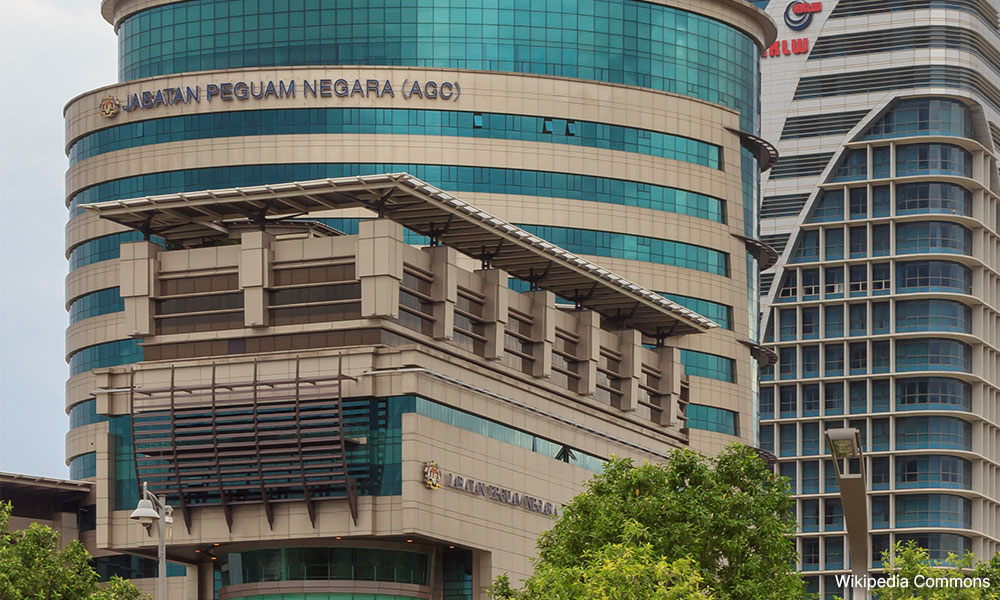
Today, the AG has two fundamentally different constitutional responsibilities.
The first is to serve as the government’s principal legal adviser - providing legal advice, representing the government in civil proceedings, and assisting in the development of legislation.
Second, prosecutors should exercise discretion in deciding whether criminal proceedings should be commenced, continued, or discontinued according to the law and the available evidence.
Both responsibilities are indispensable. Both require the highest standards of integrity and professionalism. However, they exist for fundamentally different constitutional purposes.
The government’s legal adviser works closely with the executive to support the lawful administration of the government.
However, the PP exercises powers that directly affect individual liberty, criminal accountability, and the administration of justice.
Therefore, the independence of prosecutorial decision-making is essential not only in practice but also in public perception.

The proposed reform recognises this distinction. It seeks to establish clearer institutional boundaries so that each office can focus exclusively on its constitutional responsibilities while operating within governance arrangements designed specifically for its unique role.
Therefore, this reform is not about diminishing either institution. It is about strengthening both aspects.
The only constant is change
More importantly, it recognises an enduring constitutional principle: institutions should never depend solely on the integrity of individuals.
Individuals and governments come and go, and the political landscape will continue to evolve. Institutions must be designed to command public confidence, regardless of who occupies the office.
Institutional trust cannot be legislated overnight. It is earned gradually through consistent reform, responsible governance, and public confidence that institutions are designed to serve the nation rather than any particular administration.
This is why constitutional reform requires time and patience. It should never be rushed to satisfy immediate political expectations. Similarly, it should never be postponed simply because change is difficult.
Recognising the constitutional significance of this proposal, the Parliamentary Special Select Committee undertook extensive consultations with former judges, prosecutors, legal practitioners, constitutional scholars, academics, civil society organisations, and international experts.
This engagement is not merely procedural. This reflects the belief that constitutional legitimacy is strengthened when reform is informed by experience, expertise, and public participation.
As Parliament prepares to debate this historic proposal, I hope the discussion rises above the familiar language of partisan politics.
Constitutions do not belong to the government. They belong to the nation.
Ultimately, this responsibility extends beyond MPs. Institutional reform succeeds only when it is understood, supported, and valued by the people.
Citizens who expect integrity from public institutions must also recognise the importance of reforms that strengthen those institutions, even when the benefits are not immediately visible.

When historians look back on this Parliament decades from now, they are unlikely to remember every speech delivered or every clause debated. What they will remember are the choices that shaped Malaysia’s constitutional future.
We are merely temporary custodians of institutions that will outlive every government, every Parliament, and every generation represented today.
If this reform succeeds in reinforcing public confidence in the administration of justice, history may remember this Parliament not simply as the one that separated two constitutional offices but as the one that reaffirmed a timeless democratic principle: that the strength of a nation lies not in the concentration of power but in the trust its institutions inspire.
That is the legacy we, as MPs, should strive to leave behind. - Mkini
AZALINA OTHMAN SAID is Pengerang MP and is minister in the Prime Minister’s Department (Law and Institutional Reform).
The views expressed here are those of the author/contributor and do not necessarily represent the views of MMKtT.

No comments:
Post a Comment
Note: Only a member of this blog may post a comment.