


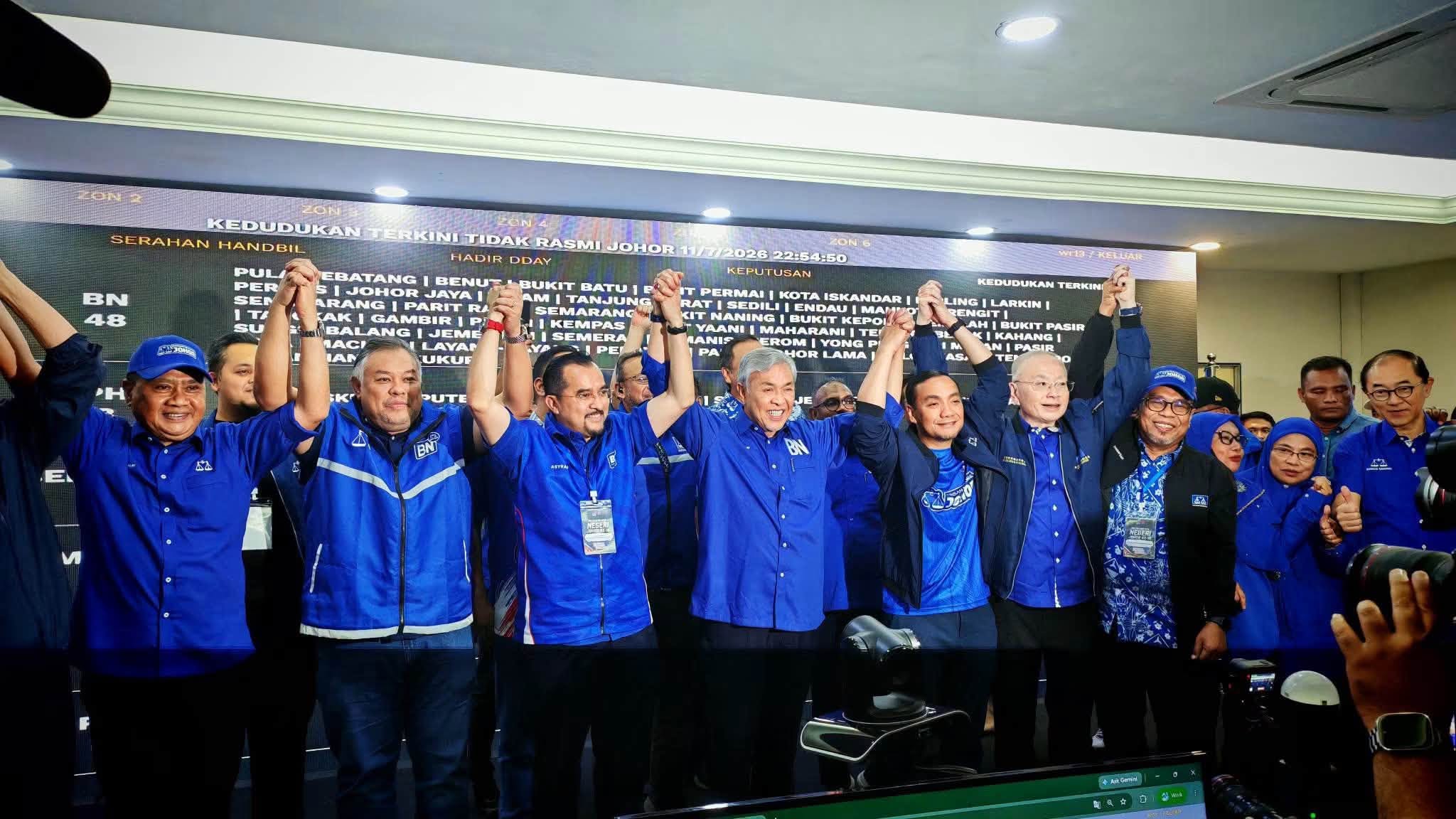
THE results of the Johor state elections yesterday (July 10) dealt a devastating blow to Pakatan Harapan (PH), the country’s ruling coalition helmed by Prime Minister Datuk Seri Anwar Ibrahim.
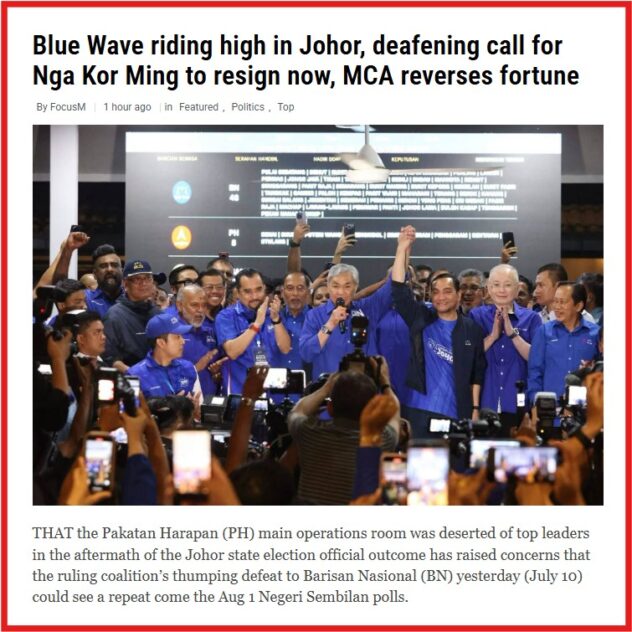
UMNO-led Barisan Nasional (BN) improved its performance by winning 48 seats of the total number of 56.
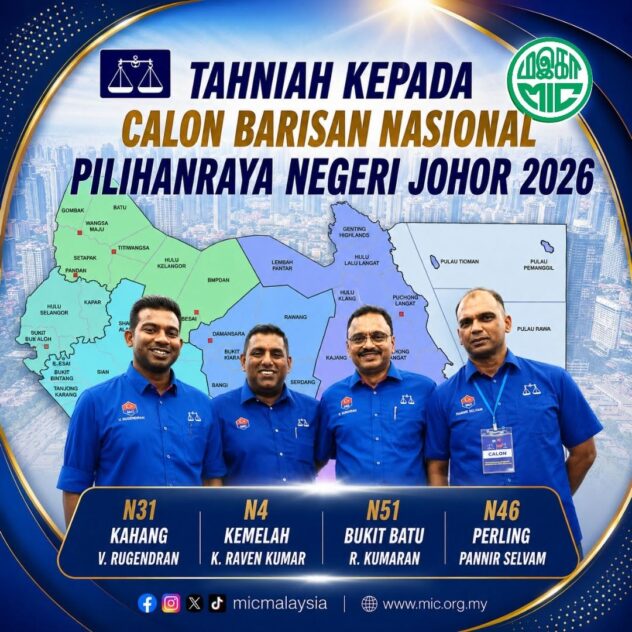
MIC was the only BN component party to achieve a 100% success rate.
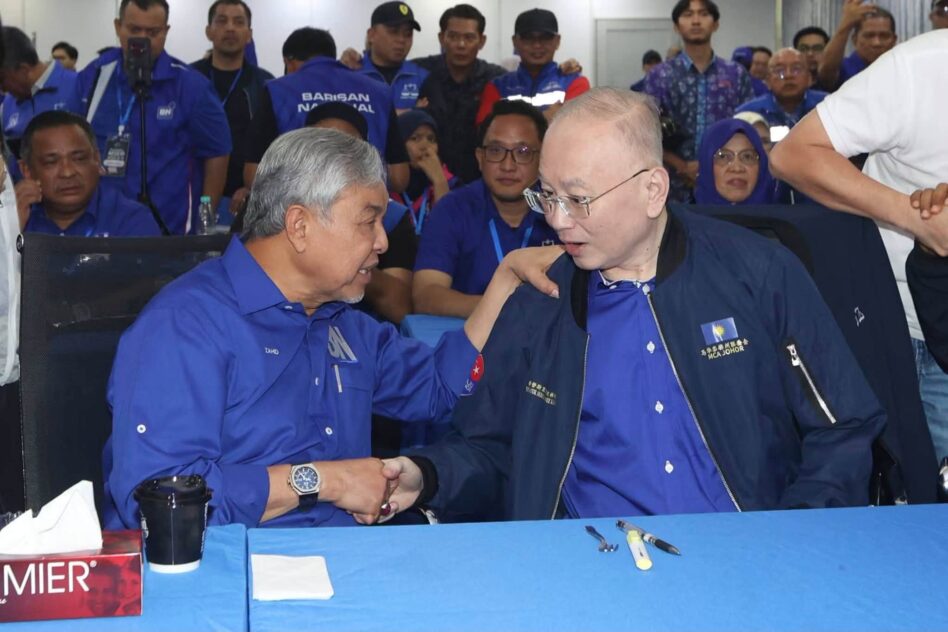
Once written off by the Chinese community, MCA won eight of the 15 seats it contested, securing 57% of the seats.
In terms of the absolute number of seats won, MCA’s performance was better than that of DAP which only won six in contrast to 10 during the March 2022 state polls.
Time of reckoning
As predicted by me and others days before the elections, PH emerged as the clear loser in the tightly fought contest.
Of the 20 seats contested, PKR won only one. Amanah also won just one of the 19 seats it contested.
The once-arrogant DAP which claimed to be the champion of the non-Malays, particularly the Chinese, won only six of the 17 seats it contested or a 35% success rate.
It was simply a disaster for the party that once championed the idea of “Malaysian Malaysia”. A pale shadow of its former self, DAP could not even match the performance of MCA – its traditional rival.
Surprisingly, MIC, the weakest component in BN, won every seat it contested, thus achieving a 100% success rate.
Overall, BN rose to prominence in Johor, leaving PH far behind. The biggest casualty of the election was none other than Perikatan Nasional (PN).
The split between PAS and Bersatu before the election reduced the coalition’s appeal to voters.
The opposition front PN failed to win a single seat. Whether PAS contributed to BN’s victory remains a matter that needs to be investigated.
However, I doubt PAS was able to sway voters in favour of BN or UMNO in constituencies contested by PN.
The so-called support for BN was nothing more than PAS trying to ingratiate itself with its former rival.
‘PH forsaken non-Malays’
While the majority of Malay voters swung in favour of UMNO, Chinese voters’ support for DAP had considerably waned over the years.
Certainly, the electoral slaughter suffered by the party in the Sabah state election had an effect on its performance.
During the Johor state election campaign, PH was ill-prepared for the contest. It had neither BN’s impressive manifesto nor a convincing track record of championing the rights of the Chinese and Indians.
By caving in to the extreme demands of the Malay right wing, it lost its voice in articulating and representing the rights of the non-Malays.
DAP secretary-general Anthony Loke Siew Fook appeared more like a civil servant explaining government policies than a leader fighting for the rights of the non-Malays.
In fact, DAP’s dismal performance is a reminder that he simply does not possess the leadership needed to guide the party.
Indians who traditionally voted for DAP during the Barisan Alternatif (BA), Pakatan Rakyat (PR) and later PH years have literally bid goodbye to both DAP and PKR.
Ironically, Indian voters appear to have returned to MIC and BN in the recent election.
As far as the non-Malays are concerned, PH has completely and unequivocally forsaken their rights in the country.
There is a possibility that the Johor election results will have implications for the upcoming Negeri Sembilan state election.
PH may not be able to retain the state let alone repeat its current level of performance in the election scheduled for Aug 1.
Former DAP stalwart and Penang deputy chief minister II Prof Ramasamy Palanisamy is chairman of the United Rights of Malaysian Party (Urimai) interim council.
The views expressed are solely of the author and do not necessarily reflect those of MMKtT.
- Focus Malaysia.

No comments:
Post a Comment
Note: Only a member of this blog may post a comment.